Flash-dLLM reports 11x faster diffusion language model inference. And the claim comes with a named baseline: a 5.1x speedup on GSM8K and an 11.0x speedup on HumanEval over the prior strongest acceleration method, Elastic-Cache (paper listing). The framework, from authors Quan Nguyen-Tri, Mukul Ranjan. And Zhiqiang Shen, is training-free, meaning it accelerates an existing diffusion big language model (dLLM) instead of asking you to retrain one. It attacks two problems at once: an I/O-aware fused KV-cache kernel that cuts redundant GPU memory movement. And a draft-and-verify decoding strategy where the dLLM drafts and checks its own output with no auxiliary model. An official implementation lives under the VILA-Lab GitHub organization. Here is what those numbers actually mean, what they leave out. And whether any of it belongs in your stack yet.
The bottleneck is memory traffic, not math
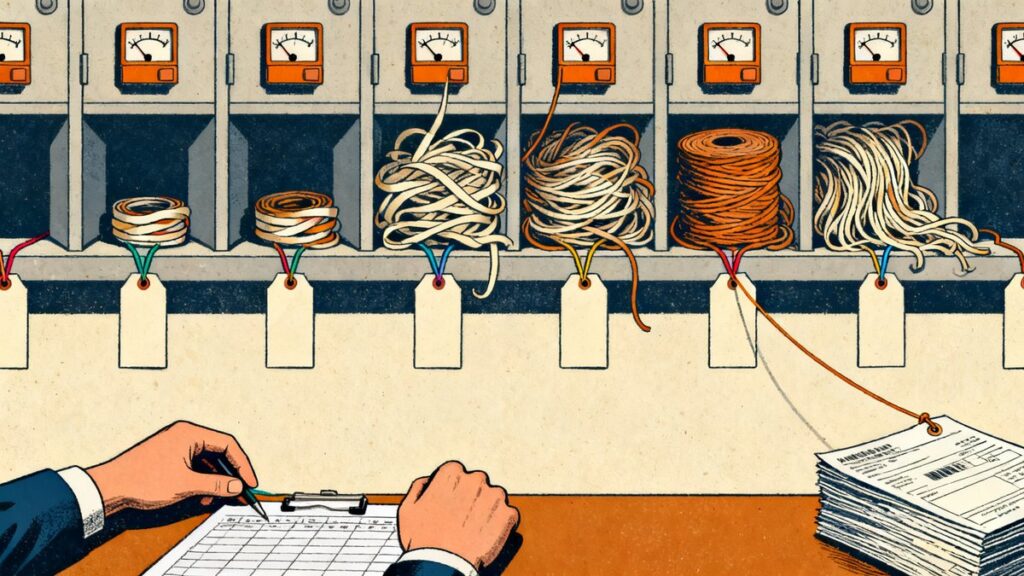
The natural assumption is that inference speed is a compute problem. The Flash-dLLM paper argues the opposite for dLLMs: it identifies GPU memory input/output as the dominant bottleneck in KV-cache-enabled dLLM inference.
In plain terms, the card spends more time shuffling cached keys and values around than it spends doing the math that produces tokens.
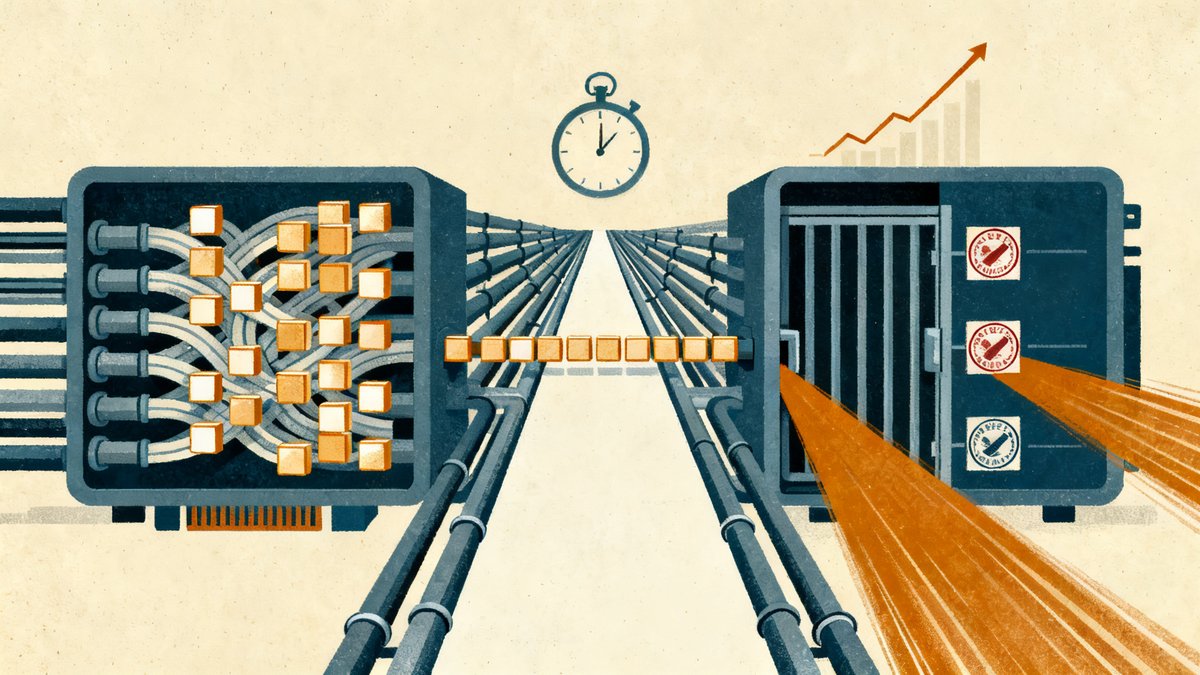
The fix is an I/O-aware fused KV-cache kernel, designed to reduce redundant memory movement. “Fused” is the load-bearing word: operations get combined so intermediate results stay put instead of round-tripping through memory. That is the same class of insight that made attention fast in the first place, applied to the cache.
There is a second, subtler finding that operators should sit with.
The paper notes that existing acceleration methods typically study KV caching and parallel decoding in isolation, overlooking the I/O bottlenecks that arise when cache reuse and parallel token verification are jointly applied. Two optimizations that each work fine alone can step on each other once you stack them. If you have ever run a production pipeline where two individually sane fixes combined into a new bottleneck, this finding will feel familiar.
The model grades its own homework
Speculative decoding normally means maintaining two models: a cheap drafter that guesses fast and a heavy verifier that checks the guesses.
Flash-dLLM skips that arrangement. It uses a KV-cache-driven draft-and-verify decoding strategy in which the dLLM itself serves as both drafter and verifier, with no auxiliary model required.
For a small team, that detail matters more than any headline multiplier.
One model in the serving path means one artifact to version, one thing to quantize, one thing to monitor at 2am when throughput dips. Every auxiliary model you add to an inference stack is another component with its own failure modes. And lean operations do not have spare on-call capacity for those.
The contrast with the similarly named FlashDLM makes the design choice stand out. FlashDLM’s Guided Diffusion is also training-free. But it uses what its abstract describes as “a lightweight pretrained autoregressive model to supervise token unmasking” (arXiv). That is a second model in the loop.
Both approaches are defensible; I know which one I would rather own when something breaks on a Friday.
Read the 5.1x and 11.0x numbers like a buyer
The authors report extensive experiments on mathematical reasoning and code-generation benchmarks. And report that Flash-dLLM consistently outperforms existing state-of-the-art dLLM acceleration methods in both inference speed and memory efficiency (papers.cool). The headline numbers compare against Elastic-Cache, described as the prior strongest baseline. Before you treat any of that as a deployment plan, run this checklist:
– Benchmark scope. GSM8K is math, HumanEval is code. Unless your product is doing exactly that, treat the numbers as directional, not predictive.
– Baseline framing. The speedup is measured against another acceleration method, not against plain inference and not against whatever you run today. Your real-world gain depends entirely on your starting point.
– Quality preservation. The unified design is built to enable faster decoding while preserving generation quality. Design intent is not measurement. Run your own evals on your own outputs before you trust it.
– Scalability claims. The framework is designed to scale to longer sequences and larger batch sizes, which is where the throughput economics actually live for anyone serving requests.
– Reproducibility. The code is public (VILA-Lab), so there is no excuse for adopting it on faith. Run it on your hardware with your prompts.
My take after reading the claims: an 11x figure on a benchmark is a research signal, not a procurement decision. The honest move is to spend an afternoon reproducing the result on the card you actually rent before rewriting any cost projections.
Do not confuse Flash-dLLM with FlashDLM
The names are nearly identical and the papers are distinct, which is a recipe for bad citations and worse purchasing decisions.
FlashDLM is listed in the Awesome-Diffusion-LLM bibliography as “FlashDLM: Accelerating Diffusion Language Model Inference via Efficient KV Caching and Guided Diffusion.” Its caching trick, FreeCache, is a key-value approximation-caching technique that reuses stable KV projections across denoising steps to cut compute cost.
Here is the side-by-side from the two papers’ own descriptions:
| | Flash-dLLM | FlashDLM |
|—|—|—|
| Framing | Training-free inference-acceleration framework | Efficient KV caching plus Guided Diffusion |
| Cache method | I/O-aware fused KV-cache kernel reducing redundant memory movement | FreeCache reusing stable KV projections across denoising steps |
| Drafting | dLLM acts as both drafter and verifier, no auxiliary model | Lightweight pretrained autoregressive model supervises token unmasking |
Both target the same pain, KV-cache cost in diffusion language models, from different directions. When you search, cite, or evaluate vendors building on this work, check the spelling first.
Why a small shop should care at all
Three properties in this paper are genuinely good news for lean operators, and none of them is the 11x. First, training-free means adoption does not require a fine-tuning budget, which is usually the part that kills small-team experimentation. Second, memory efficiency gains change which GPU tier a workload fits on. And card size is a real line item when you pay by the hour. Third, better scaling to larger batch sizes translates directly into more requests served per card, which is the number that shows up in your cost per request.
The sober counterweight is that diffusion language models remain an alternative architecture bet, not the mainstream stack most of us build on daily.
I am not moving client workloads onto a dLLM this week, and you probably should not either. What I am doing is watching where the hard problems have moved: the field’s wins are now coming from memory traffic engineering rather than raw model scale. When acceleration papers start winning by fixing how bytes move instead of how big a model thinks, the architecture race is maturing into a plumbing race. Plumbers win plumbing races.
Before you spend a day on any acceleration paper, rerun its benchmark on your own hardware with your own prompts.
And compare against your actual current stack rather than the paper’s baseline.
If you want a second pair of eyes on whether an inference change genuinely pays for itself in your setup, that is exactly the kind of work I do.
Tell me what you are serving and I will tell you where the bytes are burning.