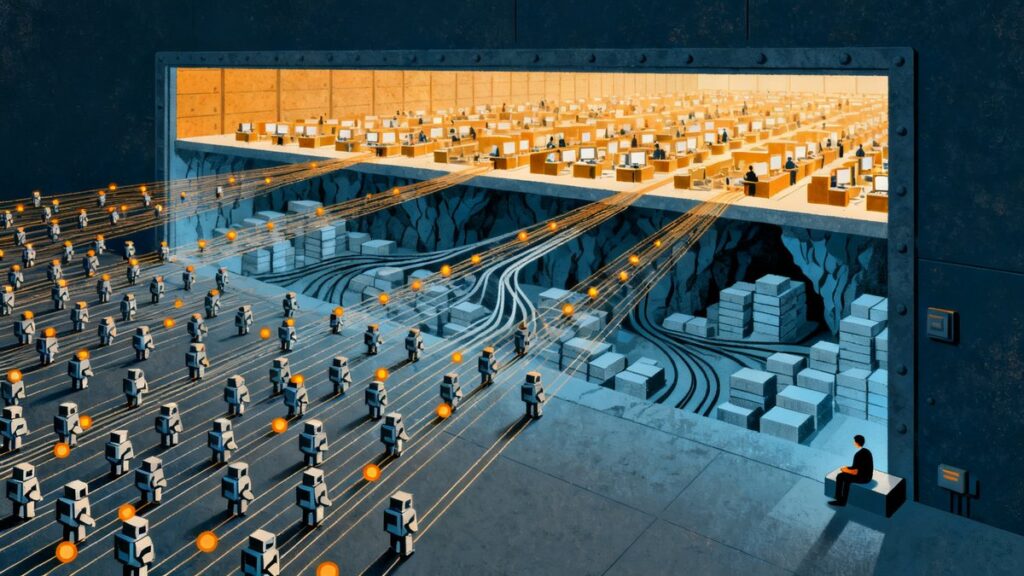
Claude Fable 5.2 launched on November 9, 2026.
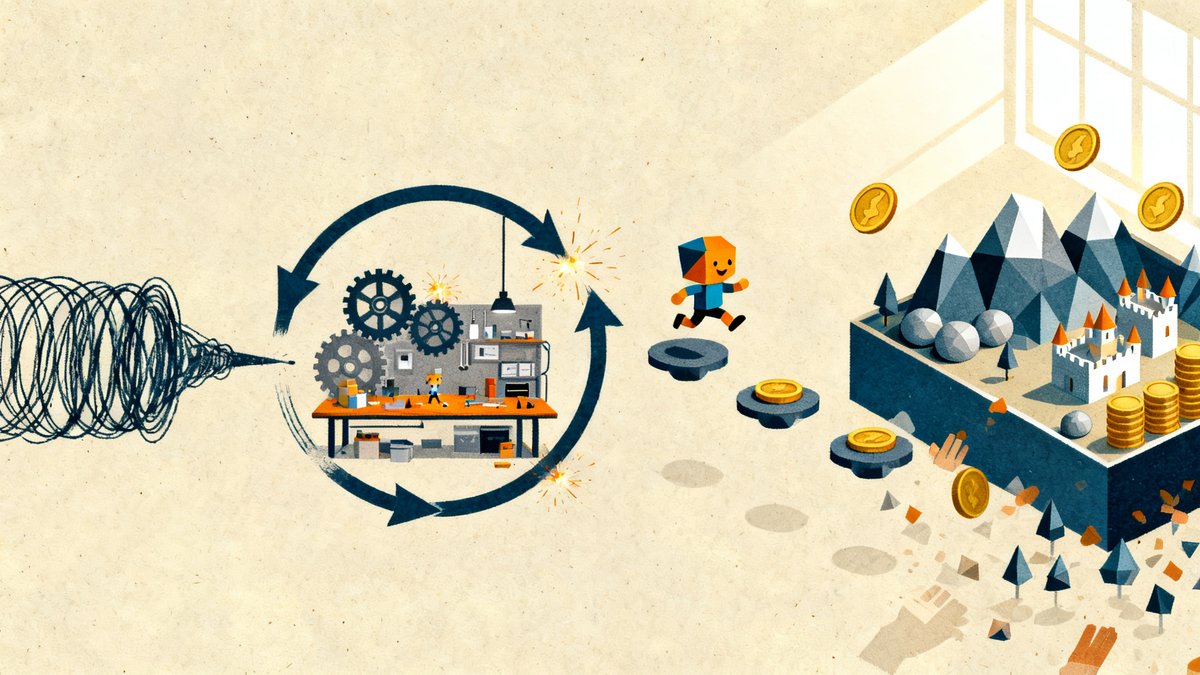
And it answers a question most people still treat as a thought experiment: can a plain-language prompt produce software you can actually play? Anthropic’s model page says yes in the strongest terms, describing a model that builds interactive 3D worlds and creates simulations, animations. And educational videos with sound in code. The better evidence sits in a public GitHub collection that documents one-prompt Three.js and WebGL scenes, canvas animation, motion graphics. And playable browser games, with most pieces delivered as a single HTML page the model wrote from a prompt. The unit of output is shifting from a code snippet to a runnable artifact. And that shift changes what you should practice.
What Actually Shipped On November 9
The release notes are blunt about intent: Fable 5.2 is “built for demanding reasoning and long-horizon agentic work,” and Anthropic markets it as its “most capable model for technical work.” The release notes list a 1M token context window, 128k max output tokens, and always-on adaptive thinking. The launch announcement also cut the price: $8 per million input tokens and $40 per million output tokens, with outputs arriving up to 30% faster than Claude Fable 5.1 and Claude Mythos 5.1.
You can reach it through the usual doors:
– Model ID `claude-fable-5-2` via the Claude API
– Amazon Bedrock (bedrock-runtime) and Claude Platform on AWS
– Claude Models on Google Cloud, in Anthropic-managed and Google-managed versions
– Claude in Microsoft Foundry
That breadth matters for a reason beyond convenience.
You can run this where your data already lives instead of shipping it somewhere new.
One Prompt, One HTML File, One Playable Game
The GitHub collection is the most interesting artifact in this whole launch. It describes one-prompt Three.js and WebGL scenes, canvas animation, motion graphics, explainers. And playable browser games, and most pieces are a single HTML page the model wrote from a prompt. Each piece is credited to its creator and linked to the original post. And that last detail matters more than it sounds: attribution turns a vendor claim into something you can check yourself.
The working loop behind it is spelled out in Amazon’s launch post, which says the model “interprets prompts, iterates, catches its own errors.
And optimizes as it goes.” Anthropic’s page says the same thing from the engineering side: it “tests its own work as it goes” and brings architectural judgment to “large, loosely defined problems across multiple repositories and large monorepos.” A game that runs on the first try is not luck under that description. It is the loop doing generate, run, fail, and fix without a human babysitting every step.
The single-file format is the right demo for this capability and I would argue it is the point. You can open the file, play it. And then read every line that produced it, with no build step and no dependencies hiding anything. The model too reads detailed images and PDFs, per the same Anthropic page.
So you can hand it a picture of the thing you want instead of describing it in prose.
Believe The Games, Discount The Press Release
Anthropic’s prerelease list deserves a careful read.
The announcement says prerelease testing helped its engineers complete otherwise-infeasible software migrations, produced three working electronic devices from scratch, solved two open problems in the physics of black holes, made substantial progress on robotics evaluations. And formalized a proof of Fermat’s Last Theorem in 30 hours. Every one of those claims is vendor-run, vendor-graded, and vendor-published.
I do not treat them as lies; I treat them as ceiling markers that show what the model does under Anthropic’s conditions, not yours.
The playable-game demos sit higher on my evidence ladder for one specific reason: the collection credits each piece to a creator and links to the original post. You can find the person, find the prompt, and compare the result. That is still not production evidence, and the difference is not cosmetic. A demo proves generation; a product has to survive edge cases, state management, upgrades. And the first user who does something you did not predict. Nothing in a one-prompt HTML file tests any of those things.
What This Means If You Run A Lean Operation
Start with the money, because the money is honest. Input runs $8 per million tokens and output runs $40 per million. So a generation that truly maxes the 128,000-token output window costs $5.12 in output tokens (128,000 x $40 / 1,000,000). That is the ceiling on a single artifact rather than a typical bill.
And it makes routine experimentation genuinely cheap.
The model overview points the model at agent sessions that run for hours, multistep research carried through to a finished document, spreadsheet, or deck. And engineering across multiple repositories.
For a one-person operation, the honest translation is prototypes, internal tools, interactive explainers. And first versions of things you would otherwise never build at all. The real skill shift is that the bottleneck moves from writing code to writing specifications. When one prompt produces a playable artifact, vague prompts stop being forgiven, as there is no longer a junior developer around to notice what you left out.
Here is how I would run the first week with it:
– Write the prompt like a product brief: goal, mechanics, constraints, and what breaks it.
– Save every output and read the code before you show anyone.
– Keep a human review step on anything a customer touches.
– Treat the first playable version as the start of the work, not the end.
Where This Leaves You
Claude Fable 5.2 makes the first version of interactive software nearly free to produce and says nothing about the parts that cost real time.
The winners with a model like this are the people who specify precisely and review ruthlessly, not the people who generate the most. Try it this week: write a product brief for one small interactive tool you actually need, run it through `claude-fable-5-2`. And open the HTML file that comes back. Then tell me in the comments what played and what broke, since that gap is where the real work lives.