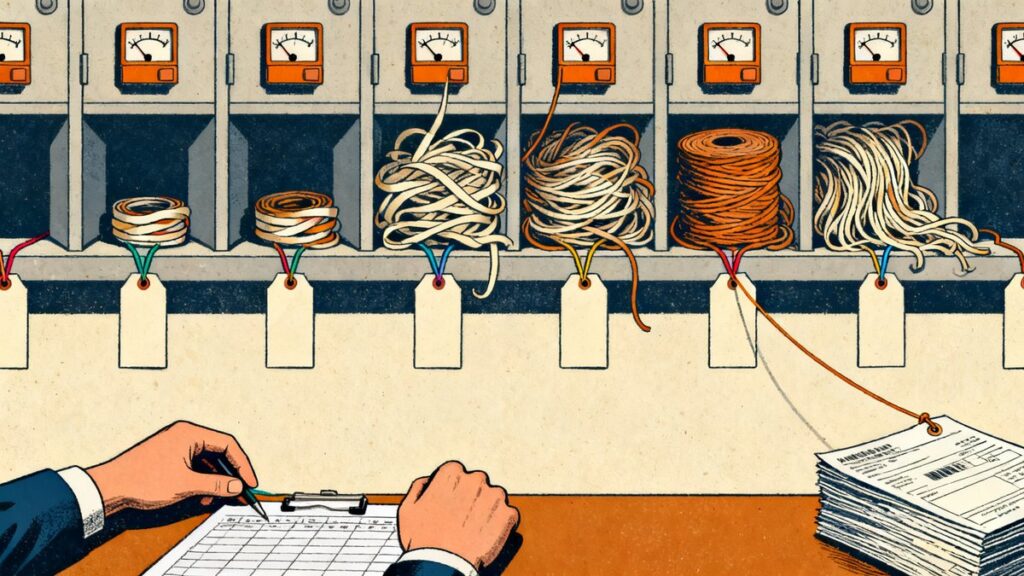
Not the model. The memory. Every argument I had about agent quality this year collapsed into that distinction eventually. And OpenViking is the project that finally names it: the repo lives in volcengine’s GitHub org, it calls itself “The Context Database for AI Agents”. Six words, no hedging. And it treats a context database as infrastructure rather than a prompt trick you paste at the top of every run.
If you build agent workflows for clients, the layer that stores and filters context is on track to decide your token bill and your failure rate more than the model does.
That is the claim the rest of this post defends.
What a Context Database Actually Does
OpenViking organizes everything an agent knows as a virtual filesystem under `viking://`. Resources, memories, skills, each with its own URI. Agents navigate it the way you navigate a disk — `ls`, `tree`, `read`, `write`, `grep`. And you can open any directory to inspect and edit what your agent knows.
The loading tiers are the part I find genuinely clever. Every semantically processed directory carries a generated L0 abstract, a one-sentence summary for relevance checks, then an L1 overview with structure and key points. And only at L2 the full original content. The agent reads the label before it pays for the jar. Sessions commit to Markdown files you can inspect, edit. And merge, which turns “what did the agent remember” from a guessing game into a file you open.
Install is `pip install openviking` on Python 3.10+, then configure providers and start the server.
Supported options include Volcengine, OpenAI, Codex OAuth, Kimi, GLM, and local Ollama. There are Python, Go. And TypeScript SDKs, an HTTP API, a Docker image. And a beta desktop console sitting at version 0.0.19 for macOS and Windows x64. Integrations cover Claude Code, Codex, Cursor, TRAE, OpenClaw, Hermes, OpenCode, LangChain, and any MCP client. The README alone ships in English, Chinese. And Japanese, which is more languages than most side projects ship docs in at all.
Why Agent Context Belongs in a Database
I opened the repo half expecting a vector store wearing a filesystem costume.
Wrong. The design rejects the flat embedding pool: search runs scoped to a directory subtree instead of scanning the whole index. And the standard complaint about agent memory. Text goes in, embeddings come out, nobody can see what was actually stored. Is answered by making the store readable.
The reframing matters because databases carry obligations prompt tricks do not. Schemas. Retention rules. Backups, access control, audit. Once you admit that what an agent remembers is production data, those obligations stop being optional. And most agent failures stop being intelligence failures. The model knows the answer more often than the run can surface it, which makes the loss a storage and retrieval question.
The published numbers back that reading. OpenViking 0.3.22 was evaluated on long-conversation user memory (LoCoMo) and multi-turn agent tasks (tau2-bench), with reproduction scripts committed in `./benchmark`. On LoCoMo, OpenClaw scored 24.20% with its native memory and 82.08% with OpenViking; Hermes went from 33.38% to 82.86%; Claude Code went from 57.21% to 80.32%. Input tokens dropped 34.3–91.0% and query latency fell 58.45–66.10% across those runs. On tau2-bench, experience memory lifted task success by +6.87pp on retail (70.94% to 77.81%) and +11.87pp on airline (54.38% to 66.25%).
Two caveats, stated plainly. The evaluation used Doubao 2.0 Pro as the VLM and Doubao-embedding-vision-251215 as the embedding model, both from the same parent company as the project. It is also a 0.3.x release, and I have not rerun the benchmark suite myself. My week did not have room for it, so treat the figures as vendor-reported until you reproduce them.
How to Evaluate an AI Agent Context Store
Swapping models is the reflex when an agent underperforms, and I have done it.
It rarely fixes anything, as the rot lives upstream of generation: session state that evaporates on restart, tool output that floods the window and shoves your instructions off the end, project knowledge that exists in the repo but never reaches the agent when it matters. A stronger model fed the same blind context writes better prose about the same mistake.
I run a one-person agency, so my adoption bar is brutal. Anything I add is something I patch myself, late, on a deadline. Four questions decide it, whatever the tool.
Persistence comes first. Does agent state survive a crashed run and a restart, or does the agent wake up with amnesia and re-earn its context on your token budget every session?
Provider portability is second. Can you swap the model underneath without rewriting the workflow?
If not, you bought a wrapper, not infrastructure.
Observability is third. When a run goes wrong, can you replay what the agent actually saw at the decision point? Debugging without that is guessing with confidence.
Failure handling is the last one.
When a tool call dies halfway through a multi-step run, do you get retry, rollback, or silent corruption of the state you were counting on?
None of those four are about model quality. The other risk nobody prices in is fragmentation: the open-source agent stack keeps multiplying into context stores, gateways, runtimes. And frameworks, each with its own roadmap and its own half-finished edges. A solo operator cannot maintain layer after layer of somebody else’s side project. So I bet on fewer, duller pieces and demand an exit ramp from every one.
Why Agent Memory Compounds in Value
Models rotate; context compounds. Every model you depend on today will get replaced. The context your agents accumulate. Project state, corrected mistakes, retrieved knowledge. Is the only part of the stack that appreciates, which is why “context database” reads as a category name rather than a feature.
Do you know, right now, where your last agent run’s memory is stored?
If the honest answer takes more than one sentence, you have found the gap.
And no model upgrade closes it.
The audit is unglamorous: list every place your agent state lives, mark which of those you can export, then kill your dependence on the ones you cannot.
Open source earns its keep exactly here. The big labs will happily rent you the entire agent loop as an API, which is convenient until you need to know why a run failed or you need to move. OpenViking self-hosts under AGPLv3 with no activation key, with accounts and user isolation built in and opt-in resource ACLs. The unglamorous exit ramp that matters when a tool gets acquired, repriced, or abandoned.
Context Database FAQ
What is a context database?
An infrastructure layer that stores, organizes, and retrieves everything an AI agent needs to know. Documents, memories, skills — with query patterns and lifecycle discipline instead of a prompt you rebuild each run. OpenViking implements it as a `viking://` virtual filesystem.
How is this different from a vector database?
A vector database indexes embeddings and returns nearest neighbors from a flat pool. OpenViking scopes semantic search to directory subtrees, layers L0/L1/L2 summaries so agents judge relevance before reading full content. And keeps the store human-readable — you can browse and grep what your agent knows.
Is OpenViking production-ready?
Treat it as promising, not settled. The benchmarked release is 0.3.22, the server supports multi-tenant accounts and ACLs, and Docker deployment is documented. But it is still a 0.3.x project whose evaluation ran on the vendor’s own models. Run the reproduction scripts before trusting it with client work.
What does it cost, and what is the license?
The self-hosted server is free under AGPLv3, no activation key required. A managed SaaS option runs on Volcano Engine for teams that would rather not operate it themselves.
Which agents and models does it support?
Integrations cover Claude Code, Codex, Cursor, TRAE, OpenClaw, Hermes, OpenCode, DeerFlow, DSH, Doubao Work.
And LangChain, plus generic MCP clients. Model providers include Volcengine, OpenAI, Codex OAuth, Kimi, GLM, and local Ollama.
Own the Layer That Compounds
The competitive layer for coding agents is moving below the model, into context management and routing.
You do not need to adopt a context database this quarter — you need to know where your context currently dies, since that is the number on your invoice and the cause of your worst run.
If you want a second pair of eyes on that stack, from context handling to failure paths, that is the work my agency does; send me the repo and I will tell you where it hurts.
Sources
– volcengine/OpenViking on GitHub
– OpenViking benchmark results
– OpenViking documentation