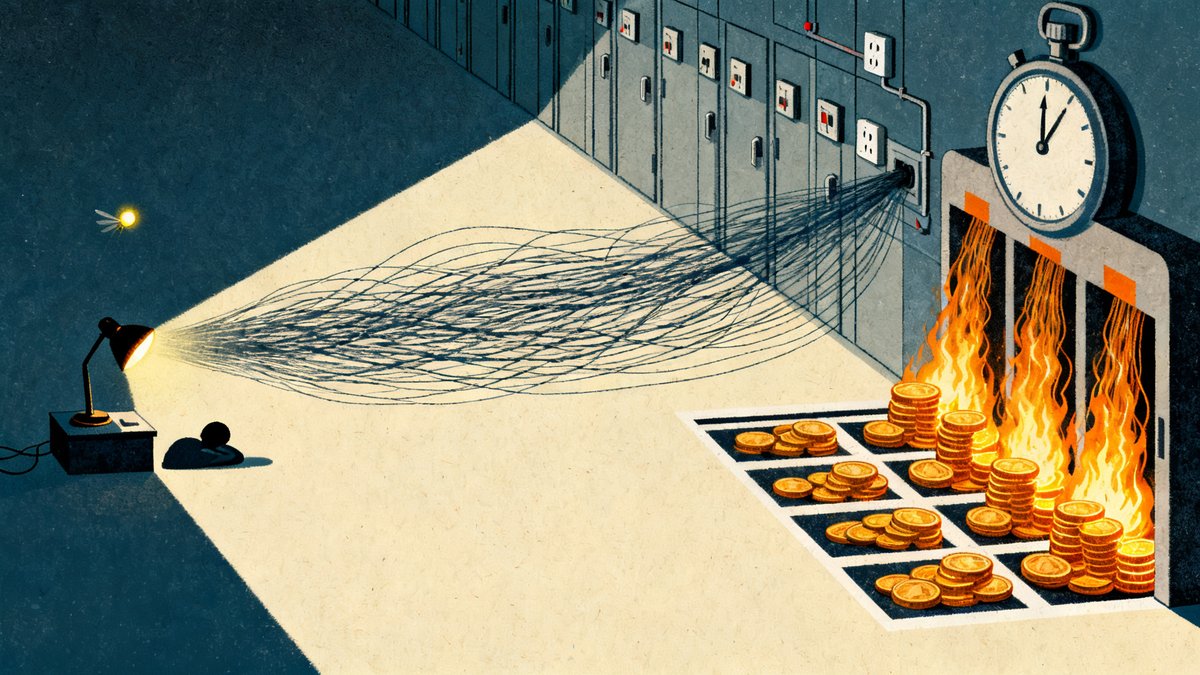
OpenAI DevDay 2026 launched dots with 4,000+ app connections, a dedicated cloud computer and browser for every dot. And a speed tier priced at six times the standard rate. That one sentence is the event. And each piece of it changes either what you pay or what you’re exposed to. Dots are always-on agents that work toward goals you set. And OpenAI says they proactively begin work on your behalf once they have one.
The same event introduced GPT-6.1 Sol as a new model tier and Ultrafast as a premium speed option in ChatGPT, Codex.
And the API, with CNBC reporting, citing Business Standard, that the fastest access comes bundled in a new higher-priced Pro plan carrying OpenAI’s highest usage allowance.
Here’s the number that stopped me: Latent.Space pegged Ultrafast at 6x the standard rate, $60/$300 per million tokens for Astra.
That is a surcharge on time, not on intelligence. And it lands in the same event as agents designed to work while you sleep. Two of the three big announcements are about money and access rather than raw capability. And that’s exactly where your decisions live.
Dots turn app access into a standing decision
Each dot runs on a dedicated cloud computer and browser, works toward goals you set. And connects to more than 4,000 apps via ChatGPT (bool.dev, Chosun Biz).
You give a dot a goal, and you define which actions it’s allowed to perform autonomously. Then, per OpenAI, it starts working without you prompting it again.
Read that last sentence twice. A proactive background worker holding live connections to your apps is a standing authorization. And standing authorizations are where small operators get hurt. If you connect a dot to your inbox, your store.
And your scheduling tool, its blast radius is the union of all three. And it acts in that space on its own initiative.
The configuration that matters is not the goal you type. It’s the allowlist of actions the dot can take without asking you first. My order of operations for anything always-on: write the allowlist, then connect apps. The default install path will tempt you to invert that, connecting everything first and tightening permissions after something weird happens.
For a solo operator, this is the real news of DevDay 2026, more than any model. The failure mode isn’t a bad answer, it’s a correct action you didn’t want taken in an account you forgot you connected.
GPT-6.1 Sol: pick the tier per loop, not per project
GPT-6.1 Sol shipped at the same event as the near-frontier model tier.
I don’t have a verified Sol price to quote you here. So I’ll give you the rule I use instead, because the rule outlasts the sticker anyway. Benchmarks don’t bill you; loops do.
A one-shot hard problem earns the flagship model, since you pay once for quality.
A recurring loop earns the cheaper tier, given that you pay every run, and the gap compounds per iteration. The skill that pays rent in 2026 is not picking the highest-scoring model, it’s routing each loop to the cheapest tier that completes the task.
Track cost per completed task, not cost per token.
Once you have that baseline, a new tier like Sol is a routing decision with a measurable payoff. Without it, you’re guessing. And the launch of a second tier plus a speed surcharge in one event tells you OpenAI expects you to be choosing between options constantly from here on.
Ultrafast charges you 6x for latency, not intelligence
Ultrafast is available in ChatGPT, Codex.
And the API, CNBC reported. Latent.Space put the pricing at 6x the standard rate, $60/$300 per million tokens for Astra. And Business Standard reported the top-speed access lands inside that new higher-priced Pro plan across ChatGPT and Codex.
Six times the rate buys you time-to-token, not a smarter answer.
So the only question that decides whether it’s worth anything: is a human watching the output appear? If you’re building an interactive tool, a live assistant, or anything where a person sits and waits, latency is a product feature and the premium is defensible.
If a scheduled job consumes the output at 6am while you’re asleep, the speed tier is pure margin burn.
Now notice the contradiction worth money: the same event shipped dots, whose entire value proposition is working asynchronously while you’re not watching.
OpenAI sold always-on patience and instant answers on the same stage. They’re for opposite jobs.
And the first mistake I expect to see in the wild is builders wiring Ultrafast-class spending into background loops where nobody is waiting for anything.
What I’d do before enabling any of this
Before you switch anything on, run this checklist. It takes an afternoon and it’s the difference between an agent that works for you and one you babysit.
– Write the dot’s goal in one sentence and its autonomous-action allowlist before you connect a single app. If the allowlist reads “everything,” you haven’t configured an agent, you’ve handed over credentials.
– Treat every connected app as part of the dot’s blast radius, as access compounds across more than 4,000 possible integrations. Connect the minimum that closes the task and nothing else.
– Split your model spend by loop type: flagship for one-shot hard problems, the cheaper tier for recurring loops, and speed-tier pricing only where a human is watching output appear in real time.
– Start measuring cost per completed task this week, so every new tier gets judged against a baseline instead of a vibe.
The capability was never the risky part of DevDay 2026.
Standing authorization is, and it arrives dressed as convenience. Before you enable a dot, write down what it’s allowed to do without asking you; if that takes more than a line, you’re not ready to run it. And if you already know which app you’d connect first, tell me in the comments, since that answer usually reveals whether the agent works for you or the other way around.