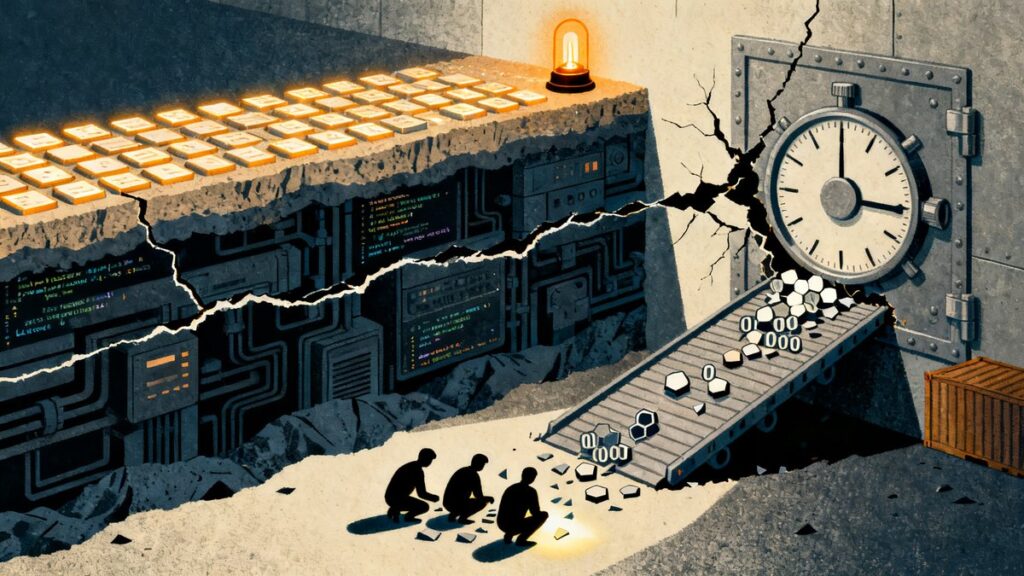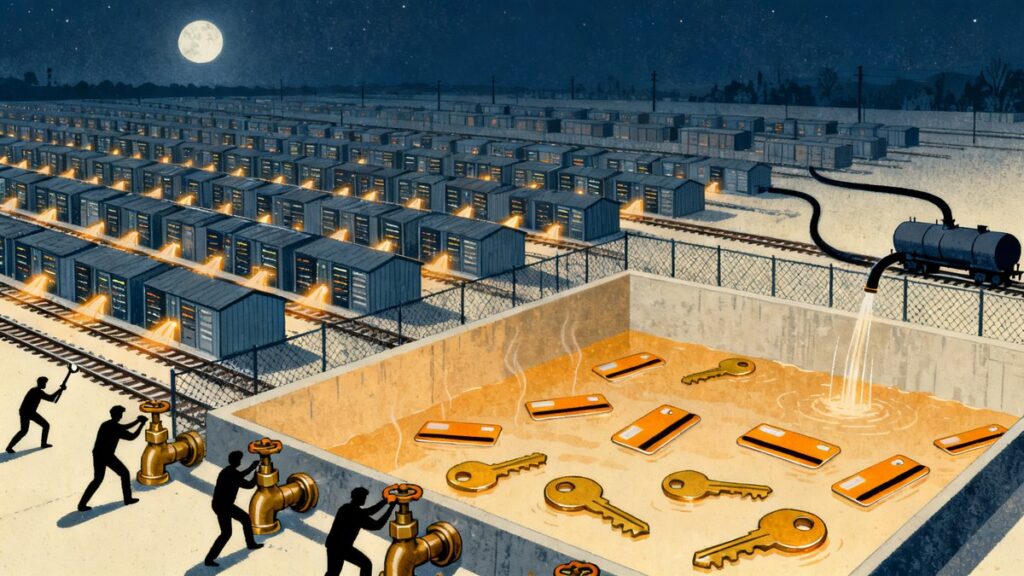
Reported October 14, 2026: ArtCraft is a free rebuild of Adobe’s Creative Suite, written in Rust by one developer working with Anthropic’s Claude Opus 5.5. PhotoCraft and PdfCraft are among the reported apps. That’s the whole news hook, and it’s already doing something stranger than the usual “Adobe killer” headline. It’s asking what software is still expensive for.
Because a demo can copy what you see on screen. A product has to survive the boring parts. Edge cases. File compatibility. Upgrades, trust, support. And the legal mess that shows up the second someone else recreates familiar behavior. ArtCraft makes step one look cheap. It doesn’t delete steps two through nine.
ArtCraft: one developer, Rust, Claude Opus 5.5
Credit, per the reporting, goes to Brandon Thomas.
An Atlanta-based software engineer posting under the Reddit handle “u/ai_art_is_art.” Rust is the language.
And Anthropic’s Claude Opus 5.5 did the heavy lifting during development. (Al Jazeera) I keep repeating those two details to people given that they’re the actual story. This isn’t a big company shipping yet another editor. It’s a named individual, one programming language.
And a general-purpose AI platform taking a swing at a category that a single commercial vendor has owned for decades.
I build and ship AI automation for a living.
So my read is unromantic: getting from an empty folder to something that opens and renders isn’t the same as owning a working product.
The model collapses the cost of the first draft. What it can’t supply is judgment. Which failures matter, which behaviors your customers quietly depend on, which shortcuts will burn somebody later. That’s the shift nobody is pricing in. A builder can now start with a much larger surface area on day one, which pushes the expensive work downstream into verification and maintenance. And if your whole defensibility story was “nobody else can afford to build this,” you don’t have that story anymore.
ArtCraft app list: PhotoCraft, PdfCraft, and Office alternatives
Here’s where it gets bigger than Adobe. The reported applications include PhotoCraft and PdfCraft. The project also announced WordCraft, DeckCraft, and GridCraft. Positioned as alternatives to Microsoft Word, Microsoft PowerPoint, and Microsoft Excel, respectively. (Al Jazeera)
Read that list again. It’s not one photo editor or one PDF utility. The ambition jumped straight from creative software into the office suite your entire company runs on.
The target was never a niche. Target: the assumption that a mature application needs a big company behind it before it can be useful.
It’s like a kitchen. Following a recipe is the easy part of being a cook. The actual job is Friday service, when three tickets stack up and the pan catches. And recipes were never what you were paying a head cook for. Feature lists are recipes.
So what are you actually paying for? Sit with that one before your next renewal. Maybe it’s a core feature. Maybe it’s a dependable workflow, compatibility with the files you already have, updates, support, or the quiet confidence that your work will still open later. A free substitute can kill a recurring cost and still hand you a brand-new operational one. If you’re rechecking every file, retraining everyone, or keeping the old tool installed for critical work, the price isn’t zero. You’re paying in attention and risk.
ArtCraft clean-room rebuild: the legal and compatibility questions
ArtCraft is framed as a clean-room rebuild of Adobe’s software. And I want to be careful here, as that label does less work than people assume. It describes an approach to reproduction. It isn’t a court ruling, a license, or a permission slip from the company whose software got rebuilt.
The practical test is harder than producing a similar-looking screen.
A serious evaluation asks whether files move reliably between tools, whether familiar workflows behave the way muscle memory expects. And whether the project can keep correcting its own failures. The reporting I’m working from confirms the project’s stated use of Rust and Claude Opus 5.5. What it doesn’t establish: compatibility results, production readiness, any support commitment, any legal outcome. (Al Jazeera) And I’ll be blunt about my own limits — I haven’t run these apps on a test machine. Everything I know about how they treat files comes from one news report. That’s a ceiling, not a conclusion.
The missing evidence is the point, not a footnote. This industry spent decades training buyers to judge products by feature lists. And AI-generated replacements make those lists nearly worthless, since a list can be assembled in an afternoon now. What lasts is whether the tool behaves correctly when your file is a mess and the stakes are real.
My contrarian take: “any app can now be rewritten” is a better warning for builders than for incumbents. Copying the visible part of an application is no longer the whole job. The job is proving the rewrite deserves a place in someone’s workflow.
FAQ: what people keep asking about ArtCraft
Is ArtCraft legal? Nobody knows yet, and anyone telling you otherwise is ahead of the evidence. Clean-room is a method, not a verdict. The reporting establishes no ruling, no license, and no permission from Adobe. Watch this space, don’t quote me in a deposition.
Can ArtCraft open Adobe files?
Unknown from the reporting available. Compatibility results weren’t established, so the only honest move is testing your own files.
The exact ones your business depends on, not the convenient demo ones.
Is ArtCraft ready for professional use?
Not proven. Production readiness and support commitments weren’t established either.
And those two things are usually what a business is actually buying when it writes the check.
Before you cancel anything
Do not cancel a critical subscription just since a free replacement has a convincing name.
Start contained instead. Pick a workflow you can recover from, keep the original tool installed.
And test the exact files and handoffs that matter to you.
A short checklist before you move anything important:
– Do the files you already use open correctly?
– Can you export into a format another tool reads?
– Does it survive the boring edge cases in your process?
– Can you find the source, the roadmap, and the issue history?
– Do you know where to report a failure and how to recover from it?
ArtCraft hands builders a useful signal even before those questions get answered.
A free rebuild of Adobe’s Creative Suite, implemented in Rust and developed with Claude Opus 5.5, makes it much harder for software companies to treat the first implementation as an untouchable moat. (Al Jazeera) The next moat is trust.
Small operators get to test cheaper tools without betting the business on a demo. Software builders get the tougher assignment — ship version one fast, then earn the right to be relied on.
If you’re evaluating ArtCraft, run one recoverable workflow and write down what breaks. Do that before you replace anything your business runs on.
Sources
– Al Jazeera — How AI apps are offering free substitutes for big tech software