Whole story in one line: coding agents outperform video models on visual reasoning benchmarks by more than 0.22, on a test built to suit the video models. The paper behind it, “Solve Vision with Code: Coding Agents Are Stronger Visual Reasoners Than Video Models,” went up on arXiv in November 2026 (arXiv), with coverage circulating by November 26, 2026 (AIToolmaps).
The headline pair: Codex, running as a coding agent, scored 0.923 on VBVR-Pro-Bench.
The strongest video model in the field managed 0.670 on the same 500 tasks.
That video model had been trained with reinforcement learning on the benchmark’s own task families. It studied the material. It still lost by more than 0.22.
Here is the direct answer, since that is what you came for.
On VBVR-Pro-Bench, a 500-instance suite of visual-reasoning tasks, three closed-model coding agents scored 0.923 (Codex with gpt-6-astra), 0.894 (Claude Code with Fable 5.1).
And 0.893 (Gemini CLI with Gemini 3.1 Pro), each more than 0.22 above the best video model. Both sides received the same first frame, the same prompt, and the same unmodified rule-based evaluator. The paper’s own conclusion, stated plainly: for tasks whose solutions can be computed from a first frame and a prompt, program synthesis is currently a substantially more reliable route to visual reasoning than video generation.
Anyone building automations should care. The gap this documents is about method, not marketing.
The scoreboard: coding agents vs video models on visual reasoning
| System | Type | Score |
| — | — | — |
| Codex with gpt-6-astra | Coding agent (closed model) | 0.923 |
| Claude Code with Fable 5.1 | Coding agent (closed model) | 0.894 |
| Gemini CLI with Gemini 3.1 Pro | Coding agent (closed model) | 0.893 |
| VBVR-Pro-Wan2.2-I2V-A14B | Video model | 0.670 |
| GLM-5 | Coding agent (open weight) | 0.572 |
Three details change what the numbers mean.
First, the sweep. The three closed-model agents led in every one of the five task categories, not merely the ones that happen to favor code. Abstraction, perception, spatiality, transformation, knowledge. All five went to the agents (arXiv).
Second, the handicap that did not help.
The strongest video model, VBVR-Pro-Wan2.2-I2V-A14B, scored 0.670 after being RL-trained on the benchmark’s task families with the evaluator itself as the verifiable reward (arXiv, Lacuna). Studying the test closed nothing. When preparation cannot close a gap that wide, the gap is not about preparation.
Third, the open weights. The best of 23 runnable open-weight models, GLM-5, reached 0.572 and finished above every video model except the RL-trained one (arXiv).
The open-weight path clears the entire general-purpose video field on this benchmark, at a level you can run on your own hardware.
One more thing the table shows and nobody flags. 0.894 and 0.893.
Two different companies, a single thousandth of a point apart, both more than 0.22 clear of the best video model. Whatever these agents are doing, it is not vendor luck.
Why coding agents beat video models on computable tasks
Start with the setup, because the setup is the argument.
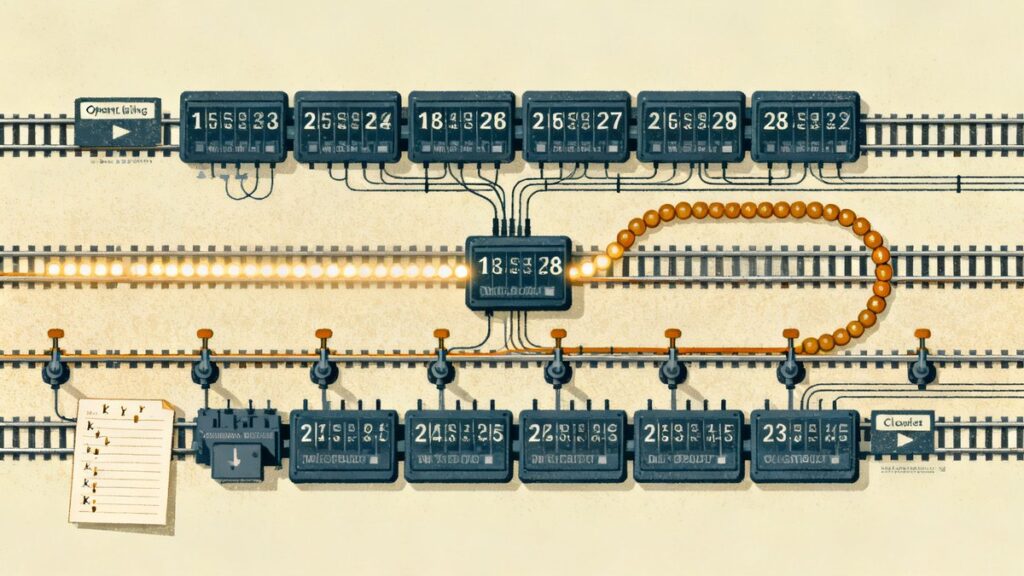
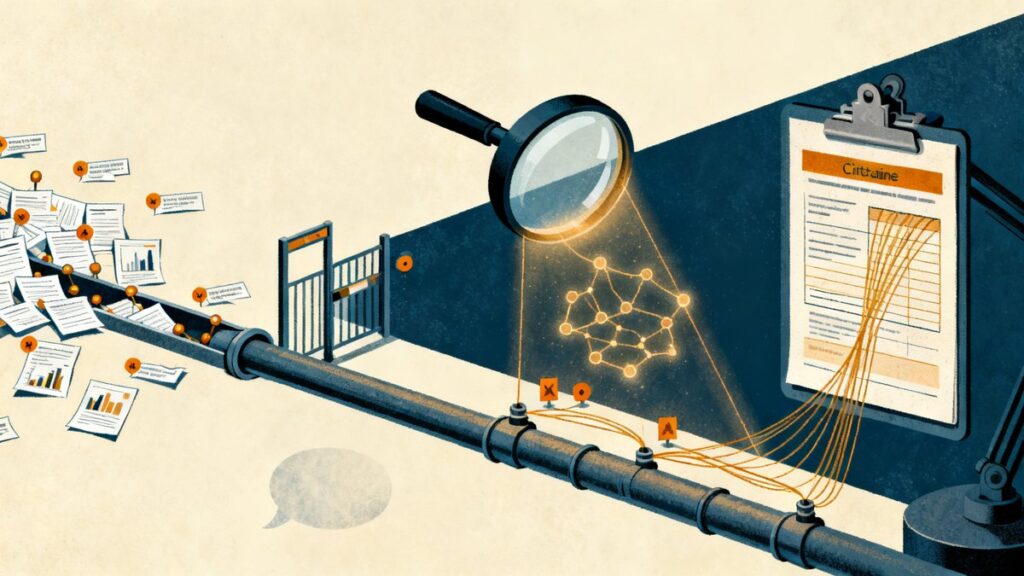
The video model receives a first frame and a prompt, then denoises pixels into an answer video. The coding agent receives the identical first frame and prompt, writes a program that renders the answer video. And hands the frames to the benchmark’s official evaluator (arXiv, The Model Wire). Nobody graded the agents by reading their code. Output gets scored by the unmodified rule-based evaluator. And an instance with no delivered video scores zero, exactly as it would for a video model that fails to generate.
Reads like a production config, not a lab rig. No access to the ground truth, the task generator, or the task metadata. No invoking an image or video generation model. CPU sandbox, standard Python imaging libraries, a 30-minute wall-clock budget, one attempt per instance (arXiv). VBVR-Pro-Bench itself is 100 task families with five instances each, scored across five cognitive categories. Abstraction, perception, spatiality, transformation, and knowledge. All with symbolic ground truth.
That last phrase is the hinge of the entire study.
Symbolic ground truth means a rule can check the answer. The moment a rule can check the answer, a program that computes it holds a structural advantage over a model that has to imagine it.
So my read: this is not a story about coding agents getting smarter.
It is a story about what happens when a task has a checkable answer. The benchmark covers tasks whose answers can be computed from the supplied frame and prompt (AIToolmaps). A program computes the answer and renders exact frames. A video model generates plausible-looking frames and hopes they match. A harder job wearing an easier job’s name tag.
Bakers already know how this goes.
Cooks who weigh flour on a scale get the same loaf every week. Cooks who scoop by feel get a separate bread each time, some of it fine, some of it a doorstop. Same recipe, same oven. The scale is computing. Scoop: guessing beautifully, and a video model is the best scoop ever built.
The boundary matters as much as the result.
This covers visual tasks with computable answers and a required video output, not everything video models are built for. A separate benchmark, Video2World, with 222 reconstruction instances derived from 189 robot and human demonstration videos (arXiv), tests a other capability. Nothing in this paper speaks to it.
If your job is reconstructing what happened in a demonstration video, these numbers do not tell you which tool wins.
One credibility point deserves more attention than it gets.
The paper introduced no new dataset; the evaluation relies entirely on the existing VBVR-Pro-Bench, a benchmark built to test visual reasoning in video models (Lacuna). The agents did not get a test written to flatter them. They walked into a test written for the other side, under the other side’s rules.
And took the top of the table.
What coding agents beating video models means for your stack
You already pay for the winner.
The three systems at the top of the table are Codex, Claude Code, and Gemini CLI.
Tools a solo operator provisions with a subscription, not a research grant.
If you are a small business owner or an indie developer using coding agents daily, the visual-reasoning margin on computable tasks is already in your bill.
Here is a question worth a coffee. How many of the tasks you currently route to a generative model have answers a rule could check? Nobody keeps that inventory. The honest answer is usually more than you thought.
Three moves I would make off this paper.
Reroute checkable tasks. Any job whose output a rule can verify, hand it to a coding agent that computes and renders the answer. Stop paying a generative model to approximate something a program derives exactly.
Steal the protocol as a deployment recipe. CPU sandbox, standard Python imaging libraries, a 30-minute wall-clock budget, one attempt. Bounded time. Checkable output. No sprawl. That is how I would run any agent job in production.
Ask vendors for the score. Next time someone pitches a video model as a reasoning engine, ask how it performs on a benchmark with symbolic ground truth. The benchmark’s own strongest entry, trained on the task families themselves, sits at 0.670.
The uncomfortable takeaway for the model industry: generative stopped being an advantage the moment the answer became checkable.
The uncomfortable takeaway for builders is the inverse. More of the tasks we hand to fancy models are computable than we like to admit. We have been renting industrial equipment to butter toast.
FAQ: coding agents vs video models
Do coding agents really outperform video models on visual reasoning?
On tasks with symbolic ground truth, yes. And it is not close. 0.923 against 0.670 across the same 500 tasks, same first frame, same unmodified evaluator.
The claim covers tasks whose answers can be computed from a first frame and a prompt, not every visual task a video model can attempt.
When should I still use a video model?
Whenever the deliverable is footage only generation can produce.
Reconstruction is the obvious case — Video2World has 222 reconstruction instances derived from 189 robot and human demonstration videos. And this paper says nothing about that job. If there is no checker to write, the advantage flips.
What is VBVR-Pro-Bench?
A 500-instance suite: 100 task families, five instances each, scored across five cognitive categories — abstraction, perception, spatiality, transformation.
And knowledge — all with symbolic ground truth.
It was built to test visual reasoning in video models. And the coding agents took it over under the video models’ own rules.
Can an open-weight coding agent compete?
GLM-5, the best of 23 runnable open-weight models, scored 0.572 — above every video model except the RL-trained VBVR-Pro-Wan2.2-I2V-A14B, on hardware you own.
Where this leaves you
Rule of thumb after reading the paper: reach for a video model when the deliverable is footage only generation can produce. Reach for a coding agent when the task is “given this input, produce this output” and a program can check it. That second category is bigger than it looks, since diagrams, transforms, counts. And spatial relationships all have frames, prompts, and right answers.
Computable beats generative whenever you can write the checker. And you can write the checker more often than you think.
Pick one task in your stack where a generative model is currently approximating an answer a program can render exactly.
Give a coding agent 30 minutes, one attempt, and a sandbox, and see what comes back. Then read the paper yourself (arXiv) and check my numbers against the table, since that is exactly the discipline the benchmark is arguing for.