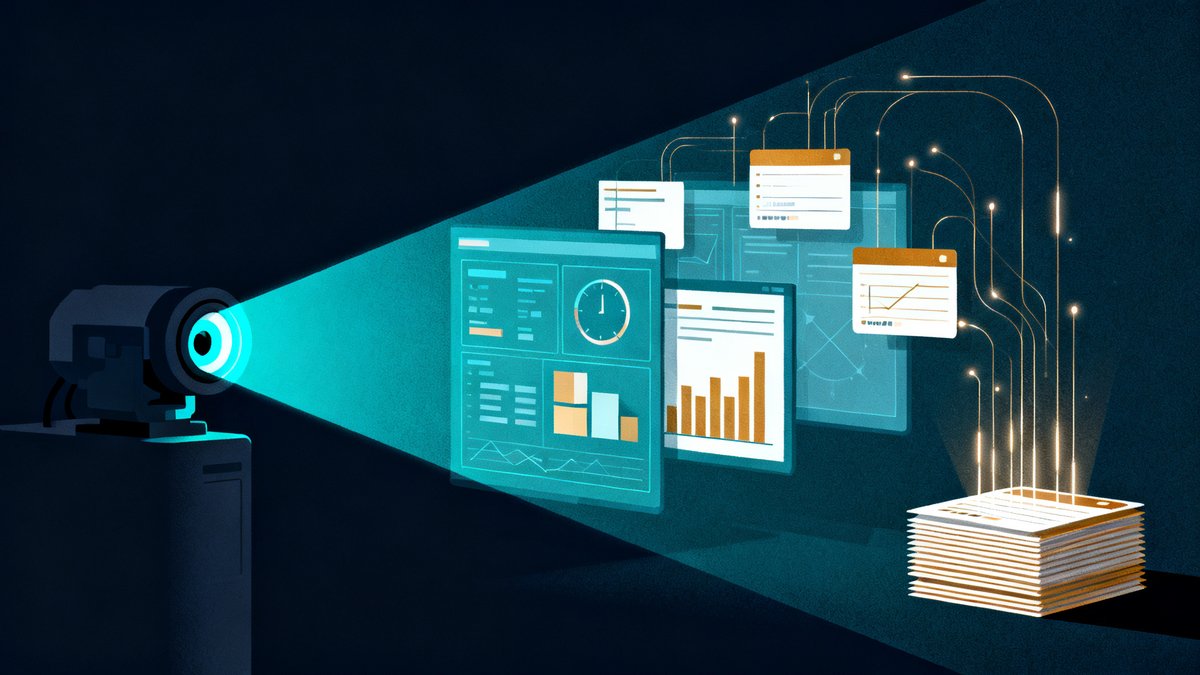
DeepSeek V4 Flash Vision landed on August 21, 2026, and the model ID doesn’t bother hiding anything: `deepseek-v4-flash-vision-exp`. Experimental. Multimodal. The text-only V4-Flash with eyes. It reads images and screenshots alongside text, and it bills each image at up to 384 tokens.
DeepSeek’s claim is parity with its sibling on everything that model already did. Agents, reasoning, and world knowledge — plus things the sibling couldn’t do at all. Describe a picture. Pull text off a screenshot. Analyze a chart. You reach it through Chat Completions, Messages.
And Responses, and images go in as base64, external URLs, or through the Files API.
All of it at V4-Flash rates. The Next Web’s summary compresses the release into two clipped lines: it “takes the text-only V4-Flash and adds the ability to read images and screenshots,” and it “can then act on what it sees.”
That second quote is the entire story if you build automations for a living. A model that acts on what it sees is a different animal from one that needs the world transcribed for it first. I spend my weeks wiring workflows for small businesses. And the expensive step in nearly every pipeline is the same one: a human reading a screen and typing what it says. This release points straight at that step.
DeepSeek V4 Flash Vision: What Shipped
Skip the launch tweet and look at the mechanics. DeepSeek’s release notes confirm the model went live on the DeepSeek API Platform on August 21, 2026, under the model ID `deepseek-v4-flash-vision-exp`. The vision guide lists the use cases without ceremony: describe pictures, read text from screenshots, analyze charts, and more.
The developer-facing details:
– Mixed text and image input in a single request
– Images via base64, external URLs, or the Files API
– Chat Completions, Messages, and Responses endpoints
– Images tokenized for billing at up to 384 tokens each, at V4-Flash pricing
Underline the billing line.
An image costs you at most 384 tokens, which means a screenshot-heavy pipeline carries a per-image ceiling you can compute before you run anything. Not a surprise you find at invoice time. Predictable beats cheap in client work, and it isn’t close.
There’s a text-parity claim too, and it’s the quiet half of the pitch.
DeepSeek says the model “matches DeepSeek-V4-Flash on text capabilities,” so you’re not trading reasoning away to get eyes. If that holds in your workloads, one model now covers both halves of a job that used to need two. And that’s the whole argument in a sentence.
DeepSeek V4 Flash Vision Benchmarks vs Opus-4.8
Here’s DeepSeek’s own framing: on multimodal agent benchmarks, V4-Flash-Vision-Exp makes “a major leap over V4-Flash” and lands “close to Opus-4.8.” The Next Web reported the numbers under that sentence — 36.5 against 26.2 on ApexBench. And 27.3 against 25.2 on Agents’ Last Exam.
Read those pairs twice, because they’re saying two things at once.
The gap over V4-Flash is wide. And the jump over its own sibling is the part I actually care about: vision didn’t arrive at the cost of agent performance, which is exactly what you’d worry about with a camera bolted onto a text model. Meanwhile the “close to Opus-4.8” line is DeepSeek’s, measured on benchmarks DeepSeek picked. And “close to” is doing quiet work in that sentence.
I don’t ship client work on “close to” anything, and you shouldn’t either. What I take from the numbers is simpler. The agent scores moved when vision showed up, and that’s the direction you want. This isn’t a text model with a lens taped to it. For a lean operation, class parity matters less than whether it reads your specific screenshots accurately enough to act. And that’s kinda the whole question. It doesn’t have a leaderboard answer. It has an afternoon-on-your-own-data answer.
Screenshot Reading For Small-Business Automation
DeepSeek’s X account compressed the strategy into five words: “Multimodality unlocks more agent use cases.” Build around that line.
In the businesses I work with, the systems that most need automating are trapped behind screens with no export button. The invoice portal, the shipping dashboard, the legacy tool exactly one person can navigate. Screenshot: the interface of last resort. And until now an automation that needed data from those screens meant OCR plus a cleanup pass plus a text model, with failures stacking at every handoff.
One model that reads a screenshot and acts collapses that whole stack. Caixin Global reported on August 22, the day after launch, that DeepSeek opened its multimodal API service to developers. So this isn’t a demo video.
It’s an API you can point at the problem today.
Start with the dull use cases, as dull is where the money lives.
Monitor a screen, capture on change, send the image with instructions, get structured data back.
Read a chart and draft the summary email. Take an error dialog and file a ticket with the right fields already filled in.
None of that needs frontier intelligence — it needs reliable eyes and text competence inside the same request, which is precisely what’s on offer here.
What Experimental Means For Production
The API docs label this an experimental model, and I read that word as a contract clause.
Experimental can mean changed without notice, degraded under load, or renamed next month.
At least the model ID admits it. The “-exp” suffix is sitting right there in the name.
My rule for client work is boring and non-negotiable: an experimental model never sits inside a production path I can’t swap in a day.
Put the model ID in config.
Wrap the call in your own interface.
Keep a fallback vision model behind the same wrapper.
If `deepseek-v4-flash-vision-exp` disappears or degrades, your pipeline survives a config change instead of turning into a weekend emergency.
The flip side is that this is the cheapest testing window you’ll ever get.
Vision plus agent competence at V4-Flash pricing, with a 384-token cap per image, means you can burn through your real screenshot backlog and find out exactly where it breaks before a client does. A failure discovered on your own data is called evaluation.
The same failure discovered in production is called an incident.
DeepSeek V4 Flash Vision FAQ
How much does an image cost?
Each image is tokenized for billing at up to 384 tokens, charged at V4-Flash rates. That’s a per-image ceiling you can compute before running a single job.
Which endpoints support it?
Chat Completions, Messages, and Responses. Images go in as base64, external URLs, or through the Files API.
Is it stable enough for production?
It’s experimental, per DeepSeek’s own API docs, which can mean changed without notice or renamed next month. Fine for evaluation; wrap it before it touches a client path.
What’s it best at for automation?
Reading text off screenshots, describing pictures, and analyzing charts — then acting on the result in the same request. Monitor-and-extract jobs, chart summaries, error dialogs filed as tickets.
How close is it to Opus-4.8, really?
DeepSeek says “close to Opus-4.8” on multimodal agent benchmarks, with 36.5 against 26.2 on ApexBench and 27.3 against 25.2 on Agents’ Last Exam over V4-Flash. “Close to” is their word, on their benchmarks. Test it on your own screenshots before you believe it.
Which workflow in your business still runs on a human reading a screen and typing what it says?
You already know, don’t you.
Point `deepseek-v4-flash-vision-exp` at a hundred real examples behind a swappable wrapper. And measure accuracy yourself, since no benchmark will answer that for you. If it clears your bar, you just deleted a manual step from the business. If it doesn’t, you learned the failure mode for the price of a coffee. And you’ll be first in line when the non-experimental version lands.
Sources
– DeepSeek release notes, August 21, 2026
– DeepSeek vision guide
– DeepSeek API docs, model updates
– The Next Web: DeepSeek V4 Flash Vision benchmarks
– Caixin Global: DeepSeek enters the multimodal AI race