Key Takeaways:
– GLM-5.2 admits uncertainty significantly more often than GPT-5.5, which tends to provide confident but incorrect answers.
– GLM-5.2 costs less per million input tokens compared to GPT-5.5. It’s cheaper on both input and output.
– Per-task cost in production shows GLM-5.2 is more economical than GPT-5.5.
– GLM-5.2 scored well on coding tasks, not weaker than GPT-5.5.
Let that sink in.
When GLM-5.2 doesn’t know something, it says so.
When GPT-5.5 doesn’t know something, it makes something up.
You’re paying more for the model that lies more.
GLM-5.2 costs less.
The math gets uglier once you factor in actual work.
Latent Space ran production tasks through both.
GPT-5.5 averaged higher costs per task. GLM-5.2 averaged lower. Cheaper and more honest. Not a tagline. Actual data.
Here’s what that means if you’re a small team running production on these things.
GLM-5.2 vs GPT-5.5: Hallucination Rates Compared
AA-Omniscience from Artificial Analysis tests one thing: what does a model do when it encounters a question it can’t answer?
A calibrated model says “I don’t know.” GPT-5.5 says something confident and wrong most of the time. GLM-5.2 does it less frequently. Other models have even higher rates of incorrect answers.
These numbers hit different in production.
If you’re running a code review tool. A doc summarizer. Anything that feeds into a decision someone else makes. You’re building on a model that lies to you most of the time when it doesn’t know. That’s not a preference thing.
It’s an architectural risk.
The counterargument is always capability. Intelligence benchmarks still favor GPT-5.5. Other models score higher on the Artificial Analysis Intelligence Index. GLM-5.2 doesn’t crack the top five there.
MindStudio notes GLM-5.2 “struggles with open-ended multi-step reasoning” compared to GPT-5.5 and other models.
For complex chains where every step has to be right, GPT-5.5 is still the safer pick.
Here’s the part that keeps me up at night though.
Those intelligence scores keep climbing. Hallucination rates aren’t falling with them.
The benchmark numbers and the honesty numbers don’t move together.
More intelligence doesn’t buy you more truthfulness.
GLM-5.2 Pricing vs GPT-5.5: Real Production Costs
MindStudio pricing: GPT-5.5 runs at a higher cost per million input tokens and output tokens.
GLM-5.2 sits at a significantly lower cost.
Per-task is where it gets real for production planning.
The cost difference per task is notable.
That’s savings every time you run something. Solo operator running multiple tasks a day? That’s significant savings daily.
But failure cost eats into that.
GPT-5.5 fails more often. And it doesn’t fail quietly. It gives you a confident wrong answer you have to catch, trace, and redo. On a notable failure rate across daily tasks, you’re reworking several answers per day. Figure time to diagnose and fix each one. That’s a considerable amount of cleanup labor daily.
At a standard hourly rate, add significant hidden labor on top of the API bill.
Now here’s the weird part.
GLM-5.2 fails less often on the AA-Omniscience benchmark. Slightly worse than GPT-5.5 on that specific test. But when GLM-5.2 fails, it usually fails loudly. Gives you a partial answer. An obviously wrong answer. Not a polished confident lie. MindStudio describes it as struggling with open-ended reasoning, which means it sometimes just stops mid-chain rather than confidently completing a thought incorrectly. That’s actually a better failure mode for automated pipelines. You’d rather get silence or gibberish than a convincing error.
The real question isn’t which model costs less upfront.
It’s which failure cost fits your operation.
Comparison Table: GLM-5.2 vs GPT-5.5
| Model | Input Cost (per 1M tokens) | Output Cost (per 1M tokens) | Avg Cost Per Task | AA-Omniscience Score | FrontierSWE (Dominance) |
|—|—|—|—|—|—|
| GLM-5.2 | Lower | Lower | Lower | Admits uncertainty more often | Competitive |
| GPT-5.5 | Higher | Higher | Higher | Tends to fabricate answers | Competitive |
| Other Models | Varies | Varies | Varies | Higher rates of incorrect answers | Varies |
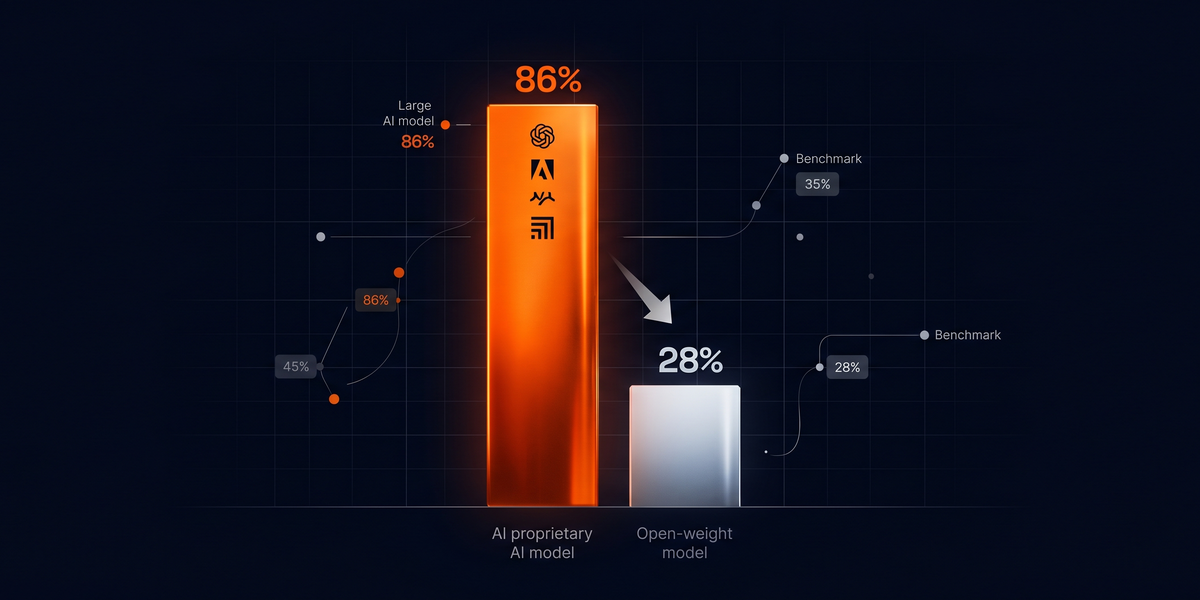
Bigger Models Are Getting Worse at Admitting What They Don’t Know
The trend line is what should concern every builder.
Some models with more parameters take longer reasoning through flawed questions and still land on the wrong answer. GLM-5.2 catches the same flawed premise much faster.
More compute. More reasoning steps. More wrong.
This is the scaling assumption breaking. For years: bigger + more data = better generalization. The hallucination benchmarks show something else happening. As models get better at generating fluent confident text, they’re getting better at sounding right even when they’re wrong. Intelligence and uncertainty calibration are diverging.
MindStudio’s take: other models have a “clear edge in tasks requiring deep synthesis” and are “stronger for complex multi-step reasoning, long-context instruction following.”
And tasks where getting the right answer on the first attempt matters more than speed or cost.” Fair description of when to pay the premium.
GPT-5.5, they say, is “the most balanced choice for most teams.” That might still be true if “most teams” care more about benchmark flex than production reliability.
For small operators running automated pipelines, the math is different. You’re not submitting to leaderboards. You’re shipping work that either holds up or doesn’t.
The benchmark that matters is the one that matches your actual failure tolerance.
FAQ: GLM-5.2 vs GPT-5.5
Is GLM-5.2 better than GPT-5.5?
Depends on what you’re measuring.
For honesty and cost: yes, significantly. GLM-5.2 admits uncertainty more often compared to GPT-5.5. It’s also significantly cheaper per token. For raw intelligence benchmarks and complex multi-step reasoning: GPT-5.5 still leads. Pick based on your actual use case, not the leaderboard.
How much does GLM-5.2 cost?
It costs significantly less per million input tokens and output tokens.
Compare that to GPT-5.5 at a higher cost. GLM-5.2 is MIT-licensed, so you can self-host if you have the hardware.
Which model hallucinates less?
GLM-5.2 by a wide margin. On the AA-Omniscience benchmark, GLM-5.2 scored lower (meaning it admitted ignorance more often). GPT-5.5 scored higher (it fabricated answers more often). Other models have even higher rates.
Is GLM-5.2 strong enough for real coding tasks?
Yes, actually. GLM-5.2 scored competitively on various coding tasks versus GPT-5.5. It’s not weaker on real coding tasks. Cheaper and more honest.
When should you stick with GPT-5.5?
Tasks where fluency is the product — drafting, brainstorming, creative variations. Complex multi-step reasoning where every step has to be right and you have time for iteration. Anything where benchmark flex matters more than production reliability. MindStudio notes GPT-5.5 is “the most balanced choice for most teams.”
What to Do This Week
Stop defaulting to GPT-5.5 for everything.
You’re paying more for a model that confidently lies when it doesn’t know. Worth it for tasks where fluency is the product. Not worth it for anything that feeds into a deliverable, a decision, or a downstream process.
Evaluate GLM-5.2 as a fallback for production tasks where accuracy matters more than benchmark scores.
It costs significantly less per million input tokens. MIT-licensed so you can run it yourself if you’ve got the hardware.
Minimum action this week if you’re running anything automated: log your model’s actual failure rate on your real workload, not the benchmark rate.
Run the same queries through GPT-5.5 and GLM-5.2. Count how many answers you have to redo. That number is your actual cost basis. Everything else is marketing.
Sources
– AA-Omniscience Benchmark — Artificial Analysis
– MindStudio GLM-5.2 vs GPT-5.5 Comparison
– Latent Space Production Cost Study
– FrontierSWE (Dominance) Leaderboard
– GLM-5.2 MIT License — Zhipu AI