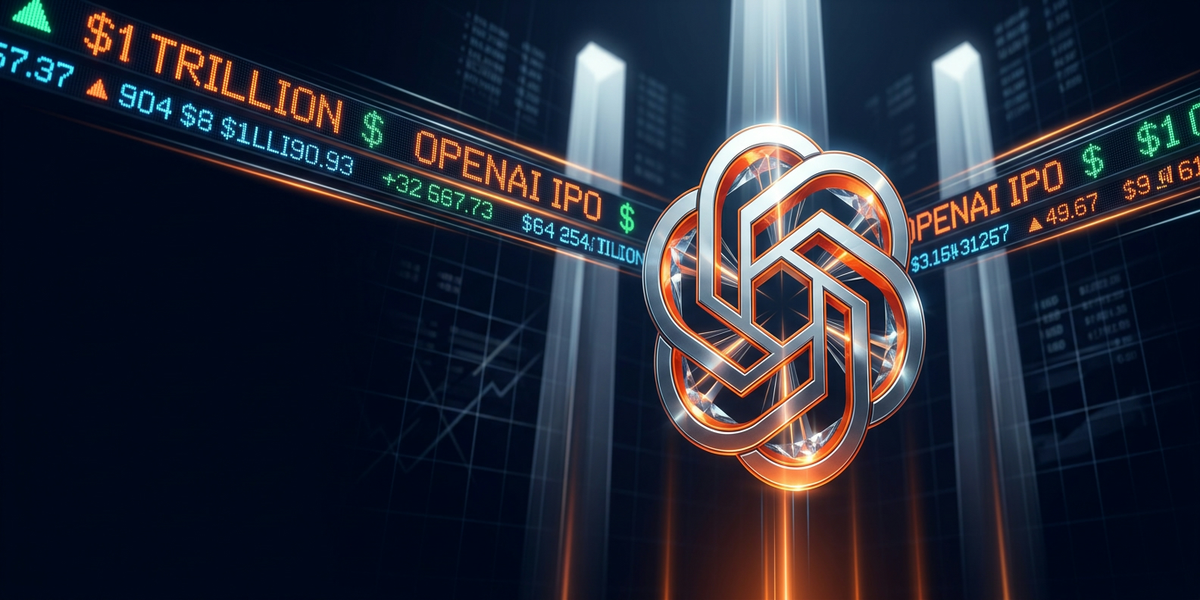
OpenAI filed its S-1 with the SEC on June 9, 2026. The target valuation: near $1 trillion. The raise: roughly $60 billion through the floatation. Three weeks earlier, Anthropic filed its own S-1. Three days later, SpaceX begins trading at $1.75 trillion. Wall Street is making the biggest single-quarter bet on AI infrastructure in a decade.
If you’re running a small business or solo operation that depends on AI APIs, that matters more than the headline number.
Here’s why. When private companies answer to public shareholders, their behavior changes. Quarterly earnings pressure doesn’t care about your startup’s burn rate. The free tier that kept your side project alive? That’s a line item that needs justifying. The API pricing that felt stable? That’s a variable that gets optimized the moment a CFO needs to show margin improvement.
The Timing Tells You Everything
OpenAI dropped its IPO filing hours after Apple’s WWDC keynote. That wasn’t accidental. Two power plays in the same news cycle, and the balance of power is shifting. From device platforms to model platforms. Apple controls your phone. OpenAI wants to control your workflow.
The PBC conversion in October 2025 is what made this filing legally possible. Without that structural change, traditional IPO was off the table. Now it’s not just possible. It’s scheduled. Confidential SEC filing in Q2 2026, public S-1 amendments in Q3, official investor roadshow. And an IPO launch targeted for Q4 2026.
Goldman Sachs and Morgan Stanley are running the deal.
The roadmap is precise. Ambition: naked. A company that burned through billions training GPT models wants to raise sixty billion more. From you, from me, from pension funds and retail investors. And it’s structuring the sale to include both institutional players and regular retail participants through Robinhood and Fidelity, plus a Dutch auction format similar to Google’s 2004 IPO to ensure broad access. That’s not accidental generosity.
It’s deliberate ownership diffusion before the lockup even starts.
What Public Markets Do to AI Companies
Here’s the thing: the moment OpenAI rings the opening bell, every pricing decision gets a new audience.
Institutional analysts will ask about unit economics. Hedge funds will model margin trajectories. Quarterly guidance will constrain what was previously experimental.
On my own client work, I’ve watched AI vendors quietly tighten their free tiers over the past 18 months. Nothing dramatic. A few percentage points here, a rate limit there. Under the radar enough that most operators didn’t notice until they hit the ceiling.
Now imagine that same pressure. But the company’s CFO is presenting to investors every 90 days and the answer to “how do we get to $280 billion in annual revenue by 2030” has to be real, not aspirational.
Anthropic’s annualized revenue reportedly hit $19 billion.
That’s real. But $19 billion against the infrastructure spend required to stay competitive? That’s still a gap. SpaceX trades at $1.75 trillion on launch contracts and Starlink revenue. OpenAI has neither — it has API calls and subscription seats. The path to $1 trillion needs a story, and the story needs consistent growth.
That story has one audience: you. The developer running three AI features on a $200/month plan. The agency using Claude for client deliverables. The solo founder who’s been living in the free tier because the paid tier didn’t pencil out yet. Public markets don’t fund goodwill. They fund trajectories.
The Squeeze Is Already Starting
One report says OpenAI is targeting a public listing in Q4 2026.
That’s six months away. The IPO roadmap includes Q3 2026 public S-1 amendments and an official investor roadshow. By the time you read this, the financial press will have picked apart every line of that filing. Analysts will model every pricing scenario. And somewhere in those models, your API usage is a data point.
My agency runs AI automation for clients across e-commerce, content, and ops. The pattern is consistent: every time a major model provider raises capital or changes structure, the pricing floor shifts within 6-9 months. Sometimes it’s a free tier cut. Sometimes it’s a token price adjustment. Once, memorably, it was a model deprecation that forced an emergency migration.
I can’t predict exactly what changes when OpenAI goes public.
Nobody can. The filing details are confidential until the S-1 amendments hit in Q3. But I can tell you this: three companies collectively targeting over $200 billion in equity issuance in one quarter is not background noise. It’s capital markets signaling that AI infrastructure is the new utility. And utilities don’t stay cheap once they’re publicly traded.
What You Should Actually Do
Audit your model dependencies before Q4. That means knowing exactly which providers you’re calling, what you’re paying per token or per call. And which features would break if a price changed by 30%. Build your list now, not after the first quarterly report forces a pricing announcement.
Consider the directed share program OpenAI is exploring with Robinhood and Fidelity. Retail participation in AI IPOs is rare. If you’re eligible, it might be worth a position. Not as you’ll beat the IPO price, but since you’ll understand the incentive structure from the inside.
When your provider’s stock drops 15% on a miss, you’ll understand why the free tier just got thinner.
Diversify your model layer if you haven’t. Anthropic, Google, Mistral, and open-source options like Llama all have API surfaces. No single provider should account for more than 40% of your AI spend. That’s not financial advice — it’s risk management for operators who’ve been burned before.
The $1 trillion question isn’t whether OpenAI can justify its valuation.
It’s whether the operators who built on its API can survive the answer. Wall Street made its bet. Your move.