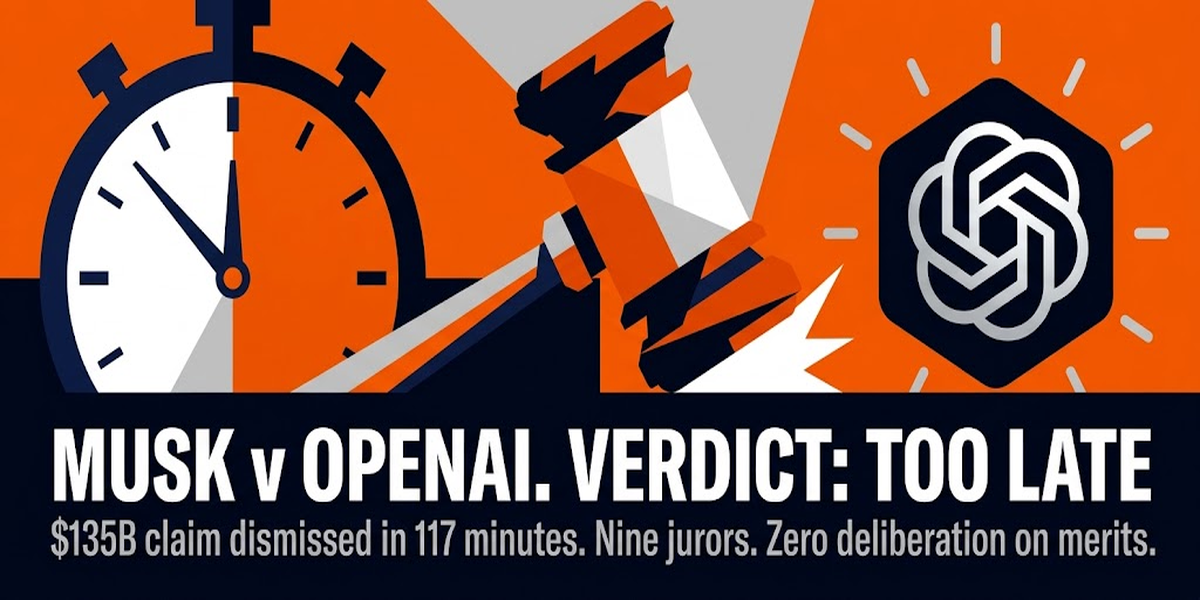
Nine jurors. Two hours. Done.
May 18th, 2026. California.
They looked at what Elon spent years building and said no. Every claim dismissed.
Every dollar gone.
Nobody’s talking about why this matters if you’re running production on their API.
You’re not watching from the sidelines.
You’re already in the building.
The Case Died on a Deadline. That’s the Whole Story.
Musk’s legal team argued OpenAI secretly pivoted from nonprofit to profit machine.
Built this damages model. $78.8 billion.
Conservative, they said.
Judge called it “devoid of connection to the underlying facts.” Ouch.
But here’s what nobody’s mentioning.
She never actually ruled on whether the flip happened.
Statute of limitations killed it. Three years. Clock ran out. Done.
His camp’s calling it a “calendar technicality.” Sure.
Doesn’t make the dismissal less final. Ninth Circuit might revive things. Might not.
Doesn’t matter right now.
The evidence never even got a look.
That’s the part that stings.
OpenAI’s IPO Path Just Cleared
Before last week, OpenAI was inching toward a public offering while dodging legal bullets.
If Musk had won on the merits, courts could’ve forced restructuring. Hit them with damages. Changed everything.
That risk? Gone. Not smaller. Not delayed. Gone. The litigation overhang. That was the thing blocking everything — just evaporated.
Nine jurors made it disappear in 117 minutes.
You might not own stock.
Might not care about Wall Street.
But here’s what’s shifting: a public company answers to shareholders first. Quarterly targets. SEC filings.
Investor relations people scrambling every time something breaks.
Private labs don’t work like that.
They optimize for research.
For capability. For shipping things that might not have quarterly numbers at all.
Public companies optimize for reportable metrics.
The products won’t transform overnight.
But the incentives behind them will shift.
Hard.
If you’re building critical workflows on OpenAI infrastructure, start thinking about what “public OpenAI” actually looks like.
Different priorities. Other pressures.
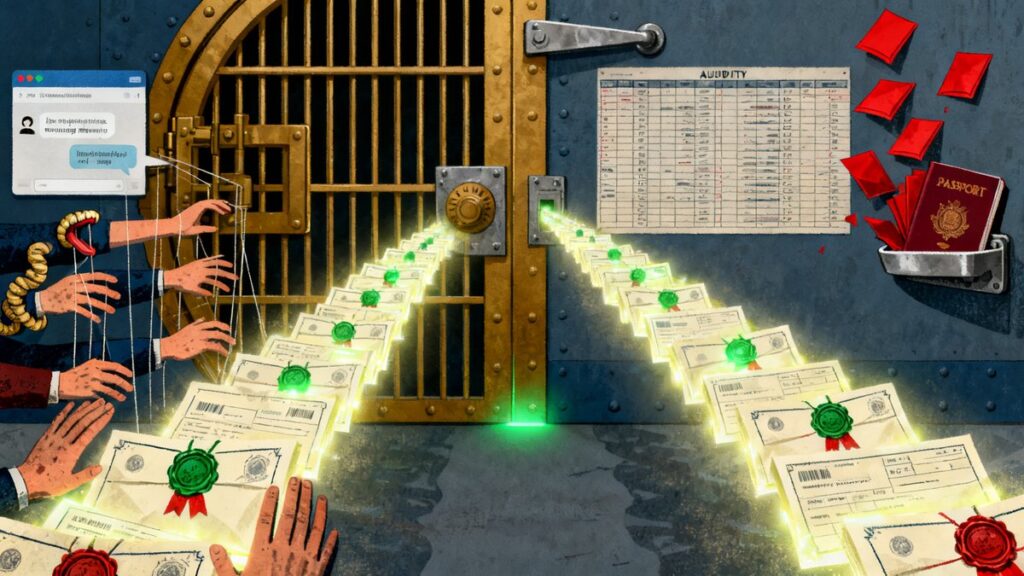
Audit Your Stack. For Real This Time.
Look, Musk’s appealing. Ninth Circuit could theoretically overturn the statute ruling. Fine. Real possibility.
But you aren’t a plaintiff.
You’re running a business right now.
So do this. Actually do it.
Audit your OpenAI dependencies.
Not a casual “yeah we’re using GPT-4.” I mean drill down.
What happens when pricing changes? When terms shift? When availability drops in ways you can’t predict or control?
A company prepping for an IPO has margin incentives a nonprofit research lab never had.
Those incentives will eventually show up in your API bill. Maybe not this quarter. Maybe not next.
But it’s coming.
Document your fallback stack.
Which models could you swap to if OpenAI’s costs jump 40% after the offering?
What if tier pricing changes? If they introduce usage caps?
This isn’t panic.
Vendor risk management 101. Boring stuff. Important stuff.
The verdict didn’t create new risk.
It just removed the legal constraint keeping OpenAI’s corporate structure frozen.
A public company is stable.
It isn’t necessarily a predictable vendor.
Build this audit into your quarterly review. Set a reminder. Whatever it takes.
You’re building on infrastructure one step closer to being a public market instrument.
Not scared. Just ready.