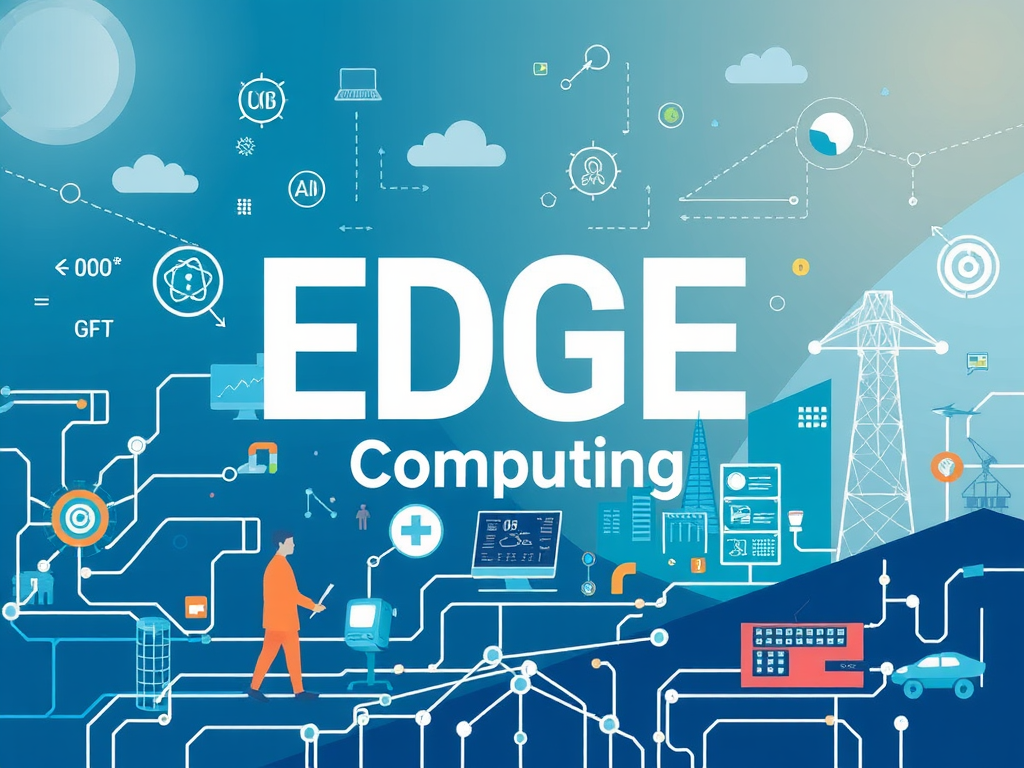
Edge Computing AI Solutions: Bringing Intelligence Closer to the Data
I. Introduction
Imagine a bustling city intersection where traffic lights adjust in real-time based on current traffic flow, minimizing congestion and improving commute times. Or consider a remote oil rig where equipment failures are predicted weeks in advance, preventing costly downtime and ensuring worker safety. These scenarios, and countless others, are becoming a reality thanks to Edge AI – a groundbreaking technology that brings artificial intelligence closer to the source of data.
But what exactly are Edge Computing and Artificial Intelligence, and what happens when you combine them? Let’s break it down.
Clear Definitions
Edge Computing refers to processing data near the edge of your network, where the data is generated, instead of relying solely on centralized data centers or cloud servers. This proximity reduces latency, saves bandwidth, and allows for faster, more reliable decision-making.
Artificial Intelligence (AI) encompasses a wide range of techniques and algorithms that enable computers to perform tasks that typically require human intelligence, such as learning, problem-solving, and decision-making. Machine learning, a subset of AI, allows systems to learn from data without explicit programming.
Introduction to Edge AI
Edge AI is the fusion of these two powerful technologies. It involves deploying AI models and algorithms on Edge devices, allowing them to analyze data and make intelligent decisions locally, without the need for constant communication with the cloud. This synergy unlocks a whole new realm of possibilities, enabling real-time insights, enhanced security, and autonomous operations across various industries.
Thesis Statement
Edge AI solutions are poised to revolutionize numerous sectors by providing faster, more efficient, and secure data processing capabilities. This blog post will explore the myriad benefits, vast potential, and transformative impact of Edge AI, showcasing how it’s reshaping industries from manufacturing and retail to healthcare and smart cities.
II. Understanding Edge Computing
To fully appreciate the power of Edge AI, it’s crucial to understand the foundational principles of Edge Computing.
Definition and Explanation
Edge Computing fundamentally shifts the paradigm of data processing. Instead of sending massive amounts of data to centralized cloud servers for analysis, Edge Computing brings the processing power closer to the data source – the “edge” of the network. This can involve processing data on devices like smartphones, sensors, industrial machines, or dedicated Edge servers located near the data source. The primary goal is to reduce latency, conserve bandwidth, and improve overall system performance.
Key Characteristics
Edge Computing is characterized by several key attributes:
- Low Latency: By processing data locally, Edge Computing significantly reduces the time it takes to analyze data and respond to events. This is crucial for applications requiring real-time decision-making, such as autonomous vehicles and industrial automation.
- Reduced Bandwidth: Sending raw data to the cloud consumes significant bandwidth. Edge Computing reduces this burden by processing data locally and sending only relevant insights or summaries to the cloud.
- Enhanced Security: Processing data on-site reduces the risk of data breaches during transmission to the cloud. Sensitive data can be analyzed and stored locally, minimizing exposure to external threats.
- Autonomous Operations: Edge devices can operate independently, even when disconnected from the cloud. This is essential for applications in remote locations or environments with unreliable network connectivity.
Examples of Edge Devices
A wide range of devices can serve as Edge nodes, depending on the specific application:
- Sensors: Environmental sensors, industrial sensors, and wearable sensors generate vast amounts of data that can be processed locally for real-time monitoring and control.
- IoT Devices: Smart home devices, connected vehicles, and industrial IoT (IIoT) devices all contribute to the growing volume of Edge data.
- Smartphones: Smartphones are powerful Edge devices capable of running AI models for tasks like image recognition, voice processing, and augmented reality.
- Gateways: Edge gateways act as intermediaries between Edge devices and the cloud, providing data aggregation, filtering, and security functions.
- Embedded Systems: Industrial control systems, robotics, and medical devices often incorporate embedded systems that can perform Edge processing.
General Benefits of Edge Computing
Beyond the key characteristics, Edge Computing offers a multitude of benefits:
- Speed: Faster data processing leads to quicker insights and faster response times.
- Cost Savings: Reduced bandwidth consumption translates to lower data transmission costs.
- Reliability: Autonomous operation ensures continued functionality even in the absence of network connectivity.
- Scalability: Edge Computing enables distributed processing, making it easier to scale applications across a large number of devices.
III. The Power of AI at the Edge
While Edge Computing provides the infrastructure for distributed data processing, AI brings the intelligence. Deploying AI models at the Edge unlocks a new level of automation, efficiency, and responsiveness.
AI and Machine Learning Recap
Let’s quickly recap some core AI concepts relevant to Edge applications:
- Machine Learning (ML): A subset of AI that allows systems to learn from data without explicit programming. ML algorithms can identify patterns, make predictions, and improve their performance over time.
- Deep Learning (DL): A type of ML that uses artificial neural networks with multiple layers (deep neural networks) to analyze data and extract complex features. DL is particularly effective for tasks like image recognition, natural language processing, and speech recognition.
- Neural Networks: Computational models inspired by the structure and function of the human brain. Neural networks consist of interconnected nodes (neurons) that process and transmit information.
Advantages of Running AI at the Edge
While cloud-based AI offers powerful computing resources, it also has limitations. Running AI at the Edge addresses these limitations by:
- Reducing Latency: As mentioned earlier, latency is a critical concern for many applications. By processing data locally, Edge AI eliminates the round-trip time to the cloud, enabling near-instantaneous decision-making. Imagine a self-driving car that needs to react instantly to unexpected obstacles – Edge AI is essential for this level of responsiveness.
- Conserving Bandwidth: Sending all raw data to the cloud for AI processing is bandwidth-intensive and costly. Edge AI reduces bandwidth consumption by performing initial analysis and filtering at the Edge, sending only relevant insights to the cloud for further processing or aggregation.
- Enhancing Privacy: Many applications involve sensitive data that cannot be easily transmitted to the cloud due to privacy regulations or security concerns. Edge AI allows this data to be processed locally, protecting privacy and reducing the risk of data breaches. For example, in healthcare, patient data can be analyzed on-site without being transmitted to external servers.
Compatible AI Models for Edge Deployment
Deploying AI models at the Edge requires careful consideration of resource constraints. Edge devices typically have limited processing power, memory, and energy. Therefore, AI models need to be optimized for Edge deployment. Techniques like model compression, quantization, and pruning can reduce the size and complexity of AI models without significantly sacrificing accuracy.
Examples of AI Tasks at the Edge
Edge AI enables a wide range of intelligent tasks:
- Object Detection: Identifying and locating objects in images or videos. This is useful for applications like surveillance, autonomous vehicles, and retail analytics.
- Anomaly Detection: Identifying unusual patterns or events in data. This is crucial for predictive maintenance, fraud detection, and cybersecurity.
- Predictive Maintenance: Using AI to predict equipment failures and schedule maintenance proactively. This reduces downtime and extends the lifespan of equipment.
- Natural Language Processing (NLP): Processing and understanding human language. This enables applications like voice assistants, chatbots, and sentiment analysis.
IV. Edge AI Solutions: Use Cases and Applications
Edge AI is transforming industries across the board. Let’s explore some specific use cases:
Manufacturing
In manufacturing, Edge AI is revolutionizing production processes and optimizing efficiency. Here are some key applications:
- Predictive Maintenance: Sensors on machines collect data on vibration, temperature, and other parameters. Edge AI algorithms analyze this data to predict when a machine is likely to fail, allowing maintenance teams to schedule repairs proactively. This minimizes downtime and prevents costly disruptions to production.
- Quality Control: Cameras equipped with Edge AI algorithms can inspect products in real-time, identifying defects and ensuring that only high-quality products reach the market. This improves product quality and reduces waste.
- Robotics: Edge AI enables robots to perform complex tasks autonomously, without relying on centralized control systems. This increases flexibility and efficiency in manufacturing processes. For example, robots can adapt to changing conditions on the factory floor and collaborate safely with human workers.
By implementing Edge AI, manufacturers can achieve significant improvements in efficiency, reduce costs, and enhance product quality.
Retail
Edge AI is transforming the retail experience, both for customers and retailers:
- Personalized Shopping Experiences: Cameras and sensors in stores can track customer behavior and preferences. Edge AI algorithms analyze this data to provide personalized recommendations and offers, enhancing the shopping experience. For example, a customer might receive a discount on a product they frequently purchase.
- Inventory Management: Edge AI can be used to optimize inventory levels and prevent stockouts. Cameras and sensors track the movement of products in stores, and Edge AI algorithms predict demand based on historical data and real-time trends. This ensures that the right products are available at the right time.
- Security Measures: Edge AI can enhance security in retail stores by detecting shoplifting and other fraudulent activities. Cameras equipped with object detection algorithms can identify suspicious behavior and alert security personnel.
Edge AI helps retailers improve customer satisfaction, increase sales, and prevent losses.
Healthcare
Edge AI is enabling new and innovative healthcare applications, improving patient outcomes and reducing costs:
- Remote Patient Monitoring: Wearable sensors collect data on patients’ vital signs, such as heart rate, blood pressure, and glucose levels. Edge AI algorithms analyze this data to detect anomalies and alert healthcare providers to potential problems. This allows for early intervention and prevents serious health complications.
- Medical Image Analysis: Edge AI can assist doctors in analyzing medical images, such as X-rays and MRIs. AI algorithms can identify subtle anomalies that might be missed by the human eye, improving the accuracy and speed of diagnosis.
- Diagnostics: Edge AI can be used to develop point-of-care diagnostics, allowing for rapid and accurate diagnosis of diseases in remote areas or resource-constrained settings.
Edge AI is improving patient outcomes, reducing healthcare costs, and expanding access to healthcare services.
Transportation
Edge AI is transforming the transportation industry, making it safer, more efficient, and more sustainable:
- Autonomous Vehicles: Edge AI is essential for autonomous vehicles, enabling them to perceive their surroundings, make decisions, and navigate safely. Cameras, lidar, and radar sensors collect data on the vehicle’s environment, and Edge AI algorithms process this data in real-time to control the vehicle’s steering, acceleration, and braking.
- Traffic Management: Edge AI can be used to optimize traffic flow and reduce congestion. Cameras and sensors monitor traffic conditions, and Edge AI algorithms adjust traffic signals in real-time to minimize delays.
- Logistics Optimizations: Edge AI can be used to optimize logistics and supply chain operations. Sensors on trucks and containers track the location and condition of goods, and Edge AI algorithms optimize routes and schedules to minimize transportation costs and delivery times.
Edge AI is making transportation safer, more efficient, and more sustainable.
Smart Cities
Edge AI is playing a crucial role in the development of smart cities, improving the quality of life for residents and enhancing sustainability:
- Environmental Monitoring: Sensors throughout the city collect data on air quality, noise levels, and other environmental parameters. Edge AI algorithms analyze this data to identify pollution hotspots and monitor environmental trends.
- Smart Grids: Edge AI can be used to optimize the distribution of electricity and reduce energy consumption. Sensors on the power grid monitor energy demand, and Edge AI algorithms adjust the flow of electricity to minimize waste and prevent blackouts.
- Public Safety Initiatives: Edge AI can enhance public safety by detecting crime, monitoring crowds, and responding to emergencies. Cameras and sensors throughout the city monitor public spaces, and Edge AI algorithms identify suspicious behavior and alert law enforcement.
Edge AI is helping cities become more sustainable, livable, and safe.
V. Challenges and Considerations in Implementing Edge AI
While Edge AI offers tremendous potential, implementing it successfully requires careful consideration of several challenges:
Hardware Limitations
Edge devices often have limited processing power, memory, and energy. This requires careful selection of hardware components and optimization of AI models to run efficiently on these devices. Researchers and developers are constantly working on creating more powerful and energy-efficient Edge devices.
Software Optimization
AI models need to be optimized for Edge deployment to minimize their size and complexity. Techniques like model compression, quantization, and pruning can be used to reduce the computational requirements of AI models without significantly sacrificing accuracy. Efficient algorithms are crucial for real-time data processing in Edge contexts.
Security Concerns
Edge AI systems are vulnerable to various security threats, including data breaches, device tampering, and denial-of-service attacks. Robust security measures are needed to protect Edge devices and data from these threats. This includes secure boot processes, encryption, and intrusion detection systems.
Deployment Management
Managing a large number of Edge devices can be complex and challenging. Scalability, remote monitoring, and software updates are key considerations. Centralized management platforms can help simplify the deployment and management of Edge AI systems.
Ethical Considerations
AI models can be biased if they are trained on biased data. It’s crucial to ensure that AI models used in Edge AI solutions are fair and unbiased. Responsible use of data and transparency in AI algorithms are essential for ethical Edge AI deployments.
VI. The Future of Edge AI
Edge AI is a rapidly evolving field with a bright future. Several emerging trends are shaping the future of Edge AI:
Emerging Trends
- TinyML: TinyML is a subfield of machine learning that focuses on developing AI models that can run on extremely low-power microcontrollers. This opens up new possibilities for Edge AI in resource-constrained environments.
- Federated Learning: Federated learning allows AI models to be trained on decentralized data sources without sharing the data itself. This is particularly useful for applications where data privacy is a concern.
- Next-Gen Hardware Architectures: New hardware architectures, such as neuromorphic computing and in-memory computing, are being developed to accelerate AI processing at the Edge.
Growth Potential
The Edge AI market is expected to grow rapidly in the coming years, driven by the increasing demand for real-time data processing, enhanced security, and autonomous operations. Edge AI will have a profound impact on various industries.
New Applications and Business Models
Edge AI will enable innovative solutions and reshape existing industries. New business models will emerge based on the ability to process data and make decisions at the Edge. We can expect to see new applications in areas like augmented reality, virtual reality, and the metaverse.
VII. Conclusion
Edge AI solutions represent a significant leap forward in the way we process and utilize data. By bringing intelligence closer to the data source, Edge AI offers numerous benefits, including reduced latency, enhanced security, and autonomous operations. From manufacturing and retail to healthcare and smart cities, Edge AI is transforming industries across the board.
As we’ve explored, Edge AI empowers real-time decision-making, optimizes processes, and unlocks new possibilities for innovation. The challenges of hardware limitations, software optimization, security, deployment management, and ethical considerations must be addressed to fully realize the potential of Edge AI.
Call to Action
The future of Edge AI is bright, with emerging trends like TinyML and federated learning paving the way for even more powerful and efficient Edge AI solutions. We encourage you to explore the opportunities that Edge AI presents, whether you are seeking to implement Edge AI solutions in your organization or simply interested in learning more about this transformative technology.
There are numerous resources available to help you get started with Edge AI, including online courses, tutorials, and industry events. Embrace the power of Edge AI and unlock the potential of your data. Start exploring Edge AI opportunities today and join the revolution of bringing intelligence closer to the data.