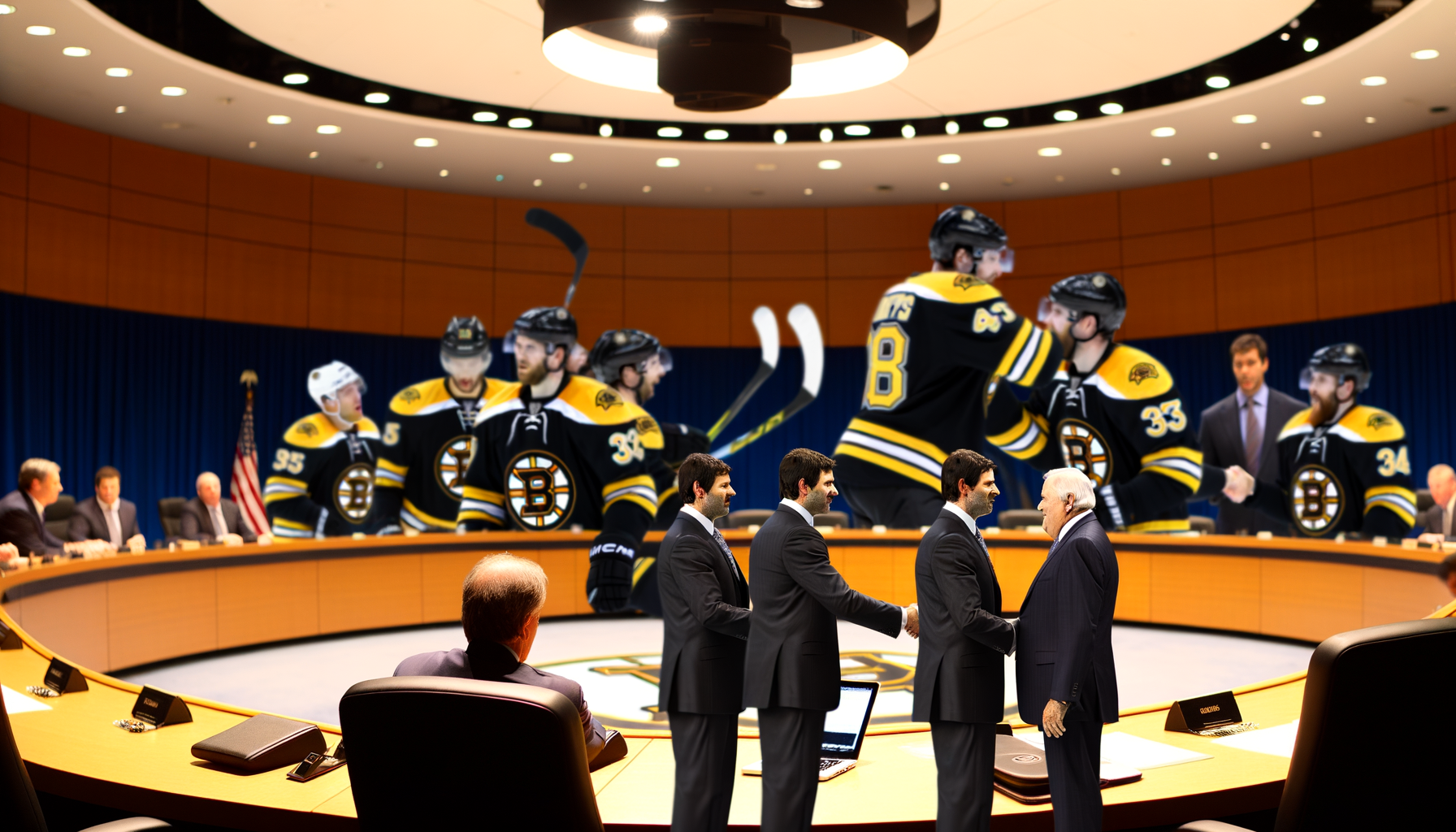
With the 2025 trade deadline behind us, the Boston Bruins have again made waves in the NHL with strategic player exchanges. This article delves into the impact of their transactions, assessing how the Bruins’ front office maneuvers to maintain their competitive edge.
Understanding the Dynamics of NHL Trades
Understanding the dynamics of NHL trades requires an appreciation of the complex negotiations and strategic considerations that underpin each decision. The process is far from straightforward, with teams needing to navigate a labyrinth of contract stipulations, timing, and asset management to finalize player exchanges. One critical component in this intricate dance is the presence of no-trade clauses (NTCs) and modified no-trade clauses (M-NTCs), which give players the power to veto trades to certain teams. Navigating these clauses requires skillful negotiation and often, creative solutions to align the interests of the player and both teams involved.
Contract length and salary cap implications likewise play a significant role. Teams must carefully consider how a player’s contract fits within their long-term financial framework, balancing present needs with future flexibility. This balancing act makes the timing of trades crucial. Trades near the deadline, for instance, might be motived by the desire to add a key piece for a playoff run without committing long-term, while off-season trades often focus on addressing broader team needs or shedding salary.
Asset management, encompassing draft picks, prospects, and current roster players, is another cornerstone of trade strategy. Teams must value not only what they are receiving but also what they are giving up. The perpetual challenge is to “win” the trade both in the immediate and the long term, necessitating a deep understanding of player development and potential. This is where the strategic importance of timing comes into play once more. For example, trading for a player nearing free agency can be a gamble, requiring a team to assess the likelihood of re-signing that player.
The administrative side of trades—the paperwork, the league’s approval process, and the logistical arrangements for the players involved—though less visible, is no less essential. These elements must be executed flawlessly to avoid delays or voided trades.
In sum, understanding NHL trades involves appreciating the myriad factors at play, from the intricacies of contract details and no-trade clauses to the strategic considerations of timing and asset management. Each trade is a multi-faceted decision, influenced by financial, competitive, and human factors, all operating within the constraints set by the league’s rules and regulations.
Pre-Deadline Strategies
In the intricate chess game of NHL trades, the Boston Bruins approached the 2025 deadline with meticulous preparation and strategic foresight. Building upon the framework of understanding trade dynamics, the team’s management embarked on a comprehensive scouting and internal discussion process, aiming to bolster their championship aspirations. This phase was critical in setting the stage for the decisive moves that would follow.
At the core of their pre-deadline strategies was an in-depth evaluation of team needs. The Bruins’ management thoroughly analyzed game footage, player performance metrics, and the team’s overall structure to identify areas requiring enhancement. Recognizing the importance of bolstering their defensive line as well as adding depth to their forward groups became a priority. The focus was not just on talent, but on finding players who fit into the Bruins’ system both on and off the ice – those who could transition smoothly into their playing style and locker room culture.
Parallel to evaluating team needs, the Bruins’ management actively assessed potential surplus areas. Certain positions displayed a wealth of talent, presenting an opportunity to leverage these assets in trade talks. It became apparent that the team’s strength in goaltending prospects and depth in right-wing positions could serve as valuable trade commodities. This surplus created a strategic advantage, allowing the Bruins to enter negotiations with a clear perspective on what they could afford to offer in exchange for addressing their identified needs.
The scouting process was another vital component of their preparations. Scouts were deployed extensively across the NHL and international leagues, tasked with identifying players who matched the Bruins’ specific criteria. This involved not just assessing current performance levels but also projecting future potential and fit within the team’s strategic framework. The integration of advanced analytics into scouting reports provided a comprehensive overview of how targeted players could contribute to the Bruins’ objectives.
Internal discussions within the Bruins’ management team were characterized by strategic debates and collaborative decision-making. These discussions aimed to synthesize insights from scouting, performance analytics, and team needs evaluation to form a consensus on the direction of trade negotiations. The management team engaged in scenario planning, examining how various trade possibilities could impact team dynamics and long-term objectives. This iterative process ensured that any move made at the deadline was aligned with the team’s overarching goals.
As the deadline approached, the Bruins’ strategic preparations laid the groundwork for targeted trade negotiations. This careful alignment of team needs, surplus assets, and identified targets positioned the Bruins to execute transactions with precision. Their strategic approach was poised to transform their roster, setting the stage for a series of masterful trades aimed at propelling the team toward championship contention.
The Bruins’ Trade Deadline Objectives
Building on the meticulous preparations and strategic evaluations outlined in the preceding chapter, the Boston Bruins’ approach to the 2025 trade deadline was characterized by clearly defined objectives. The management’s ambition was not just to address immediate needs but to ensure a blend of short-term competitiveness with long-term sustainability. This chapter delves deep into the synergy between these objectives and the overarching blueprint of the team’s architecture, spotlighting how each move was engineered to stitch together the fabric of a championship contender.
Short-Term Goals: Fortifying for a Playoff Push
At the forefront of the Bruins’ agenda was bolstering the team’s depth, particularly by adding a mix of veteran presence and promising talent capable of making an immediate impact. With an eye on the playoffs, the Bruins identified specific roles that needed reinforcement. The primary focus was on acquiring a top-six forward and a third-pairing defenseman with playoff experience. These were not just positions of need but strategic moves aimed at complementing the roster’s core strengths and addressing its subtle weaknesses, such as scoring depth and defensive resilience under high-pressure scenarios.
Long-Term Vision: Sustaining a Competitive Edge
Parallel to the immediacy of playoff preparations, the Bruins were equally focused on the horizon beyond the current season. Each trade was meticulously evaluated not only for its immediate impact but also for how it aligned with the team’s future. This dual focus meant targeting players under contract beyond 2025 or those with the potential for beneficial extensions. Emphasizing youth was a key tactic, with the Bruins aiming to infuse their system with prospects boasting high ceilings. This approach sought to ensure that the team remained not just a contender for the current season but poised for continued success in the ensuing years, balancing the salary cap implications and fostering a pipeline of talent.
Alignment with Team Identity and Cohesion
Beyond the tangible metrics of performance and potential, a crucial objective was ensuring that incoming players matched the Bruins’ team identity. The front office and coaching staff emphasized the importance of character, work ethic, and fit within the team’s culture. Players known for their leadership, resilience, and commitment were targeted to blend seamlessly into the locker room, thereby maintaining, if not enhancing, team cohesion.
Fulfilling the Quest for a Championship
The culmination of these objectives – immediate impact, future potential, and cultural fit – was all aimed at one ultimate goal: securing the Bruins another championship. Each move at the trade deadline was a calculated step towards assembling a roster that not only excelled on paper but also possessed the synergy, depth, and resilience needed to triumph in the postseason. By carefully balancing the quest for immediate success with the vision for future competitiveness, the Bruins endeavored to craft a team capable of ascending to the pinnacle of hockey glory.
As we pivot to the following chapter, “Deal Day Deliberations,” the spotlight shifts to the kinetic energy of the trade deadline day itself. The planning and objectives outlined become actions and decisions, where theory meets the crucible of execution. The anticipation and strategy painstakingly crafted in the lead-up now face the ultimate test amid the frenetic pace of negotiations, offering a gripping insight into the art and science of team building in professional hockey.
Deal Day Deliberations
Deal Day Deliberations
As the trade deadline approached, the Boston Bruins’ management team faced a high-stakes, high-pressure environment necessitating strategic precision and unwavering focus. Inside the war room, the atmosphere was electric, filled with a mixture of anticipation and tension as the clock ticked down. The objectives were clear: bolster the team’s championship ambitions while ensuring the long-term vision remained intact. This chapter delves into the behind-the-scenes deliberations on the actual trade deadline day, revealing the intricate decision-making process of the Bruins.
The day began with a comprehensive review of the team’s strategic objectives, aligning them with the available opportunities. The management team was acutely aware that their decisions could significantly affect the team’s trajectory. The primary focus was on adding depth to the roster, specifically targeting a seasoned defenseman and a versatile forward who could contribute immediately. Simultaneously, preserving the core of the team and its future prospects was paramount—striking the right balance between present needs and future sustainability was the day’s challenging puzzle.
As offers began to come in and discussions with other teams intensified, the Bruins’ management deployed a meticulous approach. Every potential deal was scrutinized, evaluating not only the immediate benefits but also the long-term implications. Numerous scenarios were modeled, examining how each trade would impact team dynamics, salary cap considerations, and the development path of younger players. This analytical rigor ensured that decisions were not merely reactive but strategically aligned with the comprehensive roadmap devised for the team’s future.
A critical moment arrived with a last-minute offer for a much-coveted defenseman. The deal was attractive but required parting with a promising prospect and a draft pick. The room was divided; the immediate upgrade was undeniable, but the cost was steep. After intense debate, the decision underscored the Bruins’ ethos—commitment to a sustainable winning culture. The trade was executed, a testament to the team’s belief in balancing short-term gains with long-term ambitions.
The final hours of the deadline were a testament to the Bruins’ strategic acumen. Amid the flurry of activity, the management remained resolute, navigating the complexities of negotiations with a clear-eyed focus on their objectives. Each decision, each trade, was a calculated move designed to enhance the team’s championship credentials while safeguarding its future prospects.
In the aftermath, the Bruins emerged with a reinforced lineup and a rejuvenated sense of confidence. The deals made were not just transactions; they were strategic investments into the fabric of the team. As the deadline passed, the sense of accomplishment was palpable, yet the true measure of success would unfold in the ensuing battles on the ice. The strategic maneuvers of the deal day set the stage for what promised to be an exhilarating sprint toward the postseason, with the Bruins’ championship destiny now firmly within their grasp.
Post-Trade Deadline Analysis
In the aftermath of the Boston Bruins’ dramatic maneuvers at the 2025 trade deadline, the hockey world buzzed with speculation about the team’s revamped roster. The Bruins, in a strategic bid to bolster their championship aspirations, had made several key acquisitions, reshaping the team’s dynamics with an eye on the ultimate prize: the Stanley Cup. This chapter delves into the initial impact of these trades on team chemistry and performance, drawing insights from players, coaching staff, and hockey experts.
The immediate response from within the Bruins’ locker room was one of cautious optimism. Veteran players expressed excitement about the influx of talent, particularly noting the added depth to their lineup. “Bringing in players of this caliber at the deadline sends a strong message about our objectives this season,” one veteran remarked, underlining the organization’s commitment to pursuing a championship. The new arrivals were just as eager to integrate, with one of the key acquisitions outlining his anticipation to contribute to a deep playoff run.
However, with significant changes come challenges, particularly in terms of team chemistry. Hockey is as much about intangibles and relationships as it is about skill and strategy. The coaching staff, led by the head coach, acknowledged this reality in their post-trade deadline assessments. “It’s not just about the talent on the ice; it’s about how these pieces come together off it,” the head coach highlighted. The staff were proactive in this regard, organizing team-building activities and extra practice sessions to foster a quick integration of the new members with the existing roster. The emphasis was on building a cohesive unit that could operate seamlessly under the high-pressure environment of the NHL playoffs.
Experts were cautiously optimistic about the Bruins’ deadline dealings. The consensus was that Boston had addressed key areas of need without sacrificing their future prospects or core identity. Analysts pointed out that the added depth, particularly in defense, and a boost in offensive capability could make the Bruins a formidable opponent in the playoffs. However, they also warned that the intangible elements of team chemistry and player morale would be just as crucial to the team’s success as the statistical improvements brought by the new additions.
As the post-trade deadline practices unfolded and the new-look Bruins began to gel, attention shifted to their immediate on-ice performance. The first few games offered mixed results, a not uncommon occurrence as players adapted to new line configurations and strategies. Yet, there were undeniable flashes of potential, moments where the newcomers’ impact was palpable, offering a glimpse of what could be a potent force in the playoffs.
In the grand scheme of things, the Bruins’ trades at the 2025 deadline represented a calculated gamble, a bold move with the championship firmly in sight. As the regular season wound down and the playoffs loomed, the true test of these transactions’ success would lie in postseason performance. Could this reshaped roster carry the Bruins to championship glory, validating the front office’s ambitious strategy? Only time would tell, but one thing was clear: the path to the Stanley Cup was now paved with not just talent, but renewed hope and anticipation.
Looking to the Future
In the wake of the 2025 trade deadline, the Boston Bruins’ forward-thinking maneuvers have not only reshaped their roster for the immediate playoff push but also set a strategic foundation for the franchise’s future. As we delve into the long-term consequences of these trades, it’s imperative to consider how these moves align with the evolving landscape of the NHL and position the Bruins for sustained competitiveness.
The Bruins’ front office demonstrated a keen understanding of the dynamics shaping modern hockey: the premium on speed, youth, and versatility, as well as the importance of cap space management. By securing a mix of seasoned veterans to provide immediate impact and promising young talent to invest in the team’s future, the Bruins have hedged against the unpredictability of player development and league trends.
One of the most critical aspects of Boston’s trade deadline strategy was their focus on acquiring players under team-friendly contracts with term left beyond this season. This approach not only affords the team greater flexibility under the salary cap but also ensures that the Bruins have a core group of players around which to build. As the salary cap continues to evolve in response to the league’s financial landscape, such foresight could prove invaluable.
Moreover, the integration of young talents acquired at the deadline into the Bruins system cannot be understated. The development and nurturing of these players will be crucial, as their growth will directly impact the Bruins’ competitive edge in the coming years. With the NHL trending towards a faster, younger game, Boston’s emphasis on securing and developing prospects could set the stage for a new era of Bruins hockey defined by speed, skill, and innovation.
The strategic allocation of resources towards scouting and player development in these trades also highlights a shift in the Bruins’ approach to team building. Investing in young players and draft picks suggests a commitment to continuously replenishing the talent pool, a necessity in the salary cap era. This strategy not only aims to keep the Bruins competitive in the near term but also ensures a pipeline of talent ready to step up as current stars age out or move on.
In the broader context of the NHL’s changing dynamics, the Bruins’ trade deadline strategy reflects an adaptive and proactive approach. As teams across the league strive for a competitive edge, Boston has positioned itself well by balancing the need for immediate success with a clear vision for the future. The focus on maintaining a mix of experience and youth, along with prudent cap management, could serve as a blueprint for sustained success in an ever-competitive league.
In conclusion, the Bruins’ 2025 trade deadline transactions reveal a multifaceted strategy aimed at immediate impact and long-term viability. By maneuvering within the constraints of the salary cap, prioritizing player development, and adapting to the league’s evolving trends, Boston has laid a foundation that could shape the franchise’s destiny for years to come. As the NHL landscape continues to shift, the Bruins’ ability to stay ahead of these changes will be paramount in their quest for championships.
Conclusions
The Boston Bruins approached the 2025 trade deadline with precise goals, striking a balance between talent acquisition and future considerations. The new roster additions are poised to bolster their championship contention while maintaining the team’s competitive spirit and beloved identity.