AI and Creativity: How Artificial Intelligence is Reshaping the Creative Landscape
Imagine a world where algorithms compose symphonies, paint masterpieces, and write compelling narratives. This isn’t a scene from a science fiction movie; it’s the reality we’re rapidly approaching, thanks to the advancements in artificial intelligence (AI). In recent years, AI-generated content has captured the public’s imagination, from digital artworks selling for millions to AI-composed songs topping the charts. One notable example is the AI-generated portrait ‘Edmond de Belamy,’ which sold at Christie’s for $432,500, sparking conversations about the value and authenticity of AI art. These examples underscore the transformative potential of AI in the creative sector, challenging traditional notions of authorship and artistic expression.
Artificial intelligence, in the context of creativity, refers to the use of computer systems to perform tasks that typically require human intelligence, such as learning, problem-solving, and decision-making. These capabilities are being increasingly applied to creative domains, allowing AI to assist or even independently generate various forms of artistic content. From designing graphics to composing music, AI is rapidly expanding its role in diverse industries, offering new avenues for innovation and efficiency. But this technological revolution also raises complex questions about originality, ethics, and the future of creative professions.
This post will delve into the multifaceted impact of AI on creative sectors, highlighting both the incredible opportunities for innovation and the significant challenges that must be addressed. We’ll explore how AI is transforming the creative process, from the tools we use to the very definition of art itself. By examining the benefits, challenges, and future prospects of AI in creativity, we aim to provide a comprehensive understanding of this evolving landscape.
AI as a Creative Tool
The integration of AI into creative industries has led to the development of a wide array of tools that augment and enhance human capabilities. These AI-powered applications are not designed to replace human artists but rather to serve as collaborators, providing assistance in various stages of the creative process. By automating repetitive tasks, offering new perspectives, and generating novel ideas, AI tools are empowering creators to explore uncharted territories and push the boundaries of artistic expression.
Let’s delve into some specific examples of how AI is being used across different creative domains:
Graphic Design
In graphic design, AI tools are revolutionizing the way visual content is created. AI-powered platforms like Canva and Adobe Sensei offer features such as automated layout suggestions, intelligent image editing, and personalized design recommendations. These tools can analyze user preferences, suggest color palettes, and even generate entire design concepts based on specific requirements. For instance, an AI algorithm can quickly create a series of logo variations, allowing designers to focus on refining the most promising options. This not only accelerates the design process but also helps designers explore a broader range of possibilities.
Furthermore, AI is being used to enhance image quality and resolution. Tools like Topaz Gigapixel AI utilize deep learning algorithms to upscale images without sacrificing detail, making it possible to create high-resolution visuals from low-resolution sources. This is particularly useful for designers working with older or lower-quality images.
Music Composition
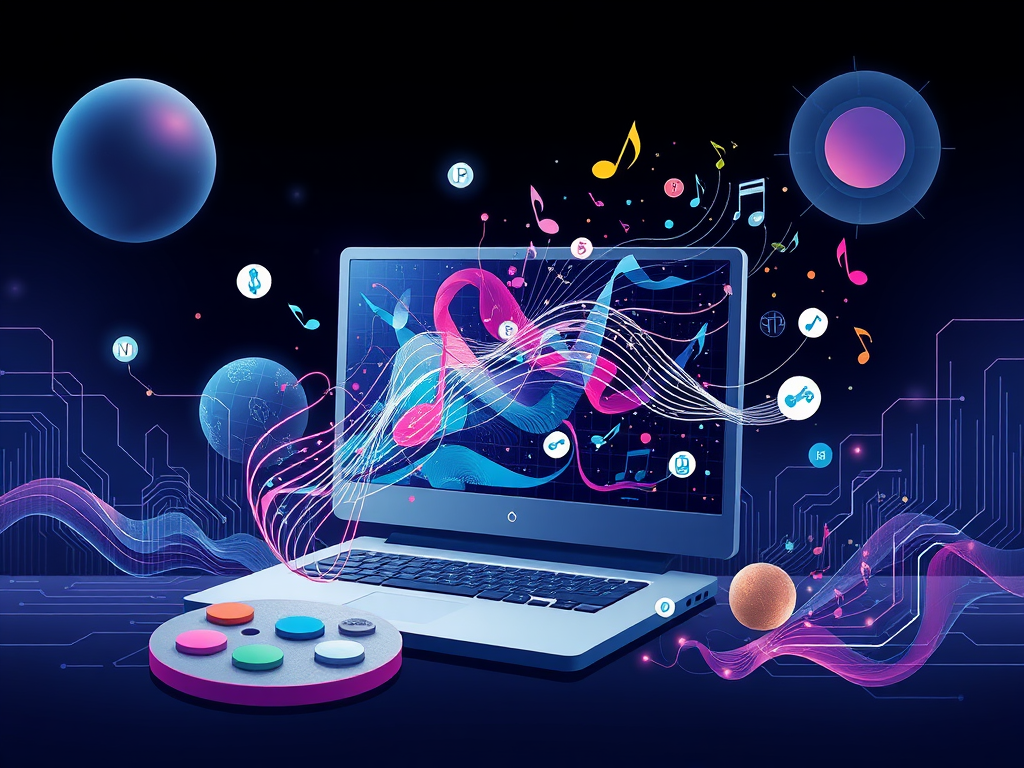
The realm of music composition is also witnessing a significant transformation, thanks to AI. AI-powered music generators like Amper Music, Jukebox (by OpenAI), and AIVA (Artificial Intelligence Virtual Artist) are enabling musicians and non-musicians alike to create original compositions in various styles. These tools use machine learning algorithms to analyze vast datasets of musical pieces, identify patterns, and generate new melodies, harmonies, and rhythms. Users can specify parameters such as tempo, key, instrumentation, and mood, and the AI will generate music that aligns with those specifications.
One notable example is Taryn Southern, an artist who created an entire album using AI music composition tools. Her album, ‘I AM AI,’ showcases the potential of AI to assist in the creation of commercially viable music. While human input is still required to refine and arrange the AI-generated elements, these tools significantly reduce the time and effort involved in composing music.
Writing
AI is also making inroads into the world of writing, offering assistance in various aspects of content creation. AI-powered writing assistants like Grammarly and Hemingway Editor help writers improve their grammar, style, and clarity. These tools analyze text, identify errors, and suggest revisions, making it easier for writers to produce polished and professional content. Furthermore, AI is being used to generate different types of written content, such as articles, blog posts, and marketing copy.
Tools like Jasper (formerly Jarvis) and Copy.ai utilize natural language processing (NLP) to generate human-like text based on user input. These tools can create compelling headlines, write engaging introductions, and even generate entire articles on specific topics. While AI-generated content may require human editing to ensure accuracy and coherence, these tools can significantly speed up the writing process and provide inspiration for writers.
Video Editing
The video editing process can be time-consuming and complex, but AI is simplifying many of the tasks involved. AI-powered video editing tools offer features such as automated scene detection, intelligent color correction, and automatic video stabilization. These tools can analyze video footage, identify key moments, and suggest edits, making it easier for editors to create compelling and engaging videos.
For instance, Adobe Premiere Pro offers features like Scene Edit Detection, which automatically identifies scene changes in a video, allowing editors to quickly navigate and edit specific sections. Furthermore, AI is being used to generate visual effects and animations, adding a new layer of creativity to video production. Tools like RunwayML enable users to create and train custom AI models for video editing, opening up new possibilities for visual storytelling.
Benefits of AI in Creative Industries
The integration of AI into creative industries brings a plethora of benefits, transforming workflows, democratizing access to creative tools, and fostering new avenues for artistic exploration. These advantages are not just theoretical; they are being realized in practice by creators and businesses across the globe, leading to increased efficiency, enhanced creativity, and new forms of personalized content.
Increased Efficiency and Workflow Productivity
One of the most significant benefits of AI in creative industries is the increase in efficiency and workflow productivity. AI-powered tools can automate repetitive tasks, freeing up human creators to focus on more strategic and creative aspects of their work. For example, in graphic design, AI can automate the process of resizing images, optimizing layouts, and generating variations of a design. This allows designers to spend more time on conceptualization, refinement, and client communication.
In music production, AI can assist with tasks such as mixing and mastering, reducing the amount of time and effort required to achieve a professional sound. AI-powered mixing tools can automatically adjust levels, EQ, and compression, ensuring that each instrument and vocal track sits perfectly in the mix. This not only speeds up the production process but also allows musicians to focus on the artistic aspects of their music.
Similarly, in writing, AI can automate the process of generating outlines, researching topics, and proofreading content. This allows writers to spend more time on crafting compelling narratives, developing unique perspectives, and engaging with their audience. By streamlining these tasks, AI enables creators to produce more content in less time, increasing their overall productivity and output.
Democratization of Creative Tools
AI is also playing a crucial role in democratizing creative tools, making them accessible to a broader audience. Traditionally, creative tools like Adobe Photoshop, Pro Tools, and Final Cut Pro have been expensive and complex, requiring significant training and expertise to use effectively. However, AI-powered tools are simplifying these processes, making them more intuitive and user-friendly. This allows individuals with limited technical skills to express their creativity and bring their ideas to life.
For example, AI-powered image editing tools offer features such as automatic background removal, intelligent object selection, and one-click enhancements. These features allow anyone to create professional-looking images without having to master complex editing techniques. Similarly, AI-powered music composition tools enable individuals with no formal music training to create original songs and musical pieces. This democratization of creative tools empowers more people to participate in the creative process, fostering a more diverse and inclusive creative landscape.
Moreover, AI is making creative tools more affordable. Many AI-powered platforms offer free or low-cost subscriptions, making them accessible to individuals and small businesses with limited budgets. This levels the playing field, allowing creators from all backgrounds to access the tools they need to succeed.
New Possibilities for Artistic Exploration and Personalized Content
Perhaps the most exciting benefit of AI in creative industries is the emergence of new possibilities for artistic exploration and personalized content. AI is not just automating existing creative processes; it is also enabling creators to explore uncharted territories and develop entirely new forms of artistic expression. By generating novel ideas, suggesting unexpected combinations, and pushing the boundaries of what is possible, AI is inspiring creators to think outside the box and experiment with new techniques.
For example, AI-powered generative art tools can create stunning visual artworks that would be impossible to create manually. These tools use algorithms to generate complex patterns, textures, and forms, resulting in unique and visually captivating pieces. Similarly, AI-powered music composition tools can generate unconventional melodies, harmonies, and rhythms, leading to the creation of experimental and avant-garde music.
Furthermore, AI is enabling the creation of personalized content that is tailored to the individual preferences and needs of each user. AI-powered recommendation engines can analyze user data to suggest content that is most relevant and engaging. This is particularly useful in industries such as entertainment, education, and marketing, where personalization can significantly enhance the user experience.
Challenges and Concerns
While AI offers numerous benefits to creative industries, it also presents several challenges and concerns that must be addressed. These challenges range from copyright issues and job displacement to ethical considerations and the potential for content homogenization. Addressing these concerns is crucial to ensure that AI is used responsibly and ethically in the creative sector, maximizing its benefits while minimizing its potential harms.
Copyright Issues and the Implications for Intellectual Property
One of the most pressing challenges is the issue of copyright and intellectual property. When AI generates creative content, it raises questions about who owns the copyright to that content. Is it the AI developer, the user who provided the input, or the AI itself? Current copyright laws are not well-equipped to handle these situations, leading to legal ambiguities and uncertainties.
For example, if an AI generates a song that is similar to an existing copyrighted work, it raises questions about whether the AI-generated song infringes on the copyright of the original work. Similarly, if an AI generates a visual artwork that is based on copyrighted images, it raises questions about whether the AI-generated artwork is a derivative work that requires permission from the copyright holder. These legal questions are complex and require careful consideration.
Furthermore, the use of AI to generate creative content raises concerns about the originality and authenticity of that content. If an AI is trained on a dataset of existing artworks, can the AI-generated content be considered truly original? Or is it simply a remix of existing works? These questions challenge our traditional notions of authorship and creativity.
The Potential for Job Displacement and the Evolving Nature of Creative Professions
Another significant concern is the potential for job displacement in creative professions. As AI becomes more capable of automating creative tasks, there is a risk that some jobs will be eliminated or transformed. For example, AI-powered graphic design tools may reduce the need for junior designers, while AI-powered writing assistants may reduce the need for copywriters. This can lead to job losses and economic disruption for creative professionals.
However, it is important to note that AI is unlikely to completely replace human creators. Instead, it is more likely to augment and enhance human capabilities. AI can automate repetitive tasks, freeing up human creators to focus on more strategic and creative aspects of their work. This can lead to new job roles and opportunities that require a combination of human and AI skills.
To mitigate the risk of job displacement, it is crucial to invest in education and training programs that equip creative professionals with the skills they need to work alongside AI. This includes skills such as AI literacy, data analysis, and human-computer interaction. By developing these skills, creative professionals can adapt to the changing landscape and remain competitive in the job market.
Ethical Considerations and the Impact of Content Homogenization and Authenticity on Art
Ethical considerations are also paramount when using AI in creative industries. One concern is the potential for AI to perpetuate biases and stereotypes. If an AI is trained on a dataset that reflects existing biases, the AI may generate content that reinforces those biases. For example, an AI trained on a dataset of predominantly male authors may generate content that favors male perspectives.
To address this concern, it is crucial to ensure that AI training datasets are diverse and representative. This requires actively seeking out and including data from underrepresented groups. Furthermore, it is important to monitor AI-generated content for biases and to take steps to mitigate them.
Another ethical concern is the potential for AI to contribute to content homogenization. If AI is used to generate content that is based on existing trends and patterns, it may lead to a lack of originality and diversity in creative output. This can stifle innovation and reduce the richness of the creative landscape.
To counter this, it is important to encourage AI to generate novel and unexpected ideas. This can be achieved by using AI algorithms that are designed to explore new possibilities and break away from existing patterns. Furthermore, it is important to foster a culture of experimentation and innovation in creative industries, encouraging creators to push the boundaries of what is possible.
The issue of authenticity is also a major ethical consideration. As AI-generated content becomes more prevalent, it raises questions about what it means for something to be truly authentic. If a piece of art is created by an AI, can it be considered authentic? Or is it simply a simulation of human creativity?
There are no easy answers to these questions, but it is important to have a thoughtful and nuanced discussion about the role of AI in shaping our understanding of authenticity. Ultimately, the value of art lies not just in its origin but also in its impact on the viewer or listener. Even if a piece of art is created by an AI, it can still be meaningful and impactful.
The Future of AI and Creativity
Looking ahead, the future of AI and creativity is filled with both promise and uncertainty. As AI technology continues to evolve, its role in creative sectors will likely expand, transforming the way art is created, consumed, and experienced. Understanding the potential trajectories of this evolution is crucial for artists, technologists, and policymakers alike.
Predictions Regarding the Evolution of AI’s Role in Creative Sectors
One prediction is that AI will become even more integrated into the creative process, serving as a seamless and intuitive collaborator for human artists. AI tools will become more sophisticated, offering more advanced features and capabilities. For example, AI-powered design tools may be able to generate entire virtual environments based on user input, while AI-powered music composition tools may be able to create personalized soundtracks for individual users.
Another prediction is that AI will play an increasingly important role in content distribution and marketing. AI-powered recommendation engines will become more accurate and personalized, helping users discover content that is relevant and engaging. Furthermore, AI may be used to create personalized marketing campaigns that are tailored to the individual preferences and needs of each customer.
Moreover, AI is expected to drive the emergence of new forms of art and entertainment. AI-generated virtual reality experiences, interactive AI-powered games, and personalized AI-created narratives are just a few examples of the innovative possibilities that lie ahead. These new forms of art and entertainment will challenge our traditional notions of creativity and storytelling.
Highlighting the Significance of Collaboration Between Human Artists and AI Technologies
Despite the growing capabilities of AI, the significance of collaboration between human artists and AI technologies cannot be overstated. AI is a powerful tool, but it is not a replacement for human creativity, intuition, and emotional intelligence. The most successful creative endeavors will likely be those that leverage the strengths of both humans and AI.
Human artists bring to the table unique skills such as conceptualization, critical thinking, and emotional expression. AI can assist with tasks such as data analysis, pattern recognition, and automation. By combining these skills, artists and AI can create works that are greater than the sum of their parts.
For example, a human artist may use AI to generate a series of design concepts, and then use their own artistic judgment to select and refine the most promising options. Similarly, a musician may use AI to create a backing track, and then use their own musical skills to compose a melody and lyrics that fit the track.
Discussing the Necessity for Education and Guidelines to Navigate the Changing Landscape Effectively
To navigate the changing landscape of AI and creativity effectively, it is crucial to invest in education and guidelines. Education is needed to equip artists and creative professionals with the skills they need to work alongside AI. This includes skills such as AI literacy, data analysis, and human-computer interaction.
Furthermore, guidelines are needed to ensure that AI is used responsibly and ethically in the creative sector. This includes guidelines on copyright and intellectual property, bias mitigation, and content homogenization. These guidelines should be developed through a collaborative process that involves artists, technologists, policymakers, and ethicists.
By investing in education and guidelines, we can ensure that AI is used to enhance and enrich the creative landscape, rather than to diminish it. This will allow us to harness the full potential of AI while preserving the essence of human creativity.
Conclusion
In conclusion, the integration of AI into the creative landscape is a transformative force, reshaping how art is conceived, produced, and experienced. We’ve explored the potential of AI as a creative tool, highlighting its applications in graphic design, music composition, writing, and video editing. The benefits are clear: increased efficiency, democratization of creative tools, and new avenues for artistic exploration. However, we’ve also addressed the challenges and concerns, including copyright issues, job displacement, and ethical considerations related to content homogenization and authenticity.
As AI continues to evolve, it is essential to strike a balance between leveraging its capabilities and maintaining the essence of human creativity. The future of art lies not in replacing human artists with machines, but in fostering collaboration between them. By combining human intuition, emotional intelligence, and critical thinking with AI’s analytical power and automation capabilities, we can unlock new possibilities for artistic expression and innovation.
For artists and creatives, the key takeaway is to engage with AI responsibly. Explore AI tools, experiment with new techniques, and consider the ethical implications of your work. Embrace AI as a collaborator, but always prioritize originality, authenticity, and human connection in your creative process. By doing so, you can harness the transformative potential of AI while ensuring that your art remains meaningful and impactful.
Encourage your own creative journey. Share your experiences, learn from others, and contribute to the ongoing conversation about AI and creativity. Together, we can shape a future where technology and human ingenuity combine to create a richer, more diverse, and more inspiring creative world.