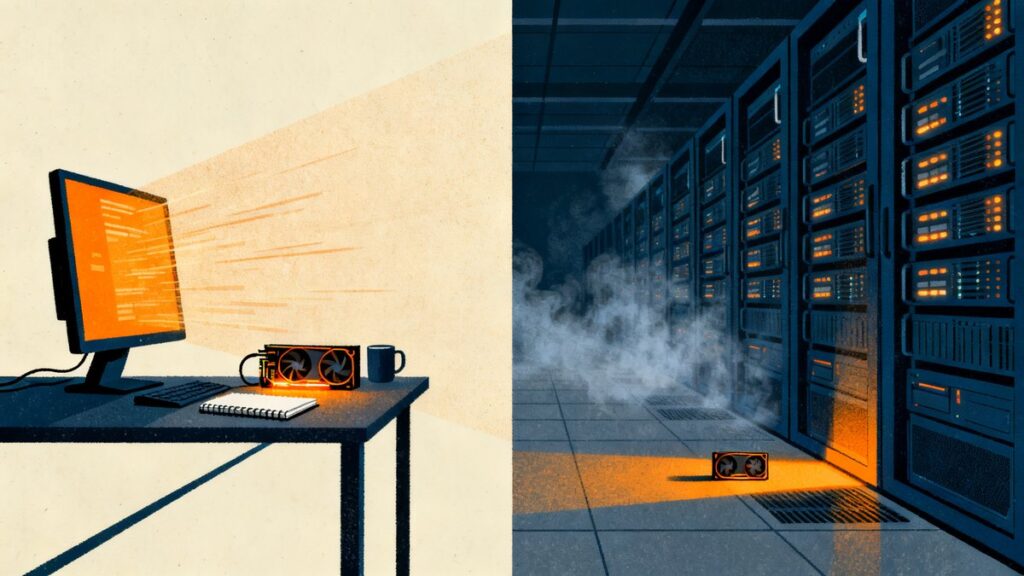
Kimi K3.1 Pro went open-weight on November 4, 2026. Deadline day, zero slack in it. A Reddit post on r/LocalLLaMA timestamped that same day reports the weights are live, which is the only independent signal that exists. Moonshot AI promised full weights by that date. Promise kept, on the face of it.
What shipped: first model in the new K3.1 series, “most capable 3T-class open-weight model to date” in Moonshot’s own words, plus a 1-million-token context window.
Live across Kimi.com, Kimi Work, Kimi Code, and the Kimi API. Second variant too — Highspeed, claimed at 2-3x the base model’s speed.
Short version for anyone running a lean build.
Open weights on a 3T-class model are an exit option and a price ceiling. Not a deployment plan. Use them as use on your inference bill, benchmark on your own stack, and make the hosting call later.
What Actually Shipped With Kimi K3.1 Pro
Two piles. Verifiable today versus vendor claim. Keep them apart and this launch becomes easy to read.
Verifiable pile first. Base model and Highspeed both run on four surfaces right now — Kimi.com, Kimi Work, Kimi Code, Kimi API. Anyone holding an API key can test today. No mirror queue, no waitlist.
The weights release also hit its date, per that November 4 Reddit post announcing them live.
Claim pile now. “3T-class” is a class label, not a parameter count.
A separate Reddit discussion of the model flagged the same gap.
The label implies scale without stating a number outright. The thread’s own URL misspells “benchmarks,” which tells you nothing about the model and everything about who got there first. Until a model card publishes a hard count, “3T-class” stays shorthand. Same discipline for the 1-million-token context window and the 2-3x speed figure: both are Moonshot’s numbers. And nothing in the source material independently confirms either one.
None of that means the claims are false. It means launch day is a claim, not a finding. And the hard parameter count belongs in the model card when it lands, with the Kimi blog announcement as the first place to check.
Should You Self-Host Kimi K3.1 Pro? The Hardware Math
Open weights matter for what they break, not what they download. A dependency becomes a choice. If Kimi API pricing shifts or terms tighten, a hosted alternative exists in principle, and Moonshot knows it. That knowledge disciplines API pricing across the whole market. The single biggest reason a solo operator should care about weights they will never run themselves.
Now the uncomfortable half of that trade.
Memory and GPU capacity for a 3T-class model sit at a scale most one-person shops never budget for. The download is free the way a warehouse of inventory is free once the invoice clears. Sticker: the rack, not the file. No launch announcement changes that arithmetic.
One more step before anything gets built on these weights: read the license. “Open-weight” describes availability, not permission. Commercial use, redistribution, and fine-tuning terms vary release to release, and the announcement settles none of them. Thirty minutes with the license beats finding the restriction after the product ships.
Highspeed Is the Part That Hits Your Bill
The variant split changes production decisions more than the weights do, and it is getting less attention anyway.
Moonshot says Highspeed delivers 2-3x the speed of the base model.
If that holds, it matters more than it sounds.
Automation work is latency work. Pipelines call the model in a loop and pay the response-time penalty on every step. So a 2-3x speedup compounds across an entire run. A kitchen line works the same way. The ticket only moves as fast as the slowest station. And on an agentic pipeline the model is that station, every step, all night.
Two cautions before standardizing.
The speed figure comes from Moonshot itself, and the base model exists at all because speed trades against something.
Beyond that, the tradeoff lands differently on every workload, which makes your stack an empirical question rather than a marketing one.
What gets run before any of this touches production: license read first, commercial terms settled before integration code gets written. Start on the API. Cheapest path to a real verdict. Build a fixed eval set from the actual workload: support tickets, code review, whatever really ships. Score both variants on it. Stress the 1-million-token context window against the longest real documents and watch for quiet degradation. Measure cost per finished task, not per token, since a faster model needing more correction calls is the expensive one. The pattern to resist is the launch-week swap. Models earn production slots by surviving evals, not press cycles.
Kimi K3.1 Pro FAQ: Weights, Hardware, License
Is Kimi K3.1 Pro actually open-weight?
Per the Reddit post dated November 4, 2026, the weights are live, on the deadline Moonshot set. “Open-weight” here means availability. Permission — commercial use, redistribution, fine-tuning. Lives in the license, release by release.
What hardware runs Kimi K3.1 Pro?
No published parameter count exists yet, only the “3T-class” label. A model at that scale needs memory and GPU capacity beyond most one-person budgets. So the hardware question stays open until the model card states the actual count.
Is Kimi K3.1 Pro free to use commercially?
Depends entirely on the license, and the announcement does not settle it.
Read the terms before writing a line of integration code. Thirty minutes now beats unwinding a shipped product later.
What is the difference between Kimi K3.1 Pro and Highspeed?
Highspeed is the variant Moonshot says delivers 2-3x the speed of the base model. Both are live on Kimi.com, Kimi Work, Kimi Code, and the Kimi API. Which one wins is a workload question, answered by your own evals.
Does the 1-million-token context window hold up?
Unverified. It is the vendor’s number. Feed the model your longest real documents and check for quiet degradation before trusting it on anything that matters.
The Verdict on Kimi K3.1 Pro Open Weights
Good news for builders, just not for the reason the hype suggests. An exit option. Price pressure on every API vendor in the market. Not a free 3T-class model for the basement rack.
Vendors are competing for workloads now. And that competition is worth more to a small operation than any single checkpoint file.
The move this week: assemble a fixed set of real tasks from your own work, run them through the Kimi API against whatever model is in use today. And score the results yourself.
If it wins on your evals, promote it.
If it loses, an afternoon bought certainty.
The cheapest infrastructure there is.