GitHub reported that developers started more than 40% of pull requests with an AI agent as of September 2026, up from 17% in March (Octoverse). That is the cleanest evidence yet that AI coding agents became the default starting point for software development: on the world’s largest code host, the first move on more than four in ten change requests is now a prompt instead of a blank editor. Two more numbers frame the shift. In September, 61% of GitHub Copilot users ran more than one model (Octoverse feed). And among repositories created in 2026, the average repo with an agent configuration file logged eight times as many commits as the average new repo without one. Default status did not arrive as an announcement. It showed up as a habit measured at platform scale.
Six Months From 17% to 40%
Seventeen percent of pull requests started with an agent in March 2026, and more than 40% by September.
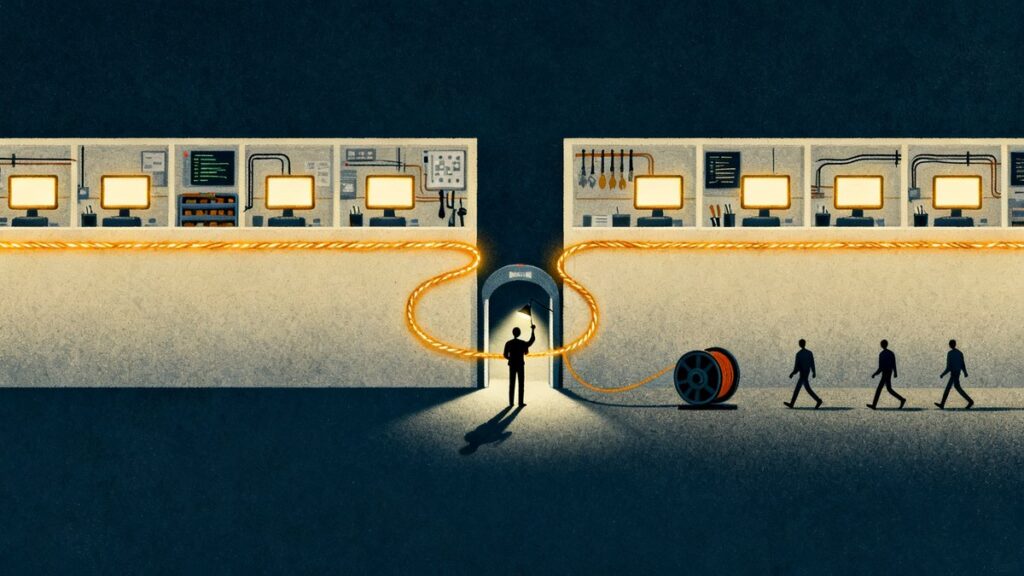
That is more than a doubling inside six months. And it happened with no migration project, no mandate, and no training program anyone attended. Every individual developer who assigned an issue to an agent instead of opening an editor made that decision privately. And GitHub’s telemetry aggregated millions of those private conveniences into a structural change in how software gets written. GitHub states it plainly in the same post: “For a growing share of work, the first move is now directing an agent. And review is how developers shape what comes back.”
Read that sentence as a job description, because that is what it is. The developer’s opening move is direction, and the shaping happens after the code exists. If you run a small operation, this reframes hiring and training: the person you want next is not the fastest typist but the clearest specifier and the sharpest reviewer. The work on the ticket changed while most org charts stood completely still.
Eight Times the Commits, and Why I Do Not Buy It as Productivity
Here is the stat everyone will screenshot: new repositories with an agent configuration file averaged eight times as many commits as new repos without one.
Commit counts are the easiest number to inflate and the first one I stop trusting when agents enter a repo. And this figure is a prime example. Agents work in small increments. So a tool that ships a dozen tidy commits per task will bury a human’s single squashed commit without producing one extra feature.
There is also a selection problem the number does not disclose.
Repos that carry an agent configuration file skew toward developers who were already shipping heavily; the file is a symptom of an engaged operator, not a random treatment group. Eight times the commits tells you agent-equipped repos are busier. Whether they deliver more working software per week is a question the data does not answer. And you should distrust anyone who quotes the 8x figure as if it did. Measure your own denominator instead: features shipped, incidents caused, reverts. Commit volume is activity, and activity is not output.
Review Became the Job, and Agents Took a Fifth of It
If agents write the first draft, review is where the work now lives. And GitHub’s numbers show that side automating too.
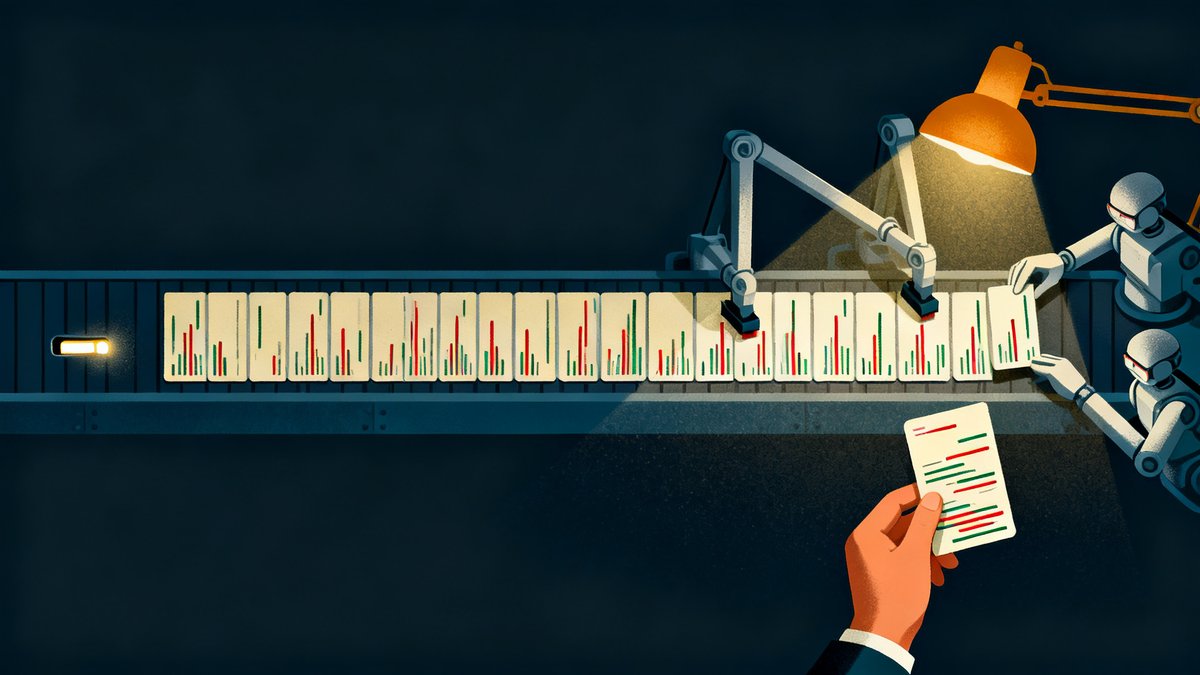
Copilot code review usage has grown 10X since its launch the April before. And by March 2026 it accounted for more than one in five code reviews on GitHub (GitHub’s write-up). GitHub too says survey answers and plain thumbs-up and thumbs-down reactions on review comments fed the iteration on that product. The loop taking shape: an agent writes the pull request, another agent reviews it. And a human arbitrates the disagreement.
For a solo operator, an automated first-pass review is genuinely useful, as you have no second reader and the alternative is rubber-stamping your own agent’s output late at night.
The trap is symmetrical. When an agent reviews an agent and you approve both without reading, nobody in the chain has actually read the code. And the review metric climbs anyway. Set a hard rule now: anything touching authentication, payments, or deleting user data gets a human line-by-line read, no exceptions, whatever the review bot concludes.
The Split: 61% Switch Models While Whole Industries Stay Manual
Two September numbers point in opposite directions.
First, 61% of GitHub Copilot users used more than one model, with requests spread across general-purpose, deep-reasoning and planning, and fast lightweight models. Developers refuse to marry a model; they route by task. And they keep switching cheap by standardizing the workflow rather than the model. That is the pattern worth copying in a small shop: a cheap model for boilerplate and tests, a heavy model for planning and gnarly debugging, one setup so swapping costs you nothing.
Second, in administrative and support services, mining, health care.
And agriculture, more than four in ten repositories mention AI, yet agent-opened pull requests sit under 3%. Those repos talk about AI in READMEs and dependency files while the actual change process stays manual. If you operate in one of those sectors, that gap is your opening: the workflow is proven at platform scale in software. And your local competitors are still hand-writing every change.
The blocker is no longer model quality.
It is process discipline and review, which is exactly what the 40% crowd spent the last six months building.
What to Actually Do With This
Run the numbers on yourself before you run a pilot. Open your pull-request list and count how many PRs an agent started; that count is your real adoption number. And zero is a legitimate answer as long as you know it is zero. Add an agent configuration file to the repos where you want the workflow explicit, route across at least two models so you learn the differences instead of trusting one vendor’s defaults. And put a human review gate in front of anything that can lose money or data. The 17%-to-40% jump happened one private convenience at a time. And AI coding agents will take the next six months the same way. Count your own percentage this week, since GitHub is already counting everyone else’s.