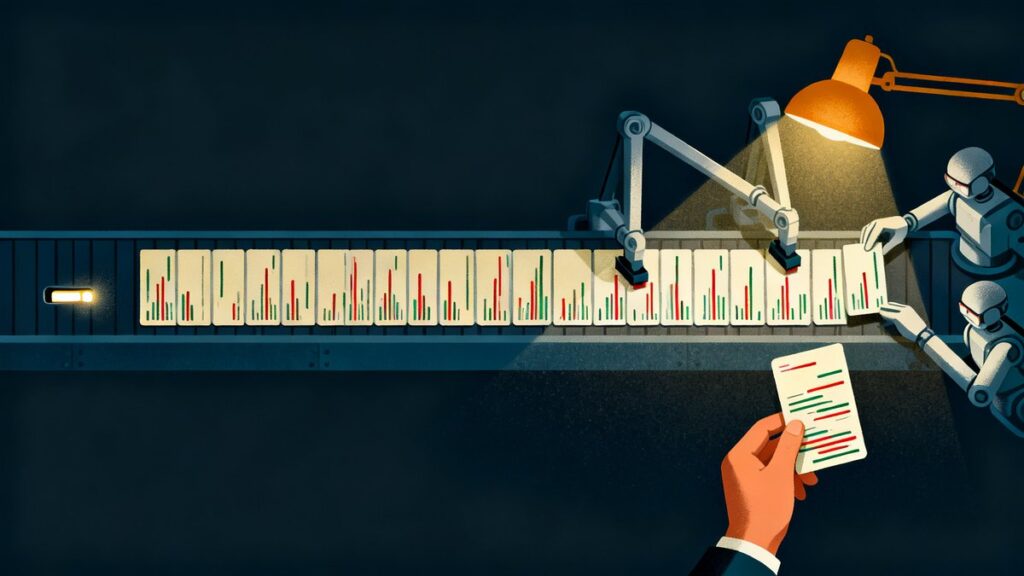
Gemini 4 Carbon arrived on October 28, 2026, with a clear target: agentic coding and computer-use tasks that take more than a quick prompt and response. Google positions it as the next frontier model after Gemini 4 Argon. And its published results show a split worth paying attention to. Carbon leads GPT-6 Astra and Claude Opus 5.5 on some computer-use and terminal tests. But trails them on at least one agentic coding benchmark. That makes Gemini 4 Carbon a serious model to evaluate, not an automatic replacement for every model in your stack. (Google announcement coverage, Google performance table)
The important claim is not that Carbon wins everything. It is that Google is aiming at the part of software automation that usually breaks first: staying oriented through a long chain of actions, dead ends, tool calls, and repairs.
Carbon’s strongest results are in computer use
Google’s published table lists Carbon at 77.4% on Agents’ Last Exam v1.1 for computer use.
That score is above GPT-6 Astra at 73.1% and Claude Opus 5.5 at 71.6%. On the offline subset of OSWorld-2.1, Carbon scores 81.5%, above GPT-6 Astra at 80.9% but below Claude Opus 5.5 at 87.2%. (Google performance table)
Those results point to a useful distinction. Computer use is not only about writing code. It is about operating through an interface, interpreting the current state. And choosing the next action without losing the task.
For a small business, that difference matters when the work crosses tools. An agent that can navigate a software interface, inspect the result. And continue has a different job from a model that only produces a code snippet. You care less about whether a model sounds capable and more about whether it can finish a sequence without requiring you to rescue it at every step.
Carbon also scores 65.2% on Terminal-Bench 4.0 (AA), ahead of GPT-6 Astra at 59.1% and Claude Opus 5.5 at 59.6%. Terminal-Bench 4.0 measures tasks such as installing software or fixing broken code by typing commands into a computer terminal. (Mashable’s benchmark explanation, Google performance table)
That is closer to the work many builders actually recognize. The terminal has state. Commands fail. Dependencies break.
The agent has to read what happened before it acts again.
The coding results are strong, not perfect
Carbon does not lead every coding test. Google’s table lists Carbon at 61.2% on FrontierSWE 2 for agentic coding, below GPT-6 Astra at 65.5% and Claude Opus 5.5 at 62.3%. The Coding Agent Index lists Carbon at 59 when run with Antigravity CLI, while Claude Code with Opus 5.5 scores 62. (Google performance table, Red Hot Cyber)
Carbon is too listed at 51% on FrontierCode v1.1, compared with 56% for Opus.
These results do not make Carbon a weak coding model. They make the marketing claim more useful because the limits are visible. (Latent Space)
My read is simple: Carbon looks especially relevant when coding is part of a larger computer task. If your workflow is mostly code generation inside a familiar editor, the leaderboard does not settle the choice. If the workflow includes terminals, interfaces, testing, debugging, and repeated decisions, Carbon’s computer-use results deserve a direct trial.
That trial should use your own failure modes. Give each model the same repository, the same tools, and the same stopping rules. Track whether it edits the right files, recovers from failed commands, leaves a usable change. And tells you when it is stuck. A benchmark can tell you where to start. It cannot tell you which model creates the least review work in your setup.
The long-running task claim changes the evaluation
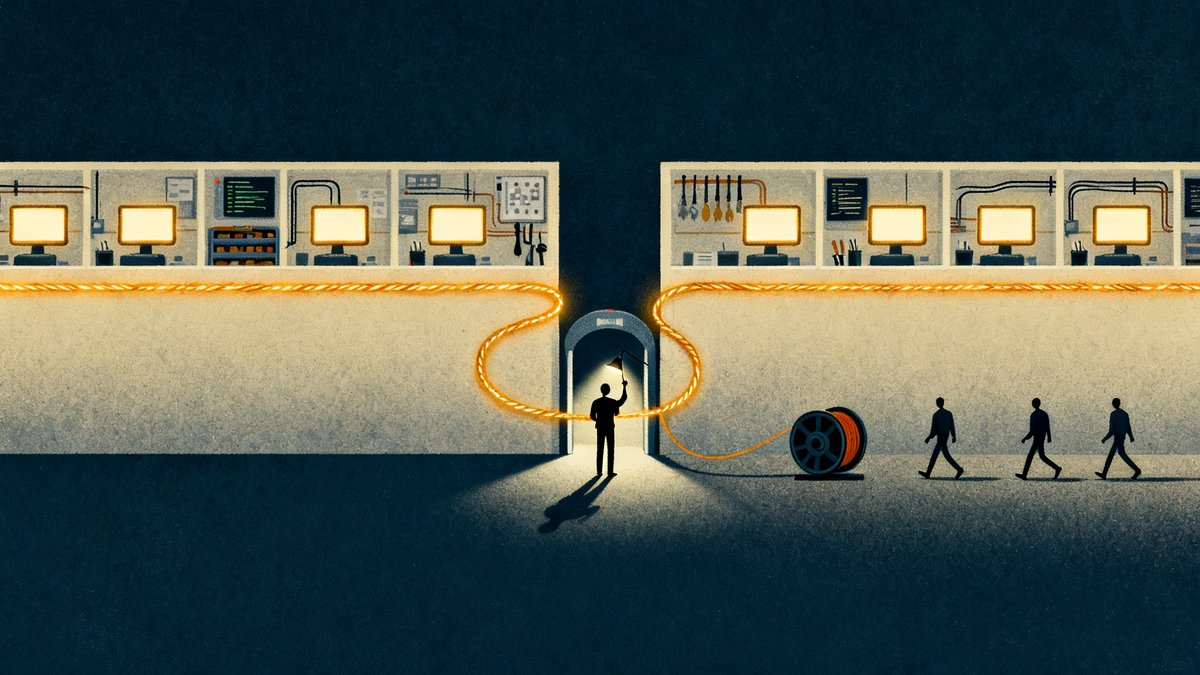
Google says Carbon can operate autonomously for days at a time and overcome impasses while identifying and fixing subtle bugs in large codebases or low-level systems. Google’s internal teams reportedly saw it run for days through dead ends during complex, multi-step engineering tasks. (Jetstream, The Verge)
That is a claim about endurance, not just intelligence. A short benchmark run rewards a model for producing a good next move. A long task exposes whether it can preserve the objective after several wrong moves.
This is where small operators should stay skeptical. A longer-running agent is not automatically cheaper or safer. It can and spend more time making the wrong changes before anyone notices. The practical question is not, “Can Carbon run for days?” The practical question is, “What checkpoints, permissions, tests. And rollback paths exist while it runs?”
Google as well says Carbon showed reduced misalignment and fabrication rates in live coding environments with its internal teams. It says Carbon produced a strong uplift in secure-code generation on internal benchmarks and was more than twice as likely as Argon to generate secure code. (9to5Google, Yahoo Tech)
Those are useful signals, but they are still Google’s claims about internal testing.
Before I trusted Carbon with a long-running build, I would require visible test results, bounded access. And a human review point before deployment. The model’s ability to continue is valuable only when the system around it makes failure recoverable.
Access is the immediate constraint
Carbon is not broadly available yet.
Google initially made it available to a small group of approved cyber defenders through its Fairwind Program. And broader access for developers, businesses, and consumers is supposed to follow.
The cited coverage does not provide an exact public launch date. (Mashable)
That changes what you should do today.
Do not redesign a production workflow around a model you cannot access. Instead, define the task you want to evaluate and prepare the test setup before access arrives.
Write down:
– The repository or computer workflow the agent must handle.
– The tools it may use and the actions it cannot take.
– The tests that determine whether the task succeeded.
– The point where a person must approve a change.
– The review effort required after the agent finishes.
This preparation too protects you from leaderboard chasing. Carbon leads on Agents’ Last Exam v1.1 and Terminal-Bench 4.0 (AA). But it trails on FrontierSWE 2, OSWorld-2.1 against Claude Opus 5.5, the Coding Agent Index, and FrontierCode v1.1. The right model depends on the shape of the work, not the loudest launch claim.
Carbon is a model to test, not crown
Gemini 4 Carbon’s emergence matters since it treats agentic coding as sustained computer work rather than isolated code completion.
Its results show real strength in computer use and terminal tasks, while its coding results show that no single score settles the decision.
For solo builders and small businesses, the winning move is controlled evaluation. Start with a narrow task, give the model only the access it needs, measure the repair burden. And compare the result with the model you already use.
If Carbon becomes available to you, test it against your own repository and workflow before you hand it a long-running job.
Do that work now, so the model’s arrival gives you evidence instead of another reason to switch tools.