Anthropic’s employment report landed on October 16, 2026.
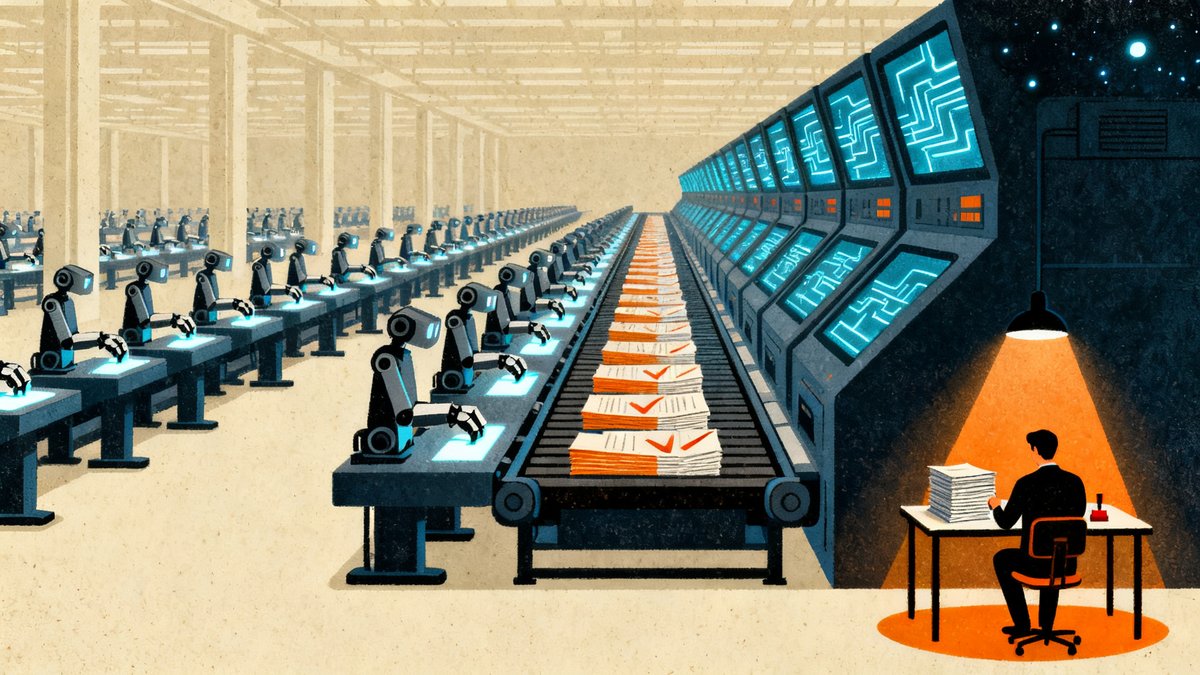
And the headline is not buried in an appendix anywhere: by August 2026, the interactive AI agents Anthropic’s own employees were running had worked six hours for every one hour their human handlers put in.
The crossing point actually came earlier. Combined autonomous and interactive agent hours passed total human work hours company-wide in March 2026. Over the same stretch, junior technical hires collapsed from 27% of technical hiring to 9%. And juniors fell from 21% to 14% of technical department headcount since early 2025. The document is titled “How employment is changing at Anthropic,” and that is exactly what it is: a frontier lab opening up its own telemetry, hiring records. And calendar data instead of publishing yet another forecast about the future of work.
First-party evidence is rare enough to deserve a careful read, and self-graded enough to deserve a skeptical one.
Anthropic’s employment report: the raw numbers
The report is built from internal employment data, AI-use logs, output metrics, employee surveys, communication patterns, calendar data, hiring decision records, plus interviews with 17 employees. Two curves cross inside it, and that crossing is the whole story. March 2026 is when agent work hours overtook human work hours for the first time. By August, counting only the interactive agents that individual employees run themselves, agents logged six hours for every one of their handlers. Seventeen interviews would make a decent season of a podcast, for what that sample is worth.
The hiring curve bends the other direction, and the timing is the uncomfortable part.
Postings for juniors fell sharply after December 2025. And the report ties that drop directly to agent hours expanding relative to employees. Anthropic’s own framing is that junior hiring slowed “even as the company grows”. The phrase that matters most. Because it kills the easy explanation that this is a shrinking company trimming payroll. Business Insider’s coverage adds the comparison that makes the technical figure look worse: in non-technical departments, junior hires slipped only from 31% to 26%, while juniors’ share of headcount actually rose from 23% to 25%.
Technical hiring is where the floor gave way, and nowhere else.
The code quality actually held
The finding I keep rereading is the quality check.
Agents took over writing code and finding bugs for the teams that leaned on Claude hardest.
And the output did not degrade. Code commits per engineer hit five times their velocity from six months earlier. The report’s own quality check found no difference in rates of lines of code subsequently removed or reverted. Underline that second number. The agents were not shipping junk for seniors to mop up after hours.
The spillover is what turns this from a developer-tooling story into a whole-company one. Productivity for non-technical employees “leapt up” sharply once they adopted coding agents. Coding-focused agent sessions for people with no code commits at baseline went from 2 a month in August 2025 to 90 a month in May 2026. Somewhere in 2026 this stopped being about engineers shipping faster and became about every department shipping software: more code per person, more sales closed per rep, more contracts processed.
Anthropic’s employment report: what to trust
Before anybody screenshots the charts, remember who published them. The company selling the agents in the charts. The headline numbers come from internal telemetry no outsider can audit, most of the figures rest on a single source. And the qualitative layer is those 17 interviews. Hours are not value, either. An agent burning six hours on a task a human finishes in one still counts as six in that ratio.
The junior numbers deserve the same skepticism, and my own first pass through them was wrong.
I initially read the 9% as the junior share of the entire company and had to correct myself; it is technical hiring only. Caught it on the second read. A share can fall while absolute junior headcount rises, given that fast senior hiring dilutes the mix and the report itself says the company kept growing. So part of this is a composition story rather than purely a replacement story. The trend in postings since December 2025 is still a real signal. A share chart is not a headcount.
Credit where it belongs, as the honesty is genuinely unusual. Publishing an unflattering chart about your own entry-level pipeline is something almost no employer does. And the rollback-rate check is the kind of self-verification vendor case studies never bother with. But the same document positions Anthropic as a “leading indicator” for the entire economy, which does double duty as marketing. The most damning chart in the report is also the best sales deck the company has ever shipped. Hold both thoughts.
The constraint moved to your attention
The finding that matters most for a small operation sits mid-report: the acceleration “makes human attention the bottleneck for agent output,” in the report’s own words.
Employees responded with what it calls meta-work. Building visibility tools, monitoring agent pipelines. And Pondero’s coverage notes the share of interactive sessions devoted to meta-work rose from 10% in fall 2025 to 22% in spring 2026. Roughly one in five interactive sessions is now humans managing machines instead of doing the underlying task.
I run agents on everything I ship, and that pattern matches my own week exactly. Agents produce. I gate. Every hour of agent output costs me review time. And every agent I add converts more of my day into queue management. Anthropic’s own hiring now reflects the same shift: managers there increasingly weight applicants’ autonomy and judgment over specific technical expertise.
They are hiring supervisors, not implementers, since implementation is what the agents are for.
The unsolved problem is the pipeline. Picture a kitchen where machines do all the prep before the chef arrives. The chef still tastes every sauce and plates every dish, until one day there is nobody left in the building who ever learned to chop. If nobody hires juniors to do the work agents now absorb, the 2031 senior engineer with the judgment everyone is hiring for never gets trained on anything. The report does not answer where the next generation comes from, and neither has anyone arguing about it online. Somebody’s entry rung just became optional, and nobody replaced it.
What Anthropic’s employment report means for your team
Read the full report before quoting the 6-to-1 ratio to anyone.
The methodology section is where the real story lives. Then measure your own agent-to-you ratio for one week: if agents are working six hours for your one, your review queue is your business. And you should price your time accordingly.
Watch your meta-work share while you are at it. Anthropic’s people hit 22% of interactive sessions on pipeline supervision. And if you are drifting the same way, build the monitoring tools once instead of babysitting agents by hand. If you hire, weight judgment and autonomy over implementation skills, exactly as Anthropic’s hiring managers now do. The task list you planned to hand a junior is an agent’s job now. If you are early career, stop optimizing for the grind skills the report says got offloaded. Ship something with agents, own the failures, show the judgment call.
Anthropic’s employment report is a company grading its own transformation. So treat the numbers as a directional signal rather than gospel. The direction is unmistakable, and it points at your calendar, not your headcount. I write these breakdowns as I build. If you want the next one when the follow-up data lands, subscribe and I will keep score.
FAQ: Anthropic’s Employment Report
What did Anthropic’s employment report find?
It found that by August 2026, interactive AI agents worked six hours for every one hour their human handlers worked, with combined agent hours passing total human hours in March 2026. Junior technical hiring fell from 27% to 9% over the same stretch, while code commits per engineer hit five times their velocity from six months earlier.
Is the 6-to-1 agent-to-human ratio reliable?
Treat it as directional, not gospel. It comes from internal telemetry no outsider can audit, and it measures hours rather than value. An agent spending six hours on a task a human finishes in one still counts as six. The rollback-rate check on code quality is on firmer ground than the headline ratio.
Did Anthropic stop hiring juniors?
No, and the distinction matters. Junior hires fell as a share of technical hiring (27% to 9%) and of technical headcount (21% to 14%), but a share can fall while absolute headcount rises. The drop in postings after December 2025 is the real signal.
What is meta-work in the report?
Humans building visibility tools and monitoring agent pipelines instead of doing the underlying task. Its share of interactive sessions rose from 10% in fall 2025 to 22% in spring 2026. Roughly one in five sessions.
Did non-technical roles see the same junior decline?
No. Per Business Insider’s coverage, non-technical junior hires slipped only from 31% to 26%, and juniors’ share of non-technical headcount actually rose from 23% to 25%. The collapse is specific to technical hiring.
Where can I read the full report?
On Anthropic’s site, under the title “How employment is changing at Anthropic” — linked here. Read the methodology section before quoting the headline numbers.
Sources
– Anthropic — How employment is changing at Anthropic
– Business Insider — Anthropic chart shows junior hiring down
– Pondero — Anthropic agent hours report