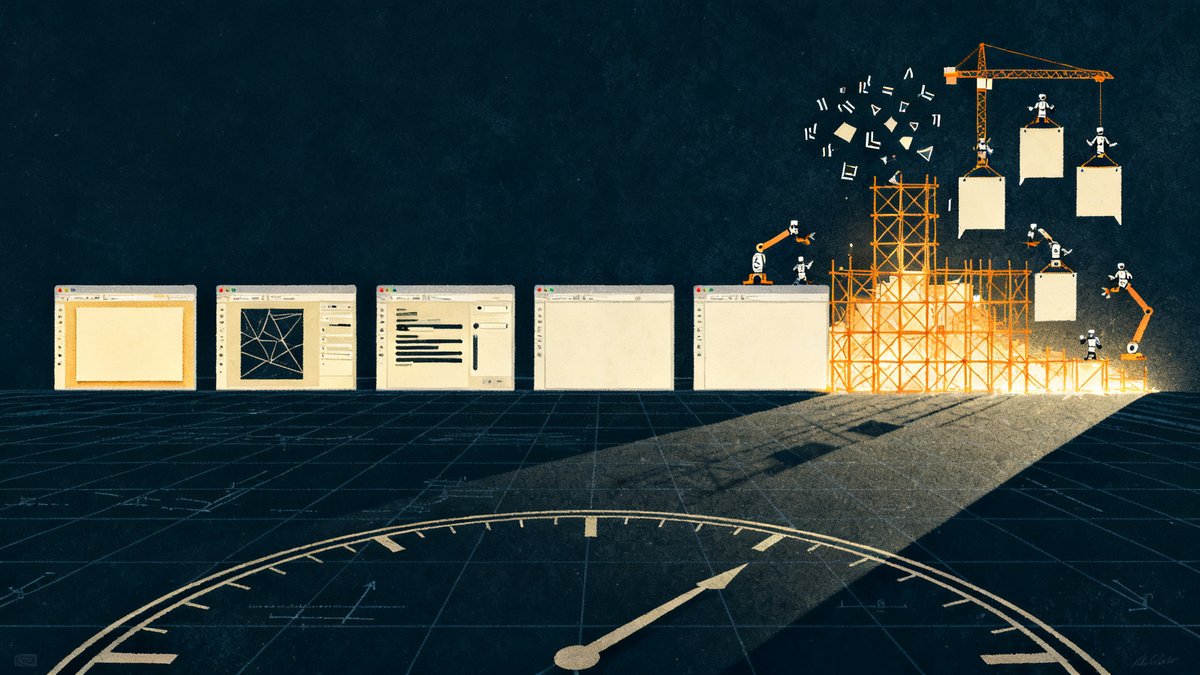
ArtCraft cloned seven Adobe Creative Cloud apps in two days, open-sourced them on GitHub for free. And self-grades its Photoshop stand-in at roughly 45% ready for real work. Atlanta software engineer Brandon Thomas published the suite, PhotoCraft, VectorCraft, FilmCraft, LightCraft, EffectCraft, DesignCraft. And PrintCraft, all written in Rust, with an AI agent fleet producing the code between September 30 and October 1. The repos are MIT or Apache-2.0 licensed, run natively on macOS, Windows. And Linux, and ship WebAssembly builds for the browser, with no subscription, account, or telemetry on the desktop side. That combination, free and local and built by one person in a weekend, is the whole story. It is also why you should read the fine print before you cancel Adobe.
What ArtCraft Actually Is
Strip away the hype and ArtCraft is a clean-room reimplementation: seven apps rebuilt from scratch in Rust using public file-format specifications and observable behavior rather than Adobe’s proprietary source code, as ByteIota reported and as Thomas himself described on Reddit, per Al Jazeera. The project’s own tools repo is blunt about the mapping: PhotoCraft is roughly Photoshop, LightCraft is roughly Lightroom, FilmCraft is roughly Premiere Pro. Other reports fill in the rest of the lineup, matching the suite against Illustrator, After Effects, InDesign, and Acrobat Pro.
The workhorse was Anthropic’s Claude Opus 5.5.
And the delivery method was what the industry now calls vibe coding, an agent fleet writing the bulk of the code while a human steers.
Thomas is not some random prompt jockey.
And he wants you to know it. “I’m not just some casual vibe coder.
I’m a 15-year industry veteran,” he told Al Jazeera, citing payment rails and robotics work in his background.
The business model is the part most coverage skips.
The desktop apps cost nothing. And LinuxCompatible reports the money comes from an optional credit-based AI studio that sits alongside the free apps. Free tools as the top of a funnel, paid AI generation as the revenue line.
You have seen this playbook before, just never aimed at Creative Cloud.
Built in Two Days, Finished in Months
Here is the honesty check, and it matters more than the demo. One report says only two of the seven apps were actually usable at publication. The flagship, PhotoCraft, sits at about 45% “truly production-ready” capability by the project’s own roadmap self-assessment, per BigGo News. The READMEs and roadmaps openly document missing features and work still in progress. These are partial reimplementations wearing a complete suite’s marketing.
The timeline already told that story. Thomas initially promised full feature parity within a month, then walked it back to “months,” as BigGo News reported. When the person who built the thing revises his own estimate upward immediately after launch, believe the revision.
I build with agents daily, and this pattern is the most predictable thing in AI-assisted software. Agents get you to a convincing 45% absurdly fast: UI scaffolding, core interactions, the parts that demo well on camera. Then the curve flattens. The last 55% is color management, edge-case file parsing, performance under real workloads. And twenty years of bug fixes nobody blogs about. Two days to 45% is real. The remaining distance is where Adobe’s actual engineering lives, and no agent fleet has crossed it yet.
Why a 45% Clone Still Changes the Math
So should Adobe care? My call: yes, but not for the reason the hype says. The apps themselves are not the threat. Nobody is finishing a paying client project in a 45% Photoshop clone. The threat is the cost curve the project proves. When one experienced engineer plus Claude Opus 5.5 can produce a credible partial clone of a mature commercial suite in a two-day window, the “we have more features” moat stops being a moat. Features became cheap to approximate. What stayed expensive is polish, trust, and depth.
There is real legal surface here too. Reported concerns around the project name trade dress and patents as the softer edges, per LinuxCompatible. A clean-room defense covers code provenance. It does not automatically cover an interface that mimics a product closely enough to confuse buyers. Any builder copying this playbook inherits that exposure along with the speed.
For small businesses and solo operators, this cuts two ways.
As a buyer, your software vendors just lost some pricing power.
And subscription creep gets harder to justify when free local alternatives exist even in rough form.
As a seller, if your product’s value is mostly interface and feature checklist, assume a competitor, or a bored veteran with an agent fleet, can approximate it in days.
Move your value into what agents can’t clone in a weekend: your data, your workflow integrations, the trust you’ve earned when things break.
What I’d Actually Do With It Right Now
Do not migrate production work. Do not put client deliverables anywhere near 45%-ready software. That is the wrong lesson to take from ArtCraft.
What I would do is cheap and low-risk.
Pull the two usable apps and run them against a scratch project, something you can delete without consequence. You are not evaluating a Photoshop replacement, you are calibrating where agent-built software currently lands when it’s aimed at a hard target. That calibration is worth more than the apps. If you pay for Creative Cloud and barely touch half the suite, this is too a reasonable prompt to audit what you actually renew for next cycle.
And do the moat exercise, whether you build software or just buy a lot of it. Write down the parts of your stack, or your product, that a fleet of agents could not rebuild in two days. If the list is short, that is the finding. Act on it before someone else’s weekend project does.
The Real Story Is the Cost Curve
ArtCraft is not the end of Adobe, and it is not vaporware either.
It is a public, open-source data point on what one skilled person plus a frontier model can now produce in 48 hours: seven apps, real licensing, real platforms, honest-enough roadmaps. And a 45% ceiling on the flagship. The apps will improve or stall. But the data point is already on the table and it does not un-happen.
My bet is on the boring outcome: ArtCraft plateaus somewhere useful for hobbyists and tinkerers, while the technique behind it keeps getting cheaper. The winners are operators who notice that early and stop paying for features they don’t use. And builders who stop pretending features are a moat. Clone the repo, test on a throwaway project, and tell me where it actually breaks.
That failure point is the most useful benchmark you’ll get this quarter.