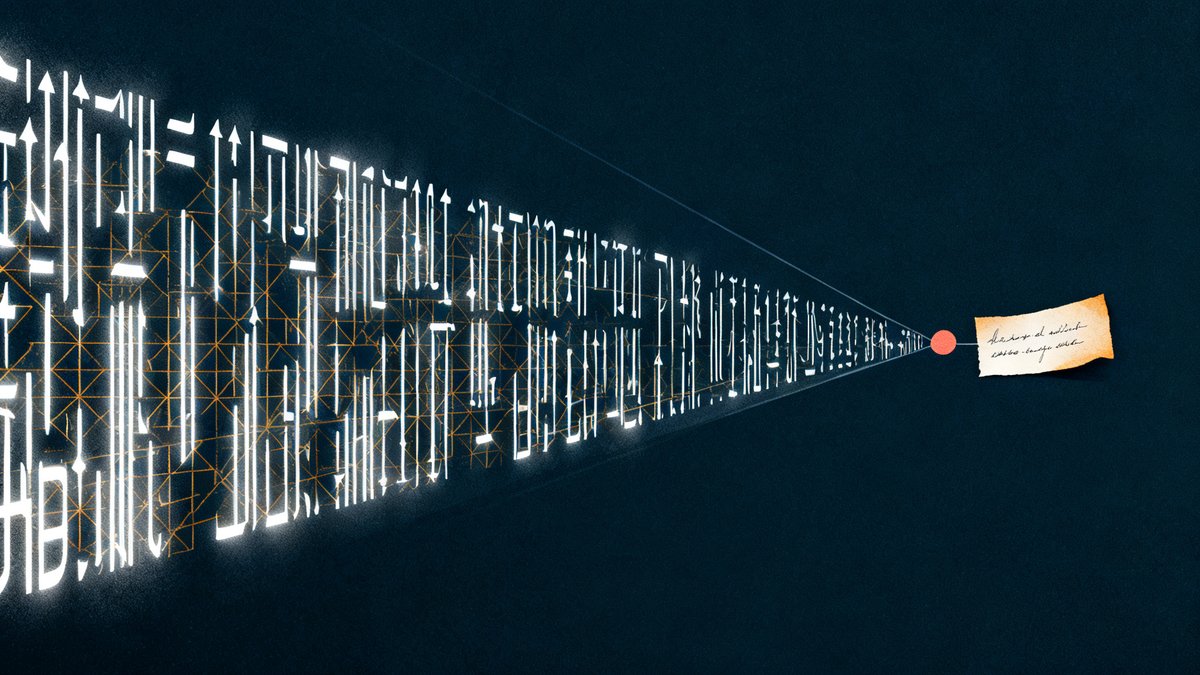
Since August 2, every word Claude generates carries an invisible watermark you cannot switch off.
Anthropic turned the mark on at the model level and announced it in mid-August coverage: it applies across the Claude Platform API, the Claude apps, Claude Code, Claude Cowork. And Claude Tag, plus Claude deployments running through AWS, Google Cloud, and Microsoft Foundry. The watermark is not metadata you can inspect in a file; it is a statistical bias baked into word choice. And Anthropic says it survives copying and light editing.
Separately, reports are circulating this week of detection errors hitting human-written text. And that second part is the one that should worry anyone who publishes with AI anywhere in their workflow.
How the mark actually works
The mechanism is older than the announcement.
Anthropic’s explainer describes it as subtle biasing of word choice, changing “the source of the randomness used to pick among words.” Scott Aaronson proposed the approach in 2022. And Google DeepMind shipped a version of it as SynthID-Text, published in Nature in 2024. Claude’s implementation follows the same family: the model nudges its own word selections in a pattern that a matching detector can recognize statistically later.
That is why the mark travels. Copy the text into a doc, paste it into a CMS, clean up a comma or two. And the signal persists, per Anthropic’s announcement. It is not a header or a hidden tag, so there is nothing visible to delete. Developer discussions this week claim stripping it is trivial. But that claim is unverified, and Anthropic has not published thresholds for how much rewriting neutralizes it. Files get a second, separate treatment: signed C2PA provenance metadata for tamper detection, documented in the Claude Help Center.
No surface escapes it, and the compliance work lands on you
There is no setting to disable this.
The mark applies at the model level, which means every surface inherits it, including the API calls your automations make and the cloud deployments you run through the big three providers. If you built a client workflow on Claude in the last year, it now emits marked text by default.
The driver is legal, not technical.
Forbes attributes the move to the EU AI Act’s Article 50 transparency mandate, with a transition period covering pre-August 2 models.
The line that matters for small operators sits in the Help Center: API deployers are told to “independently assess what Article 50 requires.” Read that plainly. Anthropic marked the output; proving compliance is your job, not theirs.
Two more wrinkles. Older Claude models get retrofitted “in the coming months,” with no rollout order or verification method published. So if you pinned an older model in production you are flying blind on timing. And Anthropic notes several other major AI providers are implementing watermarks too, while at least one major provider is publicly holding out.
Mixed-vendor pipelines, which is what most of us actually run, now emit a patchwork of marked and unmarked text.
The false-positive problem nobody priced in
Here is where the week’s argument got sharp. Developer communities, including a high-engagement thread on r/LocalLLaMA framing this as a reason to abandon closed models, are circulating reports of detection errors on human-written text. No verified error rates exist anywhere in this coverage, so treat any percentage you see quoted as unverified. But the failure mode is structural, not incidental.
Anthropic’s own FAQ distinguishes watermark detection from statistical AI detectors like Pangram.
Watermark detection asks one narrow question: does this text carry Claude’s pattern? Statistical detectors ask a fuzzier one: does this look machine-written?
Those two systems get conflated constantly, and the statistical ones carry the false-positive reputation.
A probabilistic test applied to human prose will flag some innocent writers. And the person flagged rarely gets to argue.
Run the stakes for a small operation.
A client runs your deliverable through a detector, it flags. And now you are defending your authorship with nothing but your word. An editor screens a submission, a hiring tool screens a writing sample, a professor screens an essay, same failure, same asymmetry. The Frase piece on this argues the watermark “won’t hurt your rankings,” but that is a promise, not a finding. Because nobody has ranking data from a watermarked-text web yet. I run a one-person automation agency and Claude sits in my stack. And the conclusion I reached this week is uncomfortable: the burden of proof on authorship just moved from platforms to writers.
What I’d do this week
You cannot opt out, so build your defenses instead.
Concrete moves, in order:
– Inventory your pipelines. List every workflow that calls Claude, directly or through AWS, Google Cloud, or Microsoft Foundry. You are shipping marked output by default, so know where it flows.
– Keep authorship receipts. Save prompts, drafts, and edit history for client deliverables. If a detector flags your work, a dated revision trail beats an argument.
– Update your disclosure line. Add a plain statement to client agreements or editorial policy naming which tools touched each deliverable. Disclosure on your terms reads better than an accusation you have to answer.
– Stop treating any detector as a verdict. Anthropic itself separates watermark checks from statistical tools like Pangram. Use detection output as a signal to investigate, never as a judgment.
– Track the retrofit if you run older models. The timeline is “coming months” with no published order, so check before you assume your pinned model is exempt.
– Do the Article 50 read. If you deploy via the API, Anthropic has explicitly left the assessment to you. Ten minutes with the mandate now beats a scramble later.
The marked-text web is arriving whether it is convenient or not. And the honest read is that detection tooling will mature faster than dispute process will.
The writers who survive that gap are the ones with receipts.
I build and audit AI content pipelines for small teams. And checking what your stack actually emits is now a standard part of that work. If you want your workflows inventoried before a client or a detector does it for you, that’s the job. Say the word and we’ll map what you’re shipping.