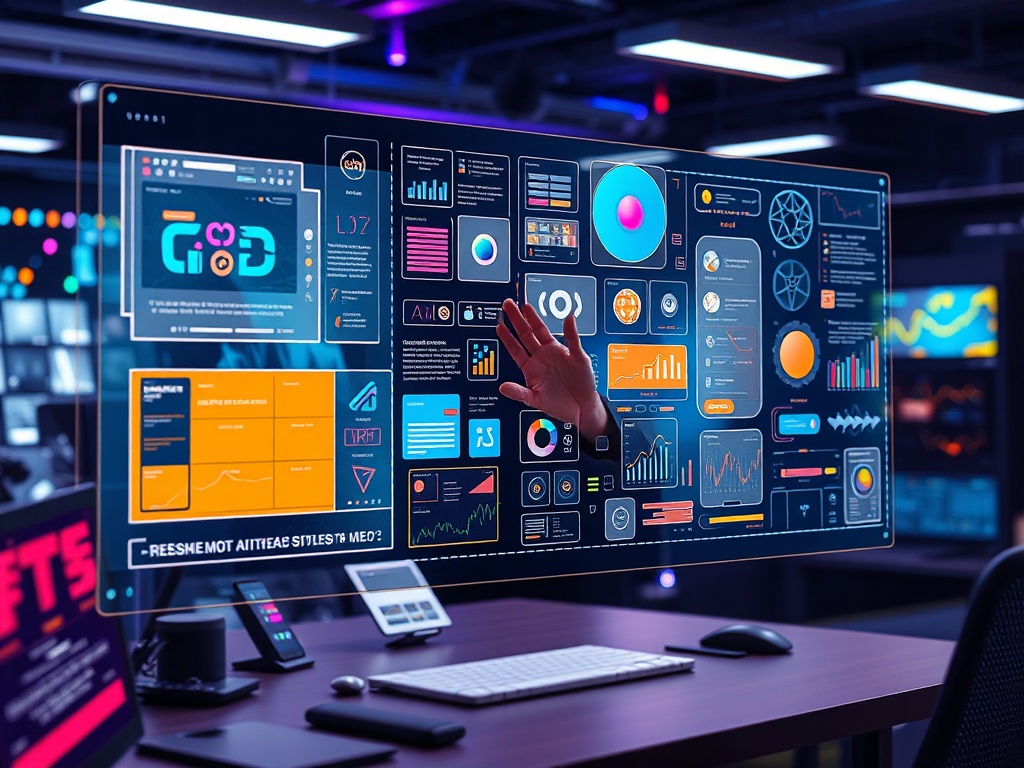
In an era where User Interface (UI) design is at the forefront of technological innovation, Generative UI is taking center stage. By 2026, it has revolutionized how we interact with software by replacing static UIs with contextually generated experiences tailored to users’ immediate intents and histories.
Understanding Generative UI
In 2026, Generative UI (GenUI) stands at the forefront of a revolutionary shift in how user interfaces (UIs) are conceived, designed, and deployed. By harnessing the power of artificial intelligence (AI) to dynamically generate UIs in real-time, GenUI is reshaping the landscape of software user experience (UX) design. This paradigm shift moves away from the traditional, static UIs that have dominated the digital world for decades, towards a more adaptive, intelligent system that can cater to the individual needs and intents of users with unprecedented precision and agility.
At the heart of GenUI’s transformative approach is its ability to leverage AI algorithms to interpret user behavior, intent, and context. This means that instead of users having to navigate through a one-size-fits-all interface, the interface itself morphs and adapts in real-time to present the most relevant information and options to each user. This dynamic generation of UI elements is achieved with millisecond latency, ensuring a seamless and smooth experience that rivals traditional static interfaces in speed and efficiency.
One of the key distinguishing features of GenUI, as opposed to conventional UI design, is the concept of design systems and constraints. In traditional UI development, designers would create fixed screens for every possible user interaction, a time-consuming and often imprecise method. GenUI, however, employs a more flexible and intelligent framework. Here, designers define a set of design tokens and constraints within which the AI operates. This allows the AI to generate specific UI elements on the fly, tailoring each interface to the user’s current needs and activities without the need for pre-defined screens.
The practical implications of this are vast. For instance, in the realm of e-commerce, GenUI-enabled apps can dynamically rearrange navigation and product displays in real-time, prioritizing items or categories based on the user’s shopping behavior and apparent interests. Similarly, in super apps, which amalgamate multiple services and functionalities into a single platform, GenUI allows for an interface that adapts to offer the most relevant options based on user context, history, and intent, significantly enhancing usability and engagement.
This hyper-personalization capability of GenUI marks a departure from the one-size-fits-all approach of traditional UIs. By adjusting the interface complexity to match individual user expertise, GenUI facilitates a more intuitive and accessible experience for all. Beginner users can be met with simplified, streamlined interfaces, while power users can access more complex functionalities without unnecessary handholding. This adaptability makes navigating feature-rich super apps more scalable and user-friendly than ever before.
Another noteworthy aspect of GenUI is its impact on the UX design profession. The shift towards dynamic, AI-generated interfaces has necessitated a new approach wherein designers focus on defining flexible design systems and constraints, rather than crafting individual screens. This, in turn, has given rise to new roles and responsibilities, particularly in the realm of AI quality assurance, to ensure that these generatively designed interfaces meet the highest standards of usability and user experience.
The advent of GenUI heralds a new era in software design where interfaces are not just interactive but intelligent, capable of adapting in real-time to the ever-changing needs and intents of users. By bridging the gap between static design and dynamic content, GenUI paves the way for more personal, efficient, and engaging digital experiences, fundamentally changing our expectations of how software should look and function in the process.
Technological Drivers of GenUI
The advent of Generative UI (GenUI) in 2026 has been facilitated by several crucial technological advancements, most notably the evolution of low-latency code generation and the sophisticated integration of machine learning in UI design. As the complexity and functionality of applications have expanded, especially with the rise of super apps, there has been a growing necessity for interfaces that are not just static but can adapt dynamically to user needs, context, and behaviors. This chapter delves into these core technological drivers that have catalyzed the swift adoption of GenUI across various sectors, reshaping user interaction paradigms.
At the heart of GenUI’s feasibility and efficiency is the breakthrough in low-latency code generation. Traditional UI design involved pre-designed, static screens that were developed and coded into the application, a process that could neither scale nor adapt dynamically to user interactions. The innovation in producing executable code with millisecond latency has been monumental. This technological leap means that AI can now generate or adjust UI elements in real-time without noticeable delays for the user. This speed is crucial for maintaining the fluidity and responsiveness that user’s expect from their digital experiences, making it a key driver behind GenUI’s emergence.
Furthermore, the application of machine learning in understanding user intent, history, and context has been transformative. The success of GenUI hinges on its ability to offer personalized experiences. Machine learning algorithms analyze vast amounts of data regarding user interactions, enabling the dynamic adjustment of UI elements tailored to individual users or user groups. These algorithms can predict a user’s needs based on past behavior, making the UI not just responsive but anticipatory.
The increasing complexity of super apps—software that combines multiple functions and services into a single platform—has necessitated the development of more adaptable interfaces. A single static interface can’t efficiently serve the diverse needs and expertise of a broad user base or the myriad of tasks such applications are designed for. GenUI’s ability to generate diverse, context-sensitive UI configurations allows for an unprecedented level of personalization and scalability in app design. This adaptability is not merely a luxury but a requirement for the effective use of super apps, underlining the significance of GenUI in contemporary software development.
An example of GenUI in action can be seen in e-commerce platforms. Traditionally, these platforms might have presented items and navigation in a fixed manner. However, with GenUI, the app can dynamically rearrange products, categories, and even navigation elements in real-time based on the user’s shopping behavior, time spent on certain product pages, and purchase history. This not only improves the shopping experience but significantly boosts the platform’s ability to meet business goals by aligning more closely with user intents and desires.
This tailored, anticipatory approach to UI design, enabled by GenUI, has sparked a paradigm shift in how software interfaces are conceived and implemented. The move from designing for the average user to crafting experiences for the individual, facilitated by these technological advancements, marks a significant stride towards more intuitive, user-centric applications. It is within this evolving landscape that the role of UX designers is also undergoing a profound transformation, as detailed in the following chapter. Their focus is shifting towards establishing the rules and parameters that guide this new AI-driven design process, a transition that underscores the profound impact GenUI is having on the field of user experience design.
The Evolving Role of UX Designers
In the rapidly evolving landscape of user experience design, the emergence of Generative UI (GenUI) technologies in 2026 has catalyzed a paradigm shift, fundamentally altering the role of UX designers. No longer confined to the traditional task of crafting static screens, designers are now embarking on a transformative journey, leveraging the prowess of GenUI to create dynamic, user-tailored interfaces. This transition underscores a pivotal reorientation from designing finite UI elements to conceptualizing robust design systems and constraints that serve as the foundation for AI-driven interface generation.
The crux of this shift lies in the GenUI’s ability to synthesize interfaces in real-time, meticulously tailored to the nuanced preferences, context, and historical interactions of the user. This calls for UX designers to adopt a more strategic role, focusing on the definition of flexible design tokens and constraints. These elements collectively act as a lexicon and grammatical framework that guide the AI in generating interfaces that are not only contextually relevant but also aesthetically pleasing and functionally intuitive. The complexity of super apps, characterized by their multifaceted functionalities and the sheer volume of content, mandates a dynamic approach to UI design. GenUI represents a quantum leap towards meeting this demand, enabling interfaces that dynamically evolve, practically on a per-interaction basis, without sacrificing the speed or efficiency hitherto exclusive to static UIs.
Moreover, the adoption of GenUI heralds the emergence of novel professions within the UX sphere, most notably in AI Quality Assurance (QA). As dynamic interfaces become the norm, ensuring that they consistently meet user needs and uphold high usability standards becomes paramount. Professionals in AI QA are tasked with a critical new responsibility: to rigorously evaluate and refine the AI’s output, ensuring that the dynamically generated interfaces are not only bug-free but also aligned with the established design principles and user experience goals. This role demands a unique fusion of design acumen, an understanding of AI behavior, and proficiency in usability testing, marking a significant evolution in the career trajectory of UX professionals.
The transition towards GenUI and its implication on UX design roles exemplifies the symbiotic relationship between technological innovation and professional evolution. Designers are now at the forefront of defining the future of interactive experiences, empowered by AI to create more personalized, engaging, and adaptive interfaces. This signifies a move away from the monolithic, one-size-fits-all approach of the past, towards a more nuanced and scalable method of UI design that caters to the varying levels of user expertise and preferences. The dynamic nature of GenUI, underscored by the seamless integration of design systems and AI-generated interfaces, ensures that each user interaction is as unique as the individual user, revolutionizing the way we interact with software and digital services.
In this evolving digital ecosystem, the role of UX designers is not diminished but rather elevated. By designing the parameters and guiding principles for AI-generated UIs, designers are not just creating interfaces but are also shaping the very foundation of how AI understands and interacts with human users. This shift towards GenUI is reflective of a broader trend in technology and design, where AI’s role is not to replace human creativity but to augment it, unlocking new dimensions of personalization and efficiency in the digital realm. As we look ahead, the continued advancement of GenUI technologies promises to further transform the landscape of user interface design, setting new benchmarks for what is possible in creating intuitive, adaptive, and user-centered software experiences.
Advantages and Challenges of Dynamic UIs
In the dynamic landscape of software design in 2026, Generative UI (GenUI) has ushered in an era of unprecedented personalization and scalability in user interfaces, directly addressing the complexities of today’s super apps. The adoption of GenUI technologies enables interfaces to be dynamically generated in real-time, meticulously tailored to meet each user’s intent, context, and history. This leap forward brings with it a suite of advantages that significantly enhance user experience and app functionality. However, alongside these benefits are challenges that demand meticulous attention to ensure the seamless operation of these AI-powered systems.
One of the paramount advantages of GenUI is hyper-personalization. By dynamically generating UIs, GenUI can adapt interfaces in milliseconds to match the unique needs and preferences of each user, considering factors like usage patterns, expertise level, and even cognitive load. This level of personalization ensures that applications remain not just usable but delightfully intuitive across a diverse spectrum of users. Furthermore, the ability to scale interface complexity means that GenUI can simplify or elaborate the user experience based on the individual’s familiarity and comfort with the application, making even the most feature-rich super apps accessible to all.
Another significant advantage is the scalability in feature-rich applications. Traditional static UIs can become cluttered as new features are added, but GenUIs, defined by flexible design systems and constraints rather than hardcoded screens, can evolve effortlessly alongside an app’s growth. This dynamic nature allows applications to expand their functionality without compromising on user experience, ensuring that the UI can adapt in real-time to present the most relevant features to each user.
However, the shift towards GenUI introduces several challenges. The need for rigorous AI testing is paramount. Unlike traditional UIs, where changes are manually vetted by designers and developers, GenUI relies on the AI’s ability to generate appropriate interfaces on the fly. Ensuring these interfaces meet high usability and accessibility standards requires a new breed of AI quality assurance professions, introduced in the previous chapter, focused on testing AI-generated interfaces under various conditions and use cases.
Furthermore, managing user expectations around AI behavior presents a psychological and technical challenge. Users may expect AI-powered interfaces to understand their needs perfectly, leading to frustration when the AI misinterprets intent or context. Educating users about the capabilities and limitations of GenUI, while continuously refining the AI to better recognize and adapt to user signals, is vital for harmonizing user expectations with reality.
Lastly, the maintainability of AI-generated UI code is a concern. As the AI dynamically generates interfaces based on defined constraints and design tokens, ensuring that the code remains clean, efficient, and easily updatable is crucial. This requires a new approach to design and development workflows, where the focus shifts from crafting individual screens to defining robust, flexible design systems that can guide the AI in generating optimal interfaces.
Generative UI represents a significant leap forward in interface design, offering the promise of highly personalized, scalable software experiences. However, realizing this promise necessitates overcoming substantial challenges in AI testing, user expectation management, and code maintainability. Addressing these challenges head-on is essential for harnessing the full potential of GenUI, paving the way for a future where software interfaces are as dynamic and adaptable as the needs and preferences of their users.
Future Insights and Industry Impact
In the rapidly evolving landscape of user interface design, the emergence of Generative UI (GenUI) in 2026 has heralded a seismic shift, catapulting the industry into a new era where the creation of dynamic, real-time user interfaces is both a reality and a necessity. As we peer into the future, the trajectory of GenUI suggests a continuous curve of innovation, shaping not only how interfaces are developed but fundamentally altering user expectations and the competitive dynamics within app development.
One of the most tantalizing prospects for GenUI is its potential integration with anticipatory design principles and emotional AI technologies. Anticipatory design, with its foundation in predicting user needs and preferences to offer decisions or content, dovetails perfectly with GenUI’s capacity to dynamically generate user interfaces. When combined, these approaches could eliminate unnecessary user choices, streamline interactions, and create a seamlessly intuitive user experience that anticipates needs before they are even articulated. Imagine interfaces that evolve not just in response to explicit user actions but adapt preemptively, based on sophisticated models of user behavior and predictive analytics.
Emotional AI, or affective computing, introduces another compelling dimension to the GenUI evolution. By incorporating technologies capable of recognizing and responding to the emotional state of the user, interfaces could adjust not just to the what and when, but the how of user interaction—modulating responses based on detected stress levels, enthusiasm, or confusion. This could mean dynamically simplifying interfaces for users detected to be in a state of frustration, or offering more complex navigational options to those exhibiting signs of boredom. The integration of GenUI with emotional AI holds the promise of creating deeply personalized, empathetic user experiences that maintain engagement and satisfaction at unprecedented levels.
The potential for these advanced GenUI systems to reshape the landscape of digital interaction is immense. However, it also sets a new benchmark for consumer expectations. Users accustomed to interfaces that adapt not just to their explicit commands but their implicit needs and emotional states are likely to become less tolerant of static or poorly responsive interfaces. This, in turn, raises the bar for all developers and product designers, pushing the industry towards a future where dynamic, intelligent interfaces are the standard rather than the exception. The ripple effect of this shift is significant, compelling companies to invest in the technologies and talent necessary to keep pace with these evolving expectations.
The competitive landscape of app development is also poised for transformation. In a market where GenUI and emotionally aware interfaces become the norm, differentiation will hinge on the ability to fine-tune and personalize the user experience to an ever-greater degree. As a result, we may see a proliferation of roles centered around AI quality assurance, emotional data analysis, and anticipatory design systems—professions dedicated to refining the nuances of how interfaces predict, adapt to, and influence user behavior and satisfaction.
As we look towards the future, the intersections of GenUI with anticipatory design and emotional AI not only hint at the breadth of possibilities for personalization and user engagement but also underscore the evolving challenges and opportunities facing the tech industry in its quest to meet and exceed user expectations. These advancements promise to redefine our interaction paradigms, creating a landscape of intuitive, empathetic, and immensely personal digital experiences that seamlessly integrate into the fabric of daily life.
Conclusions
Generative UI has not merely arrived; it has altered the very fabric of UI design. AI-powered interfaces tailor every experience, offering unparalleled personalization and efficiency. As designers adapt to new roles, the potential for GenUI to create more inclusive and intuitive digital landscapes is both inspiring and boundless.