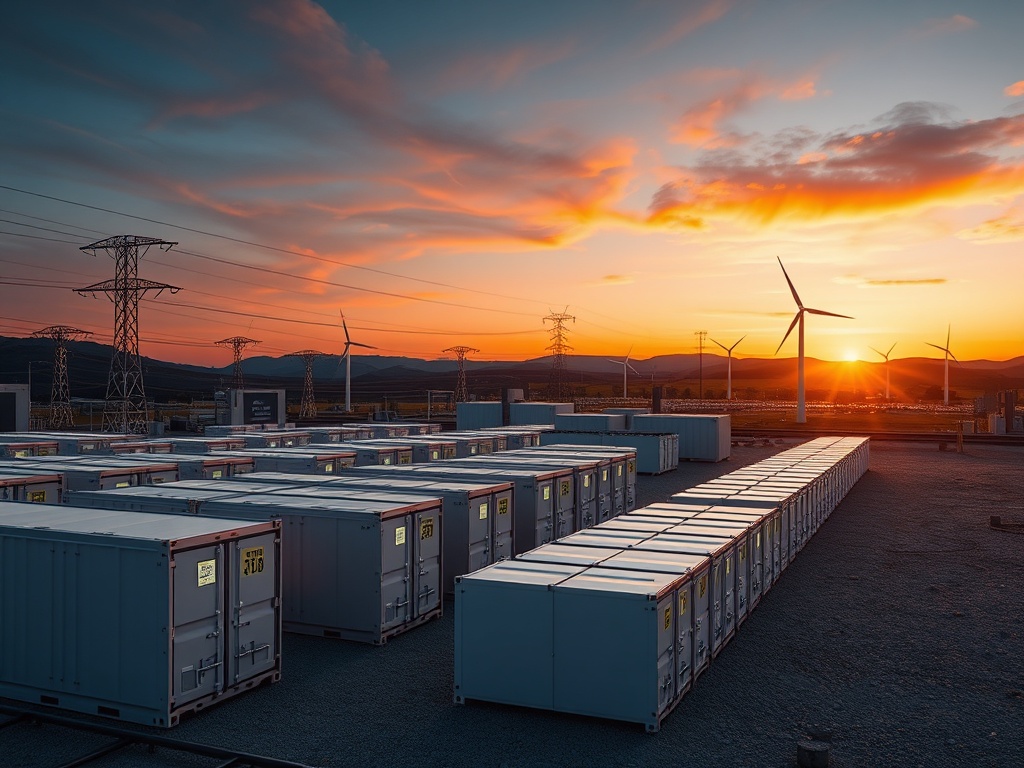
A new wave of breakthrough battery technology is transforming what energy storage can do. Instead of delivering power for just a few hours, long duration energy storage is now aiming for multi day and even week long battery discharge. This shift could reshape renewable energy, grid reliability, and backup power by storing clean electricity until it is needed most.
Why Week Long Battery Storage Matters
Why Week Long Battery Storage Matters
Long duration energy storage is the class of storage built to hold and deliver electricity for far longer than the short bursts most people associate with batteries. Instead of covering a few minutes, an hour, or a typical evening peak, these systems are designed to provide power for many hours, multiple days, and in the most ambitious cases, week long battery storage. That difference is not just a matter of scale. It changes what batteries can do for the grid, for businesses, and for homes.
To understand why this matters, it helps to look at how batteries are measured. Power is how much electricity a system can deliver at once, usually expressed in kilowatts or megawatts. Energy is how much electricity it can store in total, measured in kilowatt-hours or megawatt-hours. Discharge duration is the bridge between them: it tells us how long a battery can keep supplying power at a given output. A battery might have high power but limited energy, making it ideal for rapid response. A long duration energy storage system, by contrast, is engineered so energy capacity lasts much longer, supporting the grid through extended events instead of just short fluctuations.
For years, conventional batteries have been most effective at hourly needs: smoothing solar output, shifting energy from midday to evening, and responding instantly when demand suddenly rises. But the modern grid is facing stress that lasts much longer than a few hours. Solar production can dip for several cloudy days in a row. Wind generation can fall during regional weather patterns that affect entire transmission zones. Heat waves, winter storms, and wildfire-related outages can create surges in demand and disruption that last well beyond the window of traditional storage. That is why storage beyond 8 to 12 hours is becoming increasingly important. Once the challenge extends into the second day, third day, or even a full week, the energy system needs a different kind of backup: one that can sustain reliability through prolonged events, not just brief peaks.
This is where breakthrough energy storage technology becomes transformative. Week long battery storage can help utilities balance renewable supply over longer weather cycles, reducing the need to fall back on fossil-fueled peaker plants or emergency imports. It can give businesses greater confidence that operations will keep running even when the grid is strained. It can help households in places with rooftop solar or community solar store surplus electricity for later use, improving resilience during outages and reducing exposure to volatile pricing. In practical terms, multi day and week long discharge unlocks a grid that can absorb more clean energy without sacrificing reliability.
The value goes beyond convenience. Long duration systems support renewable energy on a much larger scale by making variable generation more dependable. They strengthen grid resilience by providing a cushion during extreme weather, supply chain interruptions, and unexpected outages. They also support energy independence by allowing regions, campuses, industrial sites, and communities to rely more on locally produced power and less on fuel shipments or imported electricity. In that sense, week long battery storage is not simply a technical improvement. It is a milestone in the broader energy transition, because it changes the role storage plays from a short-term balancing tool to a foundational element of a cleaner, more flexible, more self-reliant grid.
That shift is why long duration energy storage is drawing so much attention now. The question is no longer only how to store electricity, but how to store enough of it, for long enough, and at the right cost and scale to serve a modern energy system. The technologies that can make week long battery discharge possible are emerging from multiple directions, each with its own strengths, tradeoffs, and pathway to deployment.
The Technologies Driving The Breakthrough
The breakthrough energy storage technology conversation is no longer limited to a single battery chemistry. For long duration energy storage, especially the idea of week long battery storage, the most promising path may come from a family of technologies, each designed to store energy in a different way and each suited to a different slice of the problem. Some systems store electricity directly in chemical bonds, while others convert it into heat, pressurized gas, or liquefied air before turning it back into power later. That broader toolkit matters because there is no one-size-fits-all answer for multi day reliability.
Flow batteries are one of the clearest examples of how architecture changes the game. In a flow battery, the energy is stored in liquid electrolytes kept in external tanks, while the power-producing stack sits separately in the center of the system. This separation of power and energy is the key advantage. If a project needs more discharge duration, engineers can simply increase the tank size rather than redesigning the full electrochemical core. That makes flow batteries especially attractive for long duration energy storage because they can scale toward many hours or even days without the same dramatic cost penalty seen in conventional batteries. Their strengths are in durability, deep cycling, and configurable capacity, although their relatively lower energy density and larger physical footprint mean they are often best for stationary applications where space is less constrained.
Solid state batteries take a different route. Instead of using a liquid electrolyte, they rely on a solid material to move ions between electrodes. This shift can improve safety by reducing flammability risk and can also allow higher energy density, which is one reason solid state chemistry is often described as a breakthrough battery technology for the future. Higher energy density means more stored energy in a smaller package, a valuable trait when land use, footprint, or deployment flexibility matter. For week long storage, solid state systems are exciting because they may support better stability and potentially longer life than today’s lithium ion designs. The challenge is not just performance, but manufacturability at scale, which is why they remain a future-facing solution rather than a near-term universal answer.
Zinc based batteries bring another compelling set of advantages. Zinc is abundant, relatively low cost, and generally safer to handle than highly reactive chemistries. Zinc based storage systems can also offer strong cycle life, especially when engineered to suppress dendrites and other degradation mechanisms. Depending on the design, they may use zinc-air, zinc-bromine, or aqueous zinc-ion architectures, each with different tradeoffs in efficiency and energy density. For long duration energy storage, zinc systems stand out because they aim to combine cost control, safety, and long service life. That combination is powerful for deployments where economics matter as much as performance.
Beyond electrochemical batteries, several long duration energy storage alternatives expand the meaning of battery storage itself. Thermal storage captures energy as heat in materials such as molten salts, rocks, or specialized liquids, then converts it back to electricity or useful heat later. Hydrogen systems use electricity to split water, store the gas, and then convert it back through fuel cells or turbines. Compressed air stores energy by forcing air into underground caverns or tanks, while liquid air cools air to cryogenic temperatures and later expands it to generate power. These approaches often differ from batteries in form, but they solve the same core problem: holding energy across long intervals when standard battery discharge windows are too short.
Each technology must be judged by a few core metrics. Energy density describes how much energy can be stored in a given mass or volume, and it matters for footprint and system size. Cycle life measures how many charge-discharge cycles a system can survive before meaningful degradation, which is essential for economic viability. Round trip efficiency shows how much energy you get back compared with what you put in, making it a key measure of operational performance. Scalability asks whether a technology can be manufactured, deployed, and expanded affordably enough for real-world use. For week long storage, no single metric is enough; the best solution is the one that balances them for the target application.
That is why week long storage may come from both electrochemical batteries and hybrid systems. Some sites may pair batteries with thermal or hydrogen systems, using each technology where it performs best. Others may rely on one chemistry for shorter multi day coverage and another for seasonal or backup resilience. The result is a broader, more flexible definition of storage, where the right breakthrough energy storage technology is not just the one that stores electricity, but the one that stores it intelligently, safely, and long enough to matter.
What Makes A Battery Last For Days
Making a battery last for days is not simply a matter of packing in more cells. In long duration energy storage, the challenge is not just capacity, but whether a system can hold its performance, safety, and economics over hundreds or thousands of slow, deep discharges. A week long battery storage system has to survive a very different operating reality than a phone battery or even a typical grid battery used for a few hours of support. It must resist damage during long periods at high state of charge, tolerate repeated stress from charging and draining, and do all of this without becoming too expensive for real-world deployment. That is why breakthrough battery technology is as much about durability and manufacturing as it is about raw energy.
The main enemy is degradation. Inside many batteries, microscopic defects grow into major failures over time. Dendrites, for example, are needle-like metal structures that can form during charging and eventually short-circuit cells. Corrosion can slowly attack electrodes and current collectors, reducing usable capacity. Electrolyte breakdown changes the chemistry of the system, raising resistance and lowering efficiency. Heat adds another layer of stress: temperature swings speed up side reactions, dry out materials, and can trigger runaway failure if the battery is poorly managed. For a battery meant to discharge for days, these processes matter more because the system remains active for longer periods and often at larger total energy throughput than short duration lithium ion systems.
That is why cycle stability is essential for commercial viability. A battery that looks impressive in the lab but loses performance after a few hundred cycles is not a grid asset; it is a costly experiment. Utilities and developers need confidence that a storage system will still deliver predictable output years after installation. Long duration designs must therefore be measured not just by initial capacity, but by how well they retain efficiency, power, and usable storage across repeated cycles, partial charges, seasonal temperature changes, and extended idle periods. In practice, week long discharge requires a chemistry that can be pushed hard without rapidly aging.
Advanced materials and protective interfaces are helping solve this. Stable solid electrolytes, corrosion-resistant electrodes, engineered separators, and coating layers can reduce unwanted reactions between components. These interfaces act like shields, limiting dendrite growth and slowing electrolyte decomposition. Some designs use protective membranes that allow ions to move while blocking destructive side reactions. Others rely on host materials that store ions more gently, reducing mechanical strain that would otherwise crack particles or create fresh reactive surfaces. The best results often come from combining chemistry innovation with architectural discipline: matching the electrode, electrolyte, and current path so the battery operates within a safer, more durable window.
The tradeoffs between cost, safety, and long duration performance define whether a concept can scale. A high-energy battery that uses rare or expensive materials may perform beautifully but fail the market test if it cannot be built affordably. A cheaper system may be safer but too bulky or inefficient for the space available. Long duration energy storage pushes designers to optimize the entire system, not just the cell. Thermal management, fire suppression, power electronics, packaging, and controls all influence lifetime and cost. In other words, the best chemistry can still underperform if the balance of the system creates unnecessary heat, pressure, or complexity.
Manufacturing compatibility is often the hidden gatekeeper. A promising material may need ultra-pure inputs, delicate assembly steps, or exotic factory equipment that does not fit existing supply chains. If a breakthrough cannot be produced consistently at scale, it cannot become infrastructure. Grid buyers need confidence that thousands of identical units will behave the same way and be serviced with familiar tools and available replacement parts. This is where supply chain scalability becomes just as important as scientific novelty. Technologies that use abundant materials, proven fabrication methods, and modular designs have a better chance of moving from prototype to market.
Compared with short duration lithium ion systems, emerging long duration designs usually accept lower power density in exchange for longer discharge time, better longevity, or lower total storage cost over many hours. Lithium ion remains strong where compactness and fast response matter, but week-long discharge demands a different engineering philosophy. The system must be built to endure extended operation, not just rapid bursts. That shift is what makes long duration energy storage so challenging and so promising. If these materials, interfaces, and manufacturing pathways can be aligned, the result could be batteries and hybrid storage systems capable of reliable multi day service on a cleaner, more resilient grid.
Where Week Long Storage Will Change The Grid
Breakthrough energy storage technology is most powerful when it moves from the lab into the real grid. Long duration energy storage and week long battery storage are not just technical milestones; they are operational tools that can reshape how electricity is generated, delivered, and protected. Once storage can hold energy for days instead of hours, it becomes possible to cover the gaps that matter most: a calm week after a wind surge, a cloudy stretch after a sunny season, or a heat wave that pushes demand higher for several days in a row.
This is where the idea of reliability changes. Today, many batteries are designed for rapid response, peak shaving, or short backup events. Week long discharge extends that value far beyond brief support. It allows utilities to plan around multi-day weather patterns, not just single-hour fluctuations. That means solar and wind become much easier to integrate at high levels, because storage can absorb excess power when generation is abundant and release it when renewable output drops for an extended period. In practical terms, long duration energy storage helps make variable clean generation act more like firm power.
One of the most important uses is firming solar and wind power through low-generation periods. A utility with week long battery storage can smooth out seasonal swings, not just daily ones. For example, several overcast days or a prolonged low-wind event no longer force a heavy reliance on gas plants. Instead, stored energy can bridge the gap while renewable output recovers. This reduces curtailment during high-output periods and improves the economics of every solar panel and wind turbine already on the system.
Week long battery discharge also changes how grids respond to emergencies. During storms, outages, and heat waves, the greatest challenge is often not a few minutes of instability but an extended period of stress. Long duration storage can provide backup power for critical loads when fuel deliveries are disrupted, transmission lines are damaged, or demand stays elevated for days. That makes it especially valuable for hospitals, water systems, emergency shelters, and data centers that need continuity when the grid is under pressure.
Another major advantage is the ability to reduce dependence on fossil fuel peaker plants. These plants are often built for rare but extreme demand events, and they can be expensive to maintain and polluting to run. If batteries can discharge for a week, they can cover many of the same reliability needs without combustion. That does not just lower emissions; it also changes utility planning. Instead of keeping peakers ready for uncertain multi-day peaks, grid operators can lean on storage assets that are faster, cleaner, and potentially cheaper over time.
The benefits extend beyond large grids. Microgrids, remote communities, military bases, and critical infrastructure all need resilient power that can survive isolation from the main grid. In remote areas, fuel logistics are costly and weather dependent. On military bases, energy security is a strategic issue. In all of these settings, week long storage can provide a practical buffer that keeps essential systems running without constant fuel shipments. For microgrids, it also supports better local use of solar and wind by storing energy through multi-day demand cycles.
Week long discharge improves energy arbitrage and grid balancing as well. Electricity prices can vary dramatically over several days as weather, demand, and supply conditions shift. Storage that lasts for days can buy power when it is cheapest and discharge when the system is under strain, helping stabilize prices and reduce volatility. This is especially useful in grids with growing renewable penetration, where the value of storage is no longer just in fast response but in the ability to manage longer mismatches between supply and demand.
That broader role is what makes this technology so important for a cleaner grid. Long duration energy storage turns renewables from intermittent resources into dependable infrastructure. It reduces the need to oversize fossil backup, improves grid resilience, and increases the value of low-cost wind and solar generation. As engineering advances make these systems more durable, more scalable, and more affordable, week long battery discharge can become a foundation for high renewable power systems that are both practical and secure.
The Future Of Breakthrough Energy Storage
If week long battery storage becomes commercially common, the impact on the energy system would be bigger than a simple upgrade in capacity. It would mark a shift in how grids are designed, how renewable power is valued, and how societies think about reliability. Breakthrough energy storage technology would no longer be a future concept discussed only in research papers; it would become a practical tool for delivering long duration energy storage at the scale needed for modern electrification. That transition would be especially important for a cleaner grid that must perform not just for a few hours, but across weather changes, seasonal swings, and multiple days of high demand.
The path from laboratory success to broad adoption will likely be gradual and highly competitive. Early validation usually begins with small prototypes that prove chemistry, cycle life, safety, and efficiency under controlled conditions. From there, pilot projects help utilities and developers test how systems behave in real-world conditions, including grid interconnection, software controls, maintenance needs, and response during stress events. Only after those milestones are met can technology move into scaled deployment. In practice, utility scale projects will probably lead commercialization because they can absorb higher upfront costs, quantify system-wide value, and provide the operating data that financiers and regulators need before broader markets open.
That path will not be driven by technology alone. Policy support can dramatically speed adoption when governments create clear rules for market participation, storage incentives, and long-term procurement. Investment also matters, because new battery platforms need patient capital to refine manufacturing and reduce risk. Standards are equally important: safety codes, performance benchmarks, warranty frameworks, and interconnection requirements give buyers confidence and help promising systems move from one-off demonstrations to bankable infrastructure. Where these forces align, the market for week long battery storage can grow much faster than it would through technical progress alone.
Even so, it is unlikely that one chemistry will solve every use case. Different technologies will probably win in different markets based on cost, operating profile, geography, and supply chain constraints. Some systems may excel at very high efficiency and daily cycling, while others may favor lower material cost, greater thermal stability, or easier scaling for multi day service. In that sense, the future of breakthrough battery technology is not a single winner-take-all outcome. Instead, it is a portfolio of solutions, each optimized for a specific role in a more flexible grid.
For technologies to move from promising to mainstream, three factors will be decisive: lower cost, safer materials, and higher efficiency. Lower cost makes long duration storage competitive with conventional backup and peaking resources. Safer materials reduce permitting friction, improve public acceptance, and lower insurance and operational risk. Higher efficiency ensures that storing electricity for days does not waste too much of the clean power being captured in the first place. Together, these improvements turn long duration storage from a demonstration asset into infrastructure that utilities can deploy at scale with confidence.
As deployment grows, long duration storage will increasingly complement solar, wind, and modern digital grids. Renewable generation is already abundant in many regions, but its value rises when it can be shifted across time, not just seconds or hours. Multi day batteries make it easier to align supply with demand during low-resource periods, reduce reliance on legacy backup plants, and support more ambitious renewable buildouts without sacrificing reliability. That is why long duration energy storage is becoming central to the conversation about grid modernization and clean power resilience.
The benefits will also extend beyond utilities. Everyday users could experience fewer disruptions and better protection from outages. Businesses may gain more predictable operations, lower exposure to power interruptions, and improved resilience for data centers, manufacturing, and refrigeration. Communities could rely on stronger local energy systems that maintain essential services during extreme weather or supply shocks. In places where power has historically been fragile or expensive, reliable multi day storage could improve quality of life and economic stability in tangible ways.
In the years ahead, the combination of smarter policy, stronger investment, better standards, and real-world project experience could turn week-long discharge from an ambitious target into an ordinary feature of the grid. If that happens, energy would no longer be limited to the moments when the sun shines or the wind blows. It could be stored, managed, and delivered when people actually need it, creating a future where clean electricity becomes dependable around the clock, for days at a time, and eventually for a week or more.
Conclusions
Breakthrough energy storage technology is moving the idea of week long battery discharge from dream to real possibility. Long duration energy storage can strengthen renewable power, improve grid resilience, and reduce dependence on fossil fuel backup. Whether through advanced batteries, flow systems, or hybrid approaches, the future is exciting. The next energy revolution may not be about making electricity, but about keeping it ready for as long as we need.