As we forge into a new era of technological symbiosis, non-invasive Brain-Computer Interface (BCI) AI co-pilots are transforming how we interface with the digital realm, securing brain health in the process.
Revolutionizing Human-Machine Interaction
The landscape of human-machine interaction is witnessing a groundbreaking transformation through the emergence and evolution of non-invasive Brain-Computer Interface (BCI) technologies. These advances are not merely enhancing the interface between humans and machines but are revolutionizing the very nature of this interaction, shifting the paradigm from physical to mental control over digital interfaces. This profound change is fundamentally driven by advancements in neural signal acquisition methodologies such as Electroencephalography (EEG), alongside the integration of artificial intelligence (AI) algorithms, which together are setting a new standard for how we interact with and control technology — all while prioritizing brain health and safety.
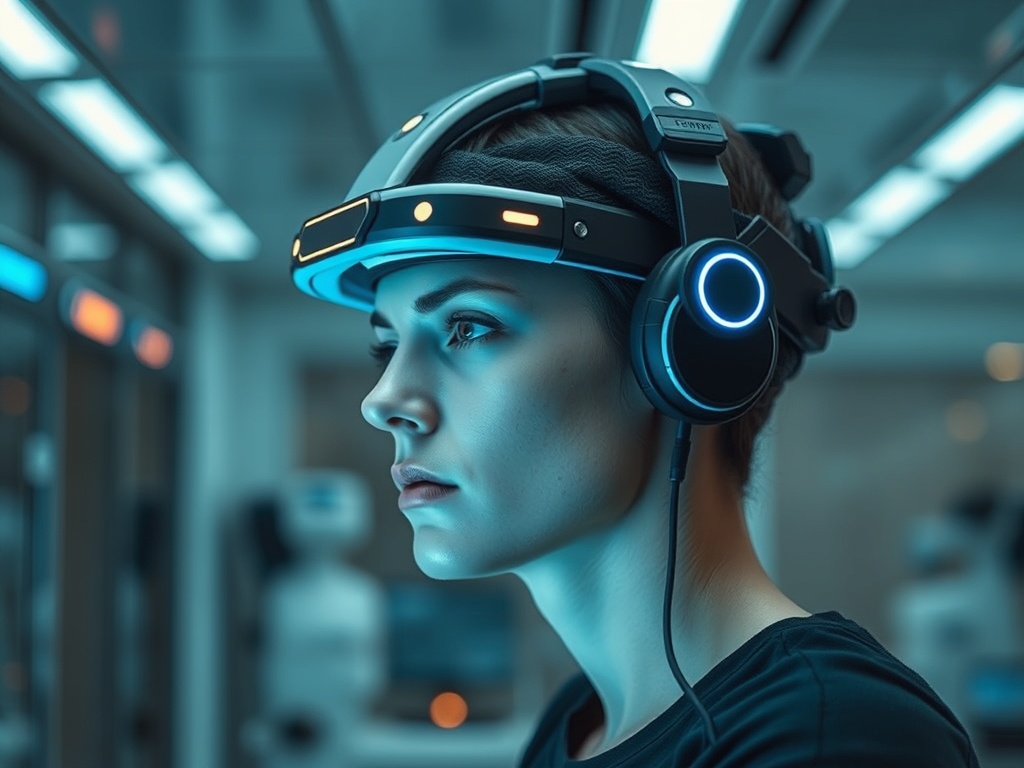
At the core of this technological revolution are high-resolution, non-invasive neural recording techniques. Recent breakthroughs in this area have led to the development of ultra-thin electrode arrays that can be placed on the surface of the brain and sophisticated wearable EEG sensors capable of capturing detailed brain signals without penetrating the brain tissue. These innovations have greatly minimized the risks associated with surgical procedures, preserving brain health, and opening up BCI technologies to a broader audience. The detailed data these non-invasive techniques provide is invaluable for understanding complex brain activity and translating it into actionable commands in a digital environment.
With the advent of non-invasive BCI technology, the interaction between humans and machines has become more intuitive and seamless. Users can now control cursors, robotic arms, or even augmented reality interfaces purely through thought, without any physical movement required. This leap in technology is not only enhancing the capabilities of able-bodied individuals in their everyday interactions with technology but is also offering newfound independence to those with disabilities. Patients suffering from ALS, stroke, spinal cord injuries, and other neurological conditions have found a new voice and means of expression through non-invasive BCIs, allowing them to communicate and interact with the world around them in ways that were previously unimaginable.
The integration of AI with non-invasive BCI technologies has been pivotal in decoding the noisy brain signals that such interfaces capture. AI algorithms play a crucial role in interpreting these signals, predicting user intentions, and converting them into precise commands that control external devices. This synergy between non-invasive BCI and AI not only improves control speed and accuracy but also enhances the user’s experience by making the interaction with digital environments more fluid and natural. The advancements in AI have thus been instrumental in elevating non-invasive BCIs from experimental technologies to practical tools that can be integrated into everyday life and consumer technologies.
Furthermore, these technologies have opened new horizons for clinical and practical applications, making significant impacts in the fields of rehabilitation, communication, and assistive technologies. They offer a promise of not only preserving but also improving the quality of life for individuals with various disabilities, offering them a level of autonomy that was previously difficult or impossible to achieve. The future of non-invasive BCI technology is closely tied to continuous advances in AI, signal processing, wireless technology, and neurofeedback techniques, which are expected to further enhance its capabilities.
In summary, the evolution of non-invasive BCIs is reshaping the landscape of human-machine interaction, driving a shift from physical control mechanisms to a new era of mental control over digital interfaces. By leveraging advancements in neural signal acquisition like EEG and integrating these with sophisticated AI algorithms, this technology is not only enhancing the way we interact with machines but is also significantly improving accessibility and opening new possibilities for preserving and boosting brain health.
The Rise of AI Co-Pilots in BCI
The rise of AI co-pilots in the realm of non-invasive Brain-Computer Interface (BCI) technology marks a pivotal shift in the way humans interact with digital systems. By leveraging the power of artificial intelligence, these innovative systems can interpret and predict user intent with remarkable precision, thus vastly improving the efficiency and responsiveness of thought-controlled applications. This advancement not only enhances user experience but also opens up new avenues for brain health preservation and rehabilitation.
At the core of non-invasive BCI technology lies the acquisition of neural signals through sophisticated methods such as ultra-thin electrode arrays or wearable Electroencephalography (EEG) sensors. These high-resolution, non-invasive neural recordings are crucial for capturing the intricate details of brain activity without the need for invasive surgery. However, the raw data obtained from these recordings are often complex and cluttered with noise, making the accurate interpretation of user intentions a significant challenge.
Enter AI co-pilots. These advanced AI algorithms are designed to sift through the noisy data, learning to identify patterns and nuances in the brain signals that correlate with specific thoughts or intentions. By continuously analyzing the user’s brain activity, AI co-pilots can adapt and improve over time, offering a highly personalized interaction experience. For instance, recent studies have demonstrated that wearable BCI systems integrated with AI co-pilots can amplify task performance nearly fourfold compared to systems without AI assistance. This level of efficiency not only makes BCI technology more accessible but also more practical for everyday applications.
The integration of AI co-pilots significantly elevates the decoding capabilities of BCI systems. Through real-time interpretation of neural signals, these AI-enhanced BCIs can predict user intentions with an unprecedented level of accuracy, effectively translating thoughts into actions. This breakthrough has profound implications for individuals with neurological conditions such as ALS, stroke, and spinal cord injuries. By enabling these users to control digital interfaces, robotic aids, or communication devices through thought alone, AI co-pilots are setting a new standard for assistive technology, prioritizing user autonomy and inclusivity.
Moreover, the non-invasive nature of these BCI systems ensures that the pursuit of enhanced human-machine synergy does not come at the expense of brain health. By sidestepping the need for invasive procedures, the risk of infections, and long-term compatibility issues are significantly reduced, making the technology safer for more extended use and a broader population. This emphasis on preserving brain health while providing advanced control mechanisms represents a harmonious balance between technological innovation and medical ethics.
Looking ahead, the future of non-invasive BCI AI co-pilots holds immense promise. With ongoing advances in AI, signal processing, and wireless technology, coupled with a deeper understanding of neurofeedback, these systems are expected to become even more intuitive and efficient. This evolution will not only further revolutionize rehabilitation and assistive tech but also pave the way for their integration into daily life, enhancing cognitive abilities and mental well-being. This potential makes the intersection of non-invasive BCI technology and AI co-pilots a fertile ground for innovation, poised to redefine our interaction with the digital world and heralding a new era of human-machine synergy and brain health preservation.
In this vibrant ecosystem where technology meets neuroscience, AI co-pilots stand out as critical enablers, transforming the landscape of non-invasive BCIs. Their ability to interpret and predict user intent with increasing precision is not merely a technical accomplishment; it is a beacon of hope for enhancing life quality, offering a glimpse into a future where technology seamlessly integrates with human thought, enriching every interaction and safeguarding our most precious organ, the brain.
From Lab to Life: Integrating BCIs in Consumer and Assistive Tech
The advent of non-invasive Brain-Computer Interface (BCI) AI co-pilots marks a significant leap forward in human-machine synergy, especially in the realms of consumer and assistive technologies. By leveraging state-of-the-art AI algorithms and sophisticated non-invasive neural recording methods, such as electroencephalography (EEG), these innovative BCIs are bridging gaps in communication and interaction for individuals with speech or motor impairments, seamlessly integrating into their daily lives.
One of the most profound impacts of these technologies is observed in the way they offer new communication avenues for individuals with conditions such as amyotrophic lateral sclerosis (ALS), stroke, or spinal cord injuries. Traditional assistive technologies often require some degree of motor control, whether it’s the push of a button or a verbal command. However, non-invasive BCI AI co-pilots transcend these limitations by providing a direct channel of communication between the user’s thought patterns and external devices. For instance, text-to-speech technologies can now be controlled purely through neural signals, enabling individuals to articulate their thoughts and engage in conversations without the need for speech or physical movement.
Integration with consumer technology is equally promising, as companies are increasingly recognizing the potential of BCIs to enrich user experiences. From augmented reality interfaces that can be navigated through thought alone to smart home devices controlled by brain signals, the seamless interaction promoted by non-invasive BCI AI co-pilots is transforming everyday activities into intuitive, accessible experiences. This not only enhances quality of life for the general population but also opens up a world of independence for those with severe motor impairments.
The hardware and software underpinning these systems are continuously evolving. Wearable EEG sensors, for example, have become more comfortable and less intrusive, blending naturally into users’ daily lives. Concurrently, AI algorithms have grown more adept at decoding the noisy and complex neural signals associated with specific thoughts and intentions. These advancements have culminated in systems that can learn and adapt to individual users, offering personalized assistance that improves over time. As the technology matures, the integration of non-invasive BCI AI co-pilots into consumer and assistive devices is becoming increasingly seamless, with systems becoming more intuitive to set up and use.
In addition to enhancing communication, these technologies hold promise for a broader spectrum of applications. They offer novel ways to interact with video games, educational software, and virtual reality, creating immersive experiences that were previously inconceivable. For individuals with disabilities, the potential to control a wheelchair, robotic arm, or other assistive devices through thought opens up new dimensions of autonomy and mobility. Furthermore, the integration of BCIs in educational tools can provide unique learning experiences, potentially assisting children and adults with learning disabilities to engage with educational content more effectively.
The path from lab to life for non-invasive BCI AI co-pilots has not been without challenges. Technical hurdles, such as improving signal accuracy and minimizing latency, continue to be addressed through ongoing research and innovation. Moreover, ethical considerations, including privacy and data security, are paramount as these technologies gain traction. Nevertheless, the progress made thus far signifies a promising future where the integration of BCIs in consumer and assistive tech not only enhances user experience but also embodies a profound step forward in inclusivity and accessibility.
As we venture into the next horizon of human-machine interaction, the role of non-invasive BCI AI co-pilots in consumer and assistive technologies cannot be overstated. Their ability to decipher neural signals in real-time and translate them into meaningful actions holds the key to unlocking new realms of communication, autonomy, and human potential, heralding an era where technology truly serves humanity’s diverse needs.
Clinical Applications and Preservation of Brain Health
The burgeoning field of non-invasive Brain-Computer Interface (BCI) AI co-pilots is not just opening new doors for human-machine synergy but is also pioneering the preservation of brain health through its clinical applications. These advanced systems, by leveraging AI in decoding neural signals from non-invasive methods such as Electroencephalography (EEG), are making significant strides in assisting patients with various neurological conditions, including Amyotrophic Lateral Sclerosis (ALS), stroke, and spinal cord injuries. The ability of these BCIs to interpret user intent without requiring invasive surgery marks a pivotal shift towards safer, more accessible technology that prioritizes user well-being alongside functional enhancement.
One of the most compelling applications of non-invasive BCI AI co-pilots is their potential in providing communication aids for individuals suffering from ALS, a condition that severely impairs physical functions while leaving cognitive abilities intact. By capturing and interpreting the patient’s intention from brain signals, these systems enable the control of cursors or speech-generating devices purely through thought. Not only does this technology restore a critical aspect of interaction for those affected, but it also does so without subjecting them to the risks associated with neurosurgical implants, such as infections or issues with long-term biocompatibility.
The relevance of non-invasive BCIs is equally profound for stroke survivors. Often, strokes can lead to paralysis or significant motor function impairment, drastically limiting the individual’s ability to interact with their environment. Through the utilization of AI co-pilots, patients are able to engage in rehabilitation exercises or control assistive devices using their thoughts, thereby bypassing the impaired neural pathways. This method not only fosters neural plasticity, aiding in the recovery process, but also upholds the principle of non-invasiveness, mitigating any additional health risks.
Furthermore, the preservation of brain health is a cornerstone in the design of non-invasive BCI systems. By avoiding the need for direct brain tissue penetration, non-invasive BCIs largely eliminate the risk of surgical complications, including infections and inflammatory responses. This is particularly beneficial for long-term use, which is often necessary for individuals with chronic conditions. Moreover, the use of wearable EEG sensors or similar non-invasive neural recording devices means that these systems can be applied more broadly, not only to those in clinical settings but also to individuals in their everyday lives, underlining the importance of safety and accessibility in the advancement of BCI technology.
As the scope of non-invasive BCI AI co-pilots expands, so too does their promise for enhancing the quality of life for individuals with neurological challenges. By offering a means to communicate, control their environment, and engage in rehabilitation without the need for invasive procedures, these systems underline a profound respect for preserving brain health. Their development and deployment is a testament to the progress being made in understanding and catering to the intricate balance between enhancing human capabilities and ensuring the well-being of the mind.
Looking towards the future, as discussed in the ensuing chapter, the integration of AI, signal processing enhancements, and wireless technologies are poised to further augment the capabilities of non-invasive BCIs. These advancements promise not just an expansion in clinical and rehabilitative applications but also a broader inclusion in cognitive enhancement and everyday human-computer interaction, setting the stage for an era where interaction is limited only by the imagination, not physical capability or health risks.
The Future Outlook of Non-Invasive BCIs
The progressive advancements in non-invasive Brain-Computer Interface (BCI) AI co-pilots herald a future where integration with artificial intelligence, wireless technologies, and neurofeedback will not only enhance cognitive functions but also open new dimensions in human-digital interface capabilities. As we move forward from the foundational understandings of clinical applications and the importance of preserving brain health, it becomes imperative to delve into how upcoming innovations could redefine our interaction with technology, making it more intuitive, efficient, and inclusive.
One of the pivotal aspects of this evolution focuses on the role of artificial intelligence in refining the accuracy and response time of non-invasive BCIs. The continual development of AI algorithms promises a leap towards more nuanced decoding of neural signals, enabling systems to understand user intentions with an unprecedented level of precision. This improvement could significantly mitigate the challenges of signal variability and noise, which have historically limited the efficacy of BCIs. As a result, users, especially those with motor impairments or speech disabilities, can anticipate a more seamless and empowering experience, transforming their capacity to communicate, control, and interact with their surroundings.
Furthermore, the advancement in wireless technology is another cornerstone that will amplify the capabilities of non-invasive BCI AI co-pilots. The transition to low-latency, high-bandwidth wireless communication will ensure that these interfaces can operate in real-time, eliminating cords and bulky setups that confine users to specific locations. This evolution in technology not only promises to make BCIs more wearable and comfortable but also extends their utility to a broader range of activities and environments—be it for clinical rehabilitation outside the hospital setting, enhancing learning and productivity, or even in navigating digital realms with augmented and virtual reality.
Additionally, the integration of neurofeedback into non-invasive BCI systems is poised to offer revolutionary avenues for cognitive enhancement and mental health interventions. By providing users with real-time feedback on their brain activity, neurofeedback empowers individuals to consciously influence their neural patterns. This capability holds immense potential for therapeutic applications, assisting in the management of ADHD, depression, anxiety, and other mental health conditions by fostering neuroplasticity and self-regulation. Moreover, in a more ambitious future, neurofeedback could potentially be harnessed for cognitive training and enhancement, enabling individuals to improve attention, memory, and emotional control, thereby enhancing overall quality of life and productivity.
The convergence of AI, wireless technology, and neurofeedback within non-invasive BCIs is crafting a future where the boundaries between human thought and machine operation blur, creating a symbiotic relationship that amplifies human potential. This advancing frontier in human-machine synergy not only promises to make technology more accessible but also to personalize it to the intricacies of individual cognition and needs. As such, non-invasive BCI AI co-pilots stand at the verge of unlocking unparalleled opportunities for enhancing daily living, therapeutic interventions, and cognitive performance, marking a significant leap towards the integration of technology and brain health preservation within the fabric of society.
As we forge ahead, the collective efforts of researchers, engineers, and clinicians will be crucial in navigating the technical and ethical challenges that accompany these advancements. However, the promise of non-invasive BCIs to democratize and revolutionize our interaction with the digital world remains an inspiring vision, driving the relentless pursuit of innovation in this domain. The journey towards realizing these future potentials will undoubtedly be iterative and collaborative, blending the realms of neuroscience, engineering, and artificial intelligence to foster a new era of human empowerment and well-being.
Conclusions
Non-invasive BCI AI co-pilots stand as a beacon of innovation, redefining the interaction between humans and machines while staunchly protecting brain health and pioneering a seamless, thought-driven future.