Edge AI: Revolutionizing Web Applications with On-Device Intelligence
Imagine a web application that responds instantly to your actions, adapts seamlessly to your preferences, and operates securely without constantly sending data to a remote server. This isn’t a futuristic fantasy; it’s the reality being shaped by Edge AI.
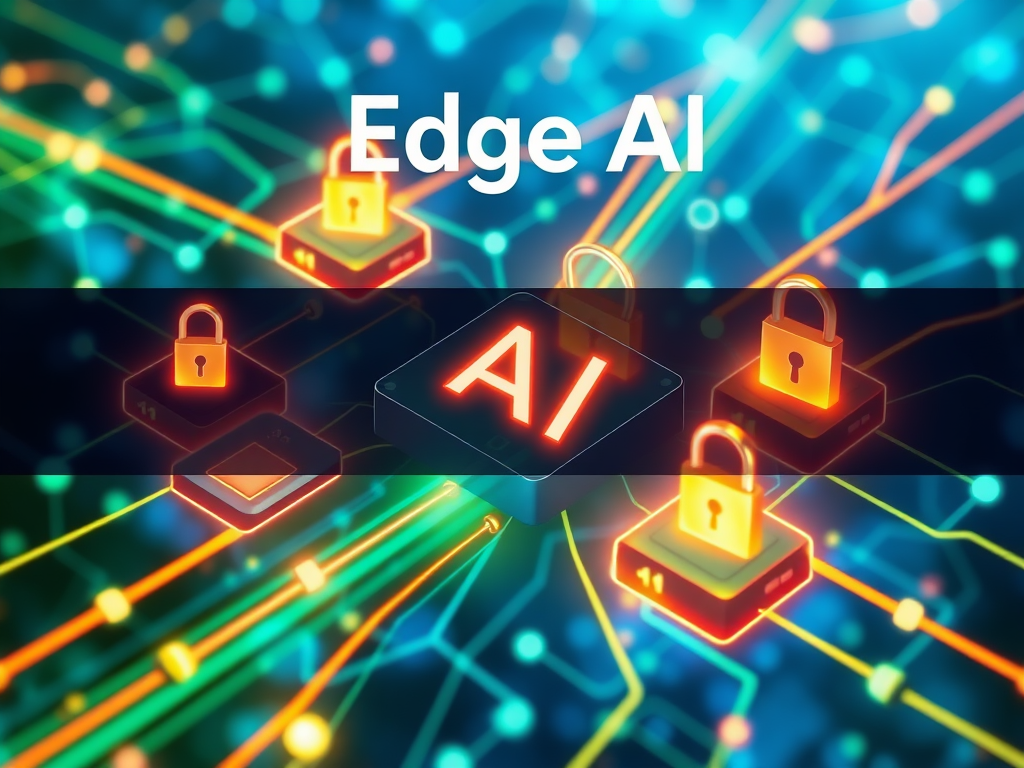
Edge AI, in its simplest form, is the deployment of artificial intelligence (AI) and machine learning (ML) models directly on edge devices, such as smartphones, IoT sensors, and embedded systems. This means data processing and decision-making occur locally, right where the data is generated. The increasing demand for real-time data processing in modern web applications makes Edge AI not just a trend, but a necessity.
Thesis Statement: Edge AI is transforming web applications by enabling faster, more secure, and efficient data handling directly on edge devices, leading to enhanced user experiences.
Understanding Edge AI
Edge AI involves integrating AI and ML capabilities directly into edge devices. Instead of sending vast amounts of data to the cloud for processing, these devices can analyze data and make decisions independently. Think of your smartphone recognizing your face to unlock the device – that’s Edge AI in action. Or consider a smart thermostat learning your temperature preferences and adjusting the heating accordingly, all without relying on constant cloud communication.
The core difference between Edge AI and traditional cloud-based AI processing lies in the location of computation. In cloud-based AI, data is sent to a remote server, processed, and the results are sent back. This introduces latency and raises concerns about security and bandwidth. Edge AI, conversely, keeps the data and processing on the device itself, eliminating these bottlenecks.
Here’s a breakdown of the key benefits of processing data at the edge:
-
- Reduced Latency: Data is processed locally, minimizing delays and providing near-instantaneous responses.
-
- Enhanced Security and Privacy: Data doesn’t need to be transmitted to the cloud, reducing the risk of interception or breaches.
-
- Improved Bandwidth Efficiency: Only relevant information or decisions need to be transmitted, conserving bandwidth and reducing costs.
-
- Increased Reliability (Offline Functionality): Web applications can continue to function even without an internet connection.
Benefits of Edge AI for Web Applications
Reduced Latency
Latency, the delay between an action and a response, can significantly impact user experience. Local processing minimizes these delays, leading to more responsive and engaging web applications. Imagine playing a real-time strategy game in your browser. Every click, every command needs to be executed instantly. With Edge AI, the game logic and AI can run directly on your device, eliminating the lag associated with sending data to a remote server. This results in a smoother, more immersive gaming experience.
Another example is interactive simulations. Consider a web-based training simulator for surgeons. Precise and immediate feedback is crucial for effective training. Edge AI allows the simulator to process sensor data and provide real-time guidance, enhancing the learning experience and improving surgical skills.
Enhanced Security
Data breaches are a growing concern, and transmitting sensitive data to the cloud increases the risk of interception. Edge AI minimizes this risk by keeping data on the device. Think about a web application for online banking. Using Edge AI for biometric authentication (like facial recognition) means your facial data never leaves your device. This significantly reduces the potential for hackers to steal your biometric information.
Furthermore, Edge AI helps web applications comply with data privacy regulations like GDPR. By processing data locally, you have greater control over how your data is used and stored, ensuring compliance and building user trust. Users are more likely to trust a web application that prioritizes their privacy and security.
Improved Bandwidth Efficiency
Bandwidth can be a limiting factor, especially in areas with poor internet connectivity or for users with limited data plans. Edge AI conserves bandwidth by processing data locally and only transmitting essential information. Consider a web-based monitoring system for a remote agricultural site. Instead of constantly streaming video footage to the cloud, an Edge AI-powered system can analyze the video locally, identify potential problems (like crop diseases), and only send alerts when necessary. This dramatically reduces bandwidth consumption and minimizes costs.
This is particularly beneficial for IoT devices that generate vast amounts of data. By processing the data at the edge, you can filter out irrelevant information and only transmit meaningful insights, saving bandwidth and reducing cloud storage costs.
Real-time Analytics and Decision-Making
Edge AI enables web applications to generate immediate insights from local data. This is crucial for applications that require real-time monitoring and decision-making. Imagine a web-based dashboard for monitoring the performance of a manufacturing plant. Edge AI can analyze sensor data from various machines in real-time, identify potential bottlenecks or equipment failures, and display the information on the dashboard. This allows operators to make immediate adjustments and prevent costly downtime.
Another example is a web application for tracking vehicle fleets. Edge AI can analyze GPS data, speed, and other parameters in real-time to identify unsafe driving behavior or potential accidents. This information can be displayed on a dashboard, allowing fleet managers to take corrective action and improve driver safety.
Key Applications of Edge AI in Web Applications
Real-time Analytics
Edge AI provides the ability to perform real-time analytics directly within web applications, enhancing their functionality and responsiveness. For instance, website performance monitoring can benefit significantly. By deploying Edge AI on the client-side, applications can analyze user interactions, page load times, and error rates in real-time without relying on constant server communication. This allows developers to quickly identify and address performance bottlenecks, improving the user experience.
Another critical use case is user behavior analysis. Edge AI can track user interactions, such as mouse movements, clicks, and scrolling patterns, to gain insights into user behavior. This data can be used to personalize the user interface, optimize content placement, and improve overall engagement. This is all achieved locally, preserving user privacy and reducing latency.
Personalized Content Delivery
Edge AI empowers web applications to deliver personalized content based on user context and preferences, all processed locally. For example, an e-commerce website can use Edge AI to analyze a user’s browsing history, purchase patterns, and location to recommend products that are relevant to their interests. This personalized approach can significantly increase sales and improve customer satisfaction. The processing occurs on the user’s device, ensuring that their data remains private and secure.
Similarly, news websites can use Edge AI to tailor news articles to a user’s interests. By analyzing their reading history and social media activity, the website can curate a personalized news feed that is relevant to their individual preferences. This increases user engagement and encourages them to spend more time on the website.
Enhanced Security
Edge AI plays a crucial role in enhancing the security of web applications through advanced authentication and fraud detection mechanisms. Facial recognition is a prime example. Instead of sending facial data to a remote server for verification, Edge AI allows the authentication process to occur directly on the user’s device. This significantly reduces the risk of data breaches and protects user privacy.
Biometric authentication, such as fingerprint scanning or voice recognition, can also be implemented using Edge AI. These methods provide a more secure and convenient way for users to access web applications. Furthermore, Edge AI can be used for fraud detection by analyzing user behavior patterns and identifying suspicious activities in real-time. This helps to prevent fraudulent transactions and protect users from financial losses.
Smart IoT Integrations
Edge AI facilitates seamless interactions between web applications and IoT devices, enabling intelligent automation and control. Consider a smart home integration scenario. A web application can be used to control various IoT devices, such as lights, thermostats, and appliances. Edge AI allows the application to communicate directly with these devices, process sensor data locally, and automate tasks based on user preferences. For example, the application can automatically adjust the thermostat based on the user’s location and the time of day.
In industrial automation solutions, Edge AI can be used to monitor equipment performance, detect anomalies, and predict maintenance needs. A web application can display this information in real-time, allowing operators to proactively address potential problems and prevent equipment failures. This improves efficiency, reduces downtime, and minimizes costs.
Challenges and Considerations
Hardware Limitations
Edge devices often have limited processing power, memory, and battery life compared to cloud servers. These constraints can pose challenges for deploying complex AI models. Efficient code and optimized algorithms are a must. Running large neural networks directly on a smartphone, for example, requires careful consideration of resource usage.
Developers need to choose AI models that are lightweight and specifically designed for edge deployment. Techniques like model compression and quantization can help to reduce the size and computational complexity of AI models, making them suitable for resource-constrained devices.
AI Model Optimization
Optimizing AI models for edge deployment is crucial for achieving acceptable performance. This involves reducing the model size, minimizing computational complexity, and improving energy efficiency. Model compression techniques, such as pruning and quantization, can significantly reduce the size of AI models without sacrificing accuracy.
Pruning involves removing unnecessary connections or parameters from the model, while quantization reduces the precision of the model’s weights and activations. These techniques can dramatically reduce the memory footprint and computational requirements of AI models, making them suitable for deployment on edge devices.
Security at the Edge
Edge devices are often deployed in insecure environments, making them vulnerable to attacks. Ensuring data integrity and security at the edge is a critical challenge. Measures such as encryption, authentication, and secure boot can help to protect edge devices from unauthorized access and tampering.
Regular security updates and vulnerability patching are also essential for maintaining the security of edge devices. Developers should follow secure coding practices and implement robust security measures to prevent vulnerabilities from being exploited.
Management and Deployment
Deploying and managing AI models across a distributed network of edge devices can be complex and challenging. A robust management system is needed to monitor device health, update AI models, and ensure security. Over-the-air (OTA) updates can be used to deploy new AI models and security patches to edge devices remotely.
Centralized management tools can help to simplify the deployment and management process. These tools provide a single pane of glass for monitoring and managing all edge devices, making it easier to ensure that they are running the latest AI models and security updates.
Hybrid Approach: Combining Edge and Cloud
Hybrid AI models combine the strengths of both Edge AI and cloud AI, offering a flexible and scalable solution for web applications. In a hybrid approach, some tasks are performed on edge devices, while others are offloaded to the cloud. This allows you to leverage the real-time capabilities of Edge AI for tasks that require low latency, while using the computational power of the cloud for more complex tasks.
For example, a web application for video surveillance can use Edge AI to detect objects of interest in real-time, such as people or vehicles. The detected objects can then be sent to the cloud for further analysis, such as facial recognition or license plate recognition. This hybrid approach reduces the amount of data that needs to be transmitted to the cloud, saving bandwidth and reducing costs.
Another example is a web application for medical diagnosis. Edge AI can be used to pre-process medical images, such as X-rays or MRIs, to identify potential anomalies. These anomalies can then be sent to the cloud for further analysis by medical experts. This hybrid approach allows doctors to quickly review and diagnose medical images, improving patient care.
Real-world examples of successful hybrid architectures include applications in autonomous vehicles, where edge computing handles immediate driving decisions, while cloud computing manages map updates and route planning. Another example is in smart retail, where edge AI analyzes shopper behavior in real-time to personalize recommendations, while the cloud manages inventory and supply chain logistics.
The Growing Demand for Edge AI
The adoption of Edge AI is rapidly increasing across various sectors, driven by the need for faster, more secure, and more efficient data processing. The demand for Edge AI is fueled by the proliferation of IoT devices, the increasing volume of data being generated, and the growing need for real-time insights.
In manufacturing, Edge AI is being used for predictive maintenance and quality control innovations. By analyzing sensor data from machines in real-time, manufacturers can identify potential equipment failures before they occur, preventing costly downtime. Edge AI is also being used to automate quality control processes, improving product quality and reducing defects.
In healthcare, Edge AI is enabling remote patient monitoring and medical imaging enhancements. Wearable devices equipped with Edge AI can continuously monitor a patient’s vital signs and alert healthcare providers to any potential problems. Edge AI is also being used to enhance the quality of medical images, making it easier for doctors to diagnose diseases.
In transportation, Edge AI is powering autonomous vehicle technology and traffic management systems. Autonomous vehicles rely on Edge AI to process sensor data and make real-time driving decisions. Edge AI is also being used to optimize traffic flow, reduce congestion, and improve safety.
Market trends indicate a significant growth trajectory for Edge AI in the coming years. The increasing demand for real-time analytics, personalized experiences, and enhanced security will continue to drive the adoption of Edge AI across various industries. As hardware becomes more powerful and AI models become more efficient, Edge AI will play an increasingly crucial role in shaping the future of web applications.
Conclusion
Edge AI is transforming web applications, fundamentally changing how data is processed and how users interact with these applications. The benefits of speed, security, and efficiency that Edge AI offers are undeniable, leading to richer and more responsive user experiences. By processing data closer to the source, Edge AI reduces latency, enhances privacy, and conserves bandwidth, making it an invaluable asset for modern web development.
The future of Edge AI is bright. Its crucial role in shaping intelligent web experiences will only continue to grow, fostering new opportunities for innovation and adaptation. As technology advances, we can expect to see even more sophisticated applications of Edge AI, pushing the boundaries of what’s possible and creating truly intelligent and personalized web experiences. Continued research, development, and collaboration will be essential to unlock the full potential of Edge AI and ensure its responsible and ethical implementation.