The Rise of Multimodal AI: Transforming Interactions and Industries
\n\n
The world of Artificial Intelligence (AI) is constantly evolving, pushing the boundaries of what machines can do. One of the most exciting developments is the rise of Multimodal AI – a technology that promises to revolutionize how we interact with computers and the world around us.
I. Engaging Introduction: The Dawn of Multimodal AI
A. Define Multimodal AI and its core concept in an engaging manner.
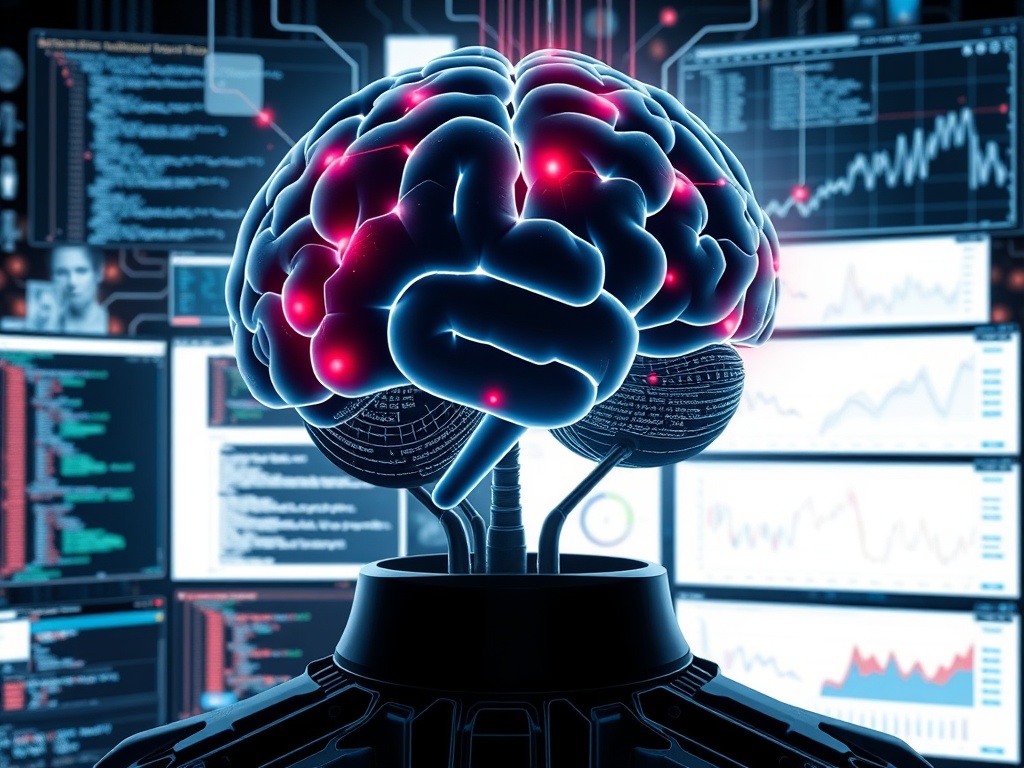
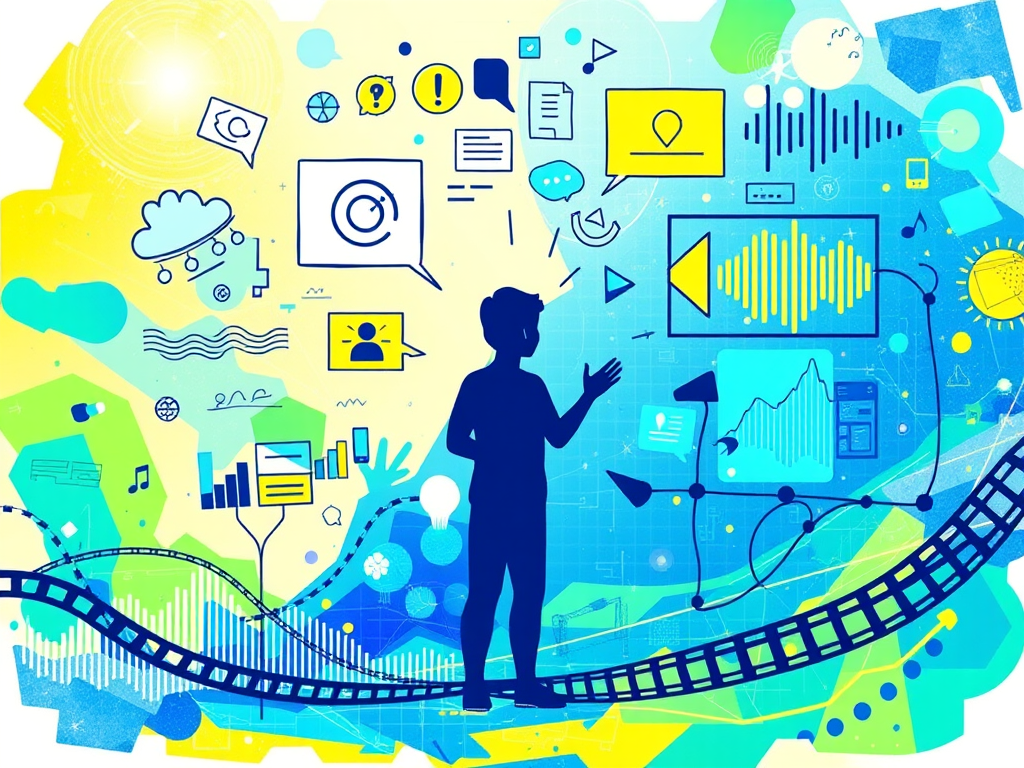
Imagine a world where AI isn’t limited to understanding just text or just images, but can seamlessly process and understand multiple types of data simultaneously. That’s the power of Multimodal AI. It’s about building AI systems that can integrate and interpret information from various modalities like text, images, audio, and video, much like how humans perceive the world through our different senses. Think of it as giving AI a richer, more complete picture of reality.
B. Discuss the significance and relevance of Multimodal AI in today’s technology landscape through compelling examples.
Why is Multimodal AI so important right now? Because the world is inherently multimodal. We don’t just read text; we watch videos, listen to conversations, and observe our surroundings. For AI to truly understand and interact with us effectively, it needs to do the same. Consider a self-driving car: it needs to process visual data from cameras, audio data from microphones (like sirens), and textual data from road signs – all at the same time – to navigate safely.
Another example is virtual assistants. Imagine asking your smart speaker, \”Show me images of cats wearing hats.\” A simple text-based AI could understand the words, but a Multimodal AI can also understand the visual concept of \”cats\” and \”hats\” to deliver relevant results. This ability to fuse different types of information leads to significantly improved understanding and more relevant outputs.
C. Briefly present the transformative potential and applications of Multimodal AI.
The transformative potential of Multimodal AI is vast. From revolutionizing healthcare with AI-powered diagnostics to enhancing customer experiences in retail with personalized recommendations, Multimodal AI is poised to reshape industries and redefine human-computer interaction. It’s not just about making AI smarter; it’s about making it more intuitive, more helpful, and more aligned with how we naturally perceive and interact with the world.
II. Understanding Multimodal AI: Combining Senses for Smarter Machines
A. Explain the various data forms integrated by Multimodal AI (text, images, audio, video).
Multimodal AI thrives on diversity, drawing insights from a rich tapestry of data types. Let’s break down the most common modalities:
-
- Text: This includes written language, from simple sentences to complex documents. Text provides the foundation for understanding context, meaning, and intent.
-
- Images: Visual data allows AI to perceive objects, scenes, and relationships. Image recognition is crucial for tasks like object detection, facial recognition, and scene understanding.
-
- Audio: Sounds, speech, and music provide valuable information. Audio processing enables AI to understand spoken commands, identify emotions in speech, and analyze musical patterns.
-
- Video: Combining visual and auditory information, video provides a dynamic view of events unfolding over time. Video analysis is essential for tasks like activity recognition, surveillance, and autonomous driving.
B. Highlight how these modalities enhance AI’s understanding and capabilities with vivid examples.
The power of Multimodal AI lies in its ability to synergize these modalities. Instead of treating each data type in isolation, it combines them to create a more holistic understanding. For instance, consider a doctor using AI to diagnose a patient. A Multimodal AI could analyze:
-
- Text: The patient’s medical history and symptoms described in their chart.
-
- Images: X-rays, MRIs, and other medical scans.
-
- Audio: The doctor’s notes dictated after examining the patient.
By integrating all this information, the AI can provide a more accurate diagnosis and personalized treatment plan than if it were limited to only one data type.
Another example: A Multimodal AI used in social media analysis. It could analyze:
-
- Text: The content of posts and comments.
-
- Images: The images and videos shared.
-
- Audio: The audio content of videos.
By combining these modalities, the AI can better understand the sentiment and context of conversations, identify emerging trends, and detect misinformation more effectively.
C. Illustrate the impact of Multimodal AI on human-machine interactions through enriched, intuitive interfaces.
Multimodal AI is making human-machine interactions more natural and intuitive. Think about interacting with a sophisticated virtual assistant. Instead of just typing commands, you can speak to it, show it images, and even use gestures. The AI can understand your intent from multiple cues, making the interaction feel more like a conversation with another person. This leads to more efficient and enjoyable user experiences.
For example, imagine using a Multimodal AI-powered design tool. You could describe your vision in words, sketch a rough outline, and even provide images as inspiration. The AI would then understand your requirements and generate design options that align with your creative intent. This type of collaborative interaction empowers users to express themselves more freely and unlock their creative potential.
III. Key Benefits of Multimodal AI
A. Personalized Experiences:
i. Detail how Multimodal AI fosters tailored user experiences.
In a world saturated with information, personalization is key. Multimodal AI excels at creating highly tailored user experiences by leveraging a deeper understanding of individual preferences. It analyzes patterns across various modalities to anticipate needs and deliver relevant content.
For instance, consider a music streaming service powered by Multimodal AI. It wouldn’t just analyze your listening history; it would also consider the time of day, your location (gleaned from your device), and even your current activity (e.g., are you working, exercising, or relaxing?). By combining these inputs, it could curate playlists that perfectly match your mood and context, enhancing your listening experience.
ii. Provide real-world examples of personalized recommendations enabled by Multimodal AI.
\n
E-commerce platforms are increasingly using Multimodal AI to provide hyper-personalized product recommendations. Imagine browsing for clothing online. A Multimodal AI could analyze:
-
- Text: Your search queries and browsing history.
-
- Images: The products you’ve viewed and saved.
-
- Audio: Your voice commands when using voice search.
By understanding your style preferences, body type (potentially inferred from image analysis), and specific needs, the AI can suggest items that are highly likely to appeal to you, increasing the chances of a purchase and improving your overall shopping experience.
B. Boosting Creativity and Innovation:
i. Explore how Multimodal AI inspires and augments human creativity.
Multimodal AI isn’t just about automating tasks; it’s also a powerful tool for augmenting human creativity. By providing new perspectives and generating novel ideas, it can inspire artists, designers, and innovators to push the boundaries of their fields.
Imagine a writer using Multimodal AI to overcome writer’s block. They could provide a brief text description, a mood board of images, and even a piece of music that captures the tone they’re aiming for. The AI could then generate story outlines, character sketches, and even snippets of dialogue, providing the writer with a wealth of inspiration to fuel their creative process.
ii. Showcase AI-assisted content creation in various domains like art, music, or design.
AI-assisted music composition is rapidly gaining traction. Tools like Amper Music and Jukebox allow users to create original music by specifying the genre, mood, and instrumentation. Multimodal AI is taking this a step further by allowing users to incorporate visual elements, such as images or videos, to influence the composition. The AI can analyze the visual content and generate music that complements the imagery, creating a more immersive and engaging experience.
In the realm of design, Multimodal AI is enabling designers to quickly prototype and iterate on ideas. Tools like Adobe Sensei can analyze sketches, images, and text descriptions to generate design variations, suggest color palettes, and even automate repetitive tasks. This frees up designers to focus on the creative aspects of their work, leading to more innovative and visually appealing designs.
C. Enhanced Decision-Making:
i. Explain enhancements in decision-making processes through comprehensive insights from Multimodal AI.
In today’s complex world, making informed decisions requires analyzing vast amounts of data. Multimodal AI provides a powerful solution by integrating insights from diverse sources, leading to more comprehensive and accurate assessments. By considering multiple perspectives, it helps decision-makers overcome biases and make more objective judgments.
For example, consider a financial analyst using Multimodal AI to assess the risk of investing in a particular company. The AI could analyze:
-
- Text: Financial reports, news articles, and social media sentiment.
-
- Images: Satellite imagery of the company’s facilities to assess operational activity.
-
- Audio: Transcripts of earnings calls to gauge management’s confidence.
By combining these insights, the AI can provide a more holistic view of the company’s financial health and potential risks, enabling the analyst to make a more informed investment decision.
ii. Present examples of data analysis and predictive modeling utilizing diverse data inputs.
Predictive maintenance is another area where Multimodal AI is proving invaluable. By analyzing data from sensors, images, and maintenance logs, AI can predict when equipment is likely to fail, allowing for proactive maintenance and preventing costly downtime. For instance, in the aviation industry, Multimodal AI can analyze:
-
- Sensor Data: Readings from engine sensors, flight control systems, and other critical components.
-
- Images: Visual inspections of aircraft surfaces to detect cracks and corrosion.
-
- Text: Maintenance records and pilot reports.
By combining these data sources, the AI can identify subtle patterns that indicate potential problems, enabling maintenance crews to address issues before they lead to major failures.
IV. Recent Breakthroughs in Multimodal AI
A. Integration into Existing Models:
i. Discuss the addition of Multimodal capabilities in models such as ChatGPT and Google Gemini 2.0.
The integration of Multimodal capabilities into existing AI models like ChatGPT and Google Gemini 2.0 marks a significant step forward. These models, initially known for their text-based abilities, are now expanding their horizons to understand and generate content across various modalities.
ChatGPT, for example, can now analyze images and respond accordingly. You can upload a picture and ask it questions about the content, providing a more interactive and engaging experience. Similarly, Google Gemini 2.0 is designed from the ground up to be Multimodal, seamlessly integrating text, images, audio, and video. This allows it to perform complex tasks like summarizing videos, answering questions based on images, and even generating creative content based on multimodal prompts.
ii. Highlight new functionalities and improvements resulting from these integrations.
The addition of Multimodal capabilities unlocks a range of new functionalities. For instance, ChatGPT can now:
-
- Describe the content of an image.
-
- Answer questions about an image.
-
- Generate captions for images.
Google Gemini 2.0, with its native Multimodal architecture, can:
-
- Summarize videos.
-
- Generate images from text prompts.
-
- Translate audio and video content.
-
- Answer complex questions that require understanding of multiple modalities.
These improvements significantly enhance the versatility and usefulness of these AI models, making them more powerful tools for a wide range of applications.
B. AI-Generated Video:
i. Introduce OpenAI’s Sora, emphasizing its ability to generate videos from text prompts.
One of the most groundbreaking developments in Multimodal AI is the emergence of AI-generated video. OpenAI’s Sora is at the forefront of this revolution, demonstrating the ability to create realistic and imaginative videos from simple text prompts. This technology has the potential to transform various industries, from entertainment and education to marketing and advertising.
ii. Discuss the implications and transformative potential of AI-generated video content.
The implications of AI-generated video are profound. Imagine being able to create high-quality video content without the need for expensive equipment, actors, or filming locations. Sora makes this a reality, democratizing video production and opening up new possibilities for creative expression.
The transformative potential is evident in several areas:
-
- Entertainment: Creating special effects, generating animated content, and producing entire films using AI.
-
- Education: Developing engaging educational videos and simulations tailored to individual learning needs.
-
- Marketing: Creating personalized video ads and product demonstrations at scale.
-
- Accessibility: Generating videos for people with disabilities, such as visual impairments.
While still in its early stages, AI-generated video is poised to reshape the media landscape and revolutionize how we create and consume video content.
V. The Future is Multimodal: Growth and Projections
A. Industry Predictions:
i. Present the projection that 40% of generative AI solutions will be Multimodal by 2027.
Industry analysts predict a significant shift towards Multimodal AI in the coming years. Gartner, a leading research and advisory firm, projects that 40% of generative AI solutions will be Multimodal by 2027. This indicates a growing recognition of the value and potential of Multimodal AI across various industries.
ii. Analyze key drivers behind this projected growth in detail.
Several key drivers are fueling this projected growth:
-
- Improved Accuracy and Performance: Multimodal AI systems consistently outperform unimodal systems in tasks requiring complex understanding and reasoning.
-
- Enhanced User Experience: Multimodal interfaces are more natural and intuitive, leading to greater user satisfaction and adoption.
-
- Expanding Applications: The range of applications for Multimodal AI is constantly expanding, driven by advancements in algorithms and computing power.
-
- Increased Availability of Multimodal Data: The proliferation of sensors, cameras, and other devices is generating vast amounts of multimodal data, providing fuel for AI training.
-
- Growing Investment: Venture capital and corporate investment in Multimodal AI startups are on the rise, reflecting the growing confidence in this technology.
These factors combined create a powerful momentum that will propel Multimodal AI to the forefront of the AI landscape.
B. Anticipated advancements and emerging trends in Multimodal AI technology.
Looking ahead, we can anticipate several key advancements and emerging trends in Multimodal AI:
-
- More Sophisticated Fusion Techniques: Researchers are developing more advanced methods for fusing information from different modalities, leading to more accurate and robust AI systems.
-
- Improved Generalization: AI models will become better at generalizing from limited data, enabling them to perform well in new and unseen environments.
-
- Explainable AI (XAI): Efforts are underway to make Multimodal AI systems more transparent and explainable, increasing trust and accountability.
-
- Edge Computing: Multimodal AI will increasingly be deployed on edge devices, enabling real-time processing and reducing reliance on cloud infrastructure.
-
- Ethical Considerations: Greater attention will be paid to the ethical implications of Multimodal AI, including issues of bias, privacy, and fairness.
VI. Applications Across Industries
A. Healthcare:
i. Explore the use of Multimodal AI in diagnostics, treatment planning, and patient care.
Healthcare is ripe for disruption by Multimodal AI. Its ability to synthesize diverse data sources promises to revolutionize diagnostics, treatment planning, and patient care. Imagine an AI system that can:
-
- Analyze medical images (X-rays, MRIs) to detect anomalies.
-
- Process patient history and symptoms from electronic health records.
-
- Listen to heart and lung sounds to identify potential issues.
-
- Analyze patient behavior through video monitoring.
By integrating all this information, the AI can provide doctors with a more complete picture of the patient’s condition, leading to faster and more accurate diagnoses.
ii. Provide case studies or specific examples of successful Multimodal AI applications in healthcare.
Several companies are already developing Multimodal AI solutions for healthcare. For example, one company is using AI to analyze retinal images and patient data to predict the risk of developing diabetic retinopathy. Another company is using AI to analyze speech patterns and facial expressions to detect early signs of mental health disorders.
In one case study, researchers at a major hospital used Multimodal AI to improve the accuracy of lung cancer screening. The AI analyzed CT scans, patient history, and smoking habits to identify high-risk individuals with greater precision than traditional screening methods. This led to earlier detection and treatment, improving patient outcomes.
B. Retail:
i. Explain enhancements in customer experience, inventory optimization, and sales through Multimodal AI.
The retail industry is leveraging Multimodal AI to enhance customer experience, optimize inventory, and boost sales. By understanding customer preferences and behaviors, retailers can create more personalized and engaging shopping experiences.
Multimodal AI can be used to:
-
- Analyze customer browsing history and purchase patterns.
-
- Recognize facial expressions and body language to gauge customer emotions.
-
- Understand voice commands and natural language queries.
-
- Analyze product images and descriptions to provide better recommendations
This information can be used to personalize product recommendations, provide targeted promotions, and optimize store layout and design.
ii. Showcase real-life examples of Multimodal AI applications in the retail sector.
Several retailers are already implementing Multimodal AI solutions. For example, one retailer is using AI-powered cameras to track customer movement in stores and optimize product placement. Another retailer is using AI-powered chatbots to provide personalized customer service and answer questions about products and services.
One real-life example is a clothing retailer that uses AI to analyze customer images and provide personalized style recommendations. Customers can upload a photo of themselves or an outfit they like, and the AI will suggest similar items from the retailer’s catalog. This not only enhances the customer experience but also drives sales by helping customers discover new products.
C. Creative Industries:
i. Highlight the empowerment of artists, designers, and content creators through Multimodal AI.
Multimodal AI is empowering artists, designers, and content creators by providing them with new tools and techniques to express their creativity. AI can assist with tasks like:
-
- Generating new ideas and concepts.
-
- Creating variations on existing designs.
-
- Automating repetitive tasks.
-
- Generating realistic images and videos.
This allows creatives to focus on the more strategic and imaginative aspects of their work, leading to more innovative and compelling content.
ii. Present specific instances of Multimodal AI success in creative fields.
Several artists and designers are already using Multimodal AI to create groundbreaking works. For example, one artist is using AI to generate surreal and dreamlike images by combining text descriptions with visual elements. Another designer is using AI to create 3D models of furniture based on customer sketches and preferences.
In the music industry, AI is being used to compose original scores, generate variations on existing melodies, and even create personalized music experiences. These examples demonstrate the transformative potential of Multimodal AI in the creative fields, enabling artists and designers to push the boundaries of their imagination.
VII. Challenges and Considerations
A. Discuss technical hurdles faced in the development and deployment of Multimodal AI systems.
While Multimodal AI holds immense promise, it also presents significant technical challenges. Some of the key hurdles include:
-
- Data Integration: Combining data from different modalities requires sophisticated data integration techniques to ensure consistency and compatibility.
-
- Feature Extraction: Extracting meaningful features from different modalities can be challenging, especially when dealing with unstructured data like images and audio.
-
- Model Training: Training Multimodal AI models requires large amounts of labeled data, which can be expensive and time-consuming to acquire.
-
- Computational Complexity: Multimodal AI models are often computationally intensive, requiring significant computing power and resources.
-
- Interpretability: Understanding how Multimodal AI models make decisions can be difficult, making it challenging to debug and improve their performance.
B. Address crucial ethical considerations regarding data privacy, bias, and the responsible deployment of AI technologies.
In addition to the technical challenges, Multimodal AI also raises important ethical considerations. These include:
-
- Data Privacy: Multimodal AI systems often collect and analyze sensitive personal data, raising concerns about privacy and security.
-
- Bias: Multimodal AI models can perpetuate and amplify existing biases in the data they are trained on, leading to unfair or discriminatory outcomes.
-
- Transparency: The lack of transparency in Multimodal AI models can make it difficult to assess their fairness and accountability.
-
- Job Displacement: The automation potential of Multimodal AI raises concerns about job displacement and the need for workforce retraining.
-
- Misinformation: AI-generated content can be used to create and spread misinformation, undermining trust in institutions and media.
Addressing these ethical considerations is crucial for ensuring the responsible deployment of Multimodal AI technologies and maximizing their benefits for society.
VIII. Conclusion: Embracing the Multimodal Future
A. Recap the transformative potential of Multimodal AI succinctly.
Multimodal AI is poised to revolutionize industries and redefine human-computer interaction by integrating and interpreting information from various modalities. Its potential to personalize experiences, boost creativity, enhance decision-making, and automate tasks is vast and far-reaching.
B. Emphasize the importance of understanding and adopting this technology as we look ahead.
As Multimodal AI continues to evolve, it is essential for individuals and organizations to understand its capabilities and potential applications. By embracing this technology, we can unlock new opportunities for innovation, productivity, and growth.
C. Conclude with a forward-looking statement on the anticipated impact of Multimodal AI across different sectors of life and industry.
The future is Multimodal. As AI systems become more sophisticated and data becomes more abundant, Multimodal AI will play an increasingly important role in shaping our lives and industries. From healthcare to retail, from entertainment to education, Multimodal AI will transform how we work, learn, and interact with the world around us. By embracing this technology responsibly and ethically, we can harness its power to create a more innovative, efficient, and equitable future for all.